
Pileated Woodpecker
Dryocopus pileatus
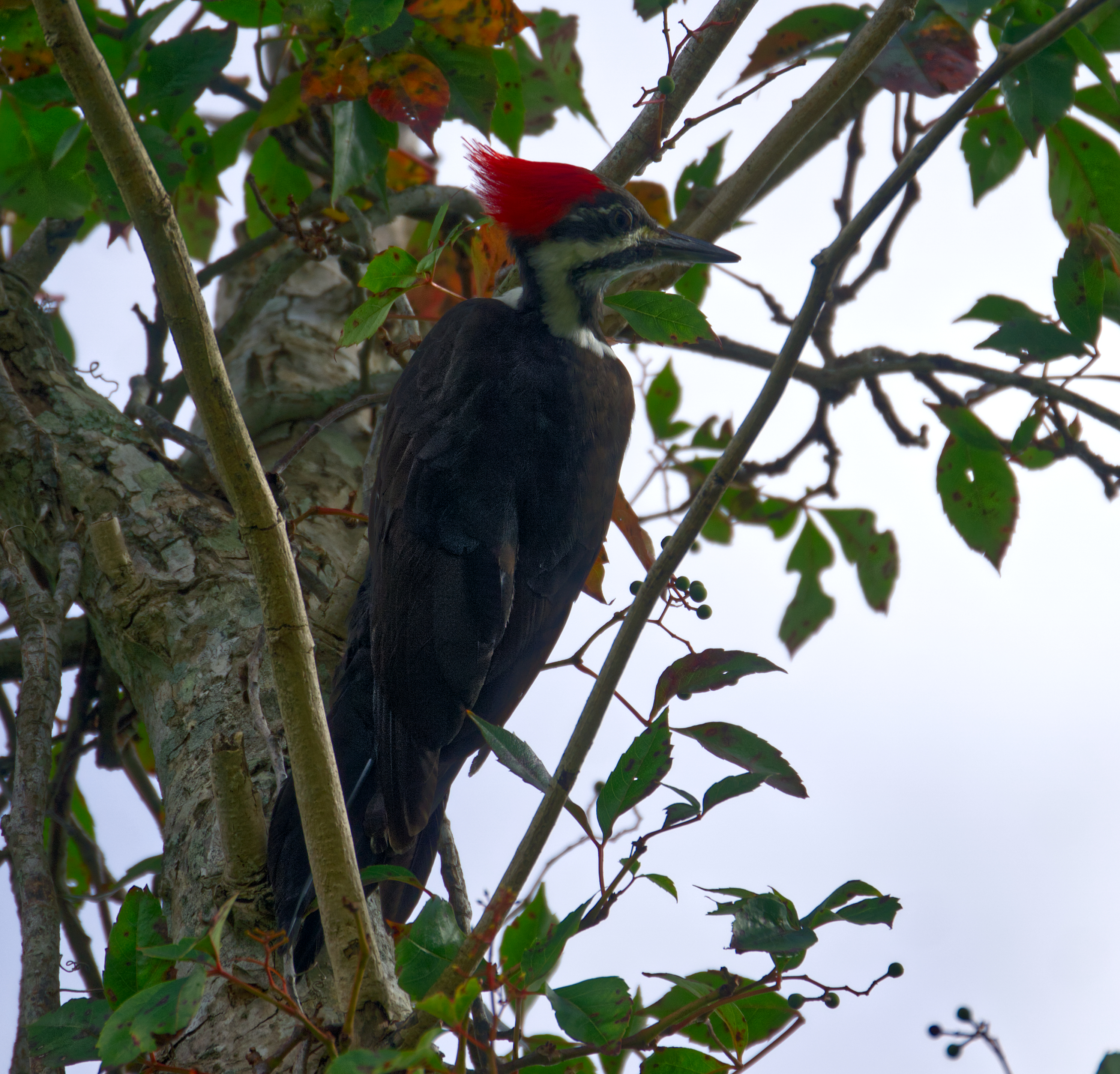
Its abandoned nesting cavities provide homes for owls, ducks, squirrels, and other wildlife.
Its abandoned nesting cavities provide homes for owls, ducks, squirrels, and other wildlife. Inspect trees for active cavities before pruning or removal. Keep people and pets away from fledglings. Protected under the Migratory Bird Treaty Act. Adults, eggs, young, and active nests must not be harmed.
Habitat:
Freshwater Wetlands, Forests and Woodlands, Urban and Residential Areas
Area / Range:
Statewide
Diet:
Carpenter ants, beetle larvae, termites, fruit, and nuts.
Behavior:
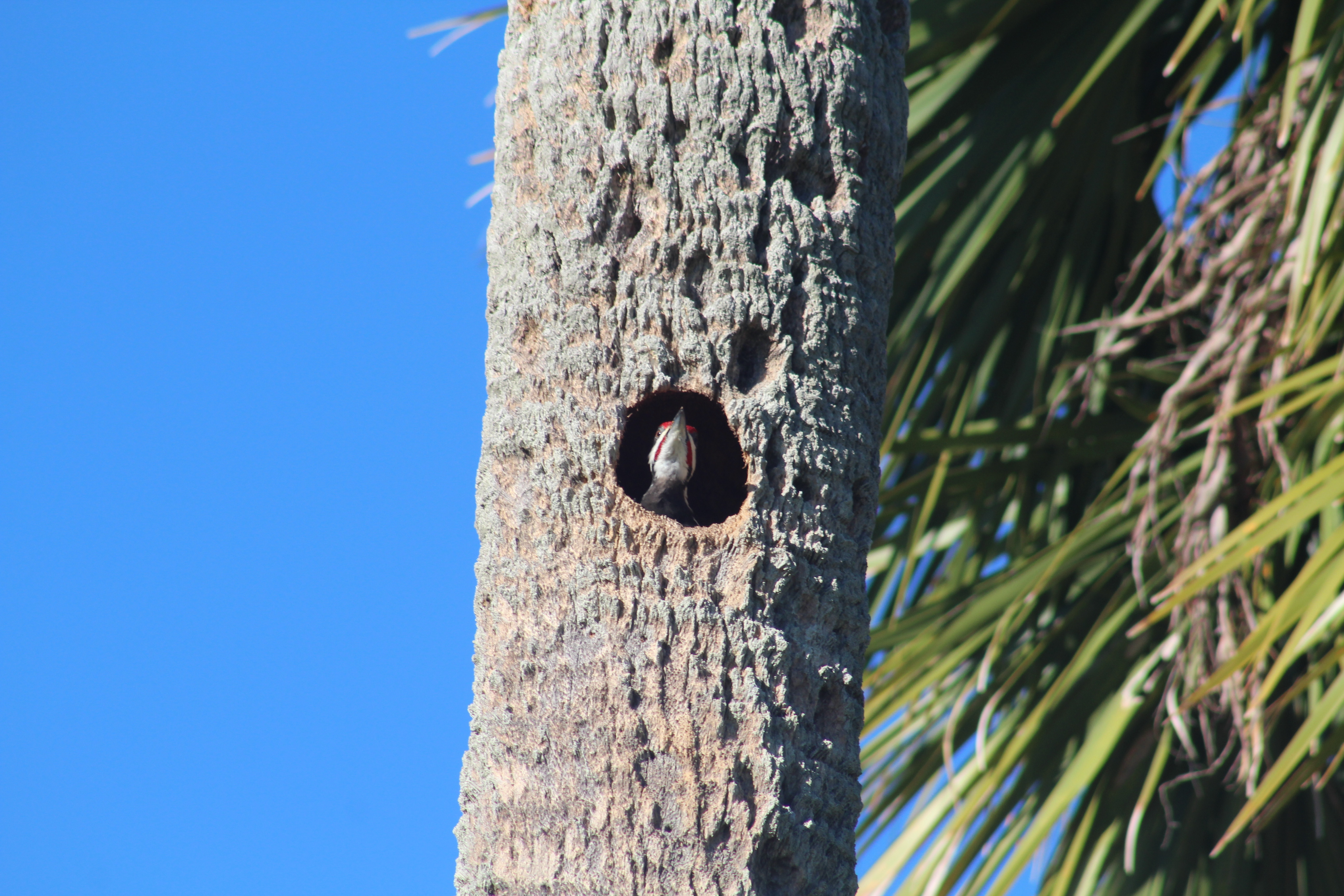
Excavates large rectangular holes in dead or decaying wood and uses loud calls and drumming to defend territory.
Day
Active Times:
Best time to see:
Observe from a respectful distance in suitable Florida habitat.
Florida Native Status:
Native
Conservation Status:
Protected migratory bird
Safety Level:
Harmless. Protect Cavity Trees
Safety Information:
Inspect trees for active cavities before pruning or removal. Keep people and pets away from fledglings.
Benefits to Property:
Removes wood-boring insects and creates valuable nesting cavities for other species.
Property Concerns:
Tree removal, snag removal, and disturbance around nest cavities reduce habitat.
Fun Fact:
Its abandoned nesting cavities provide homes for owls, ducks, squirrels, and other wildlife.
Wildlife Laws:
Protected under the Migratory Bird Treaty Act. Adults, eggs, young, and active nests must not be harmed.
Identification:
Very large black woodpecker with bold white facial stripes, a red crest, and white wing patches visible in flight.
Credits:
Facts: wildlife reference. Images: Wikimedia Commons.