
Prairie Warbler
Setophaga discolor
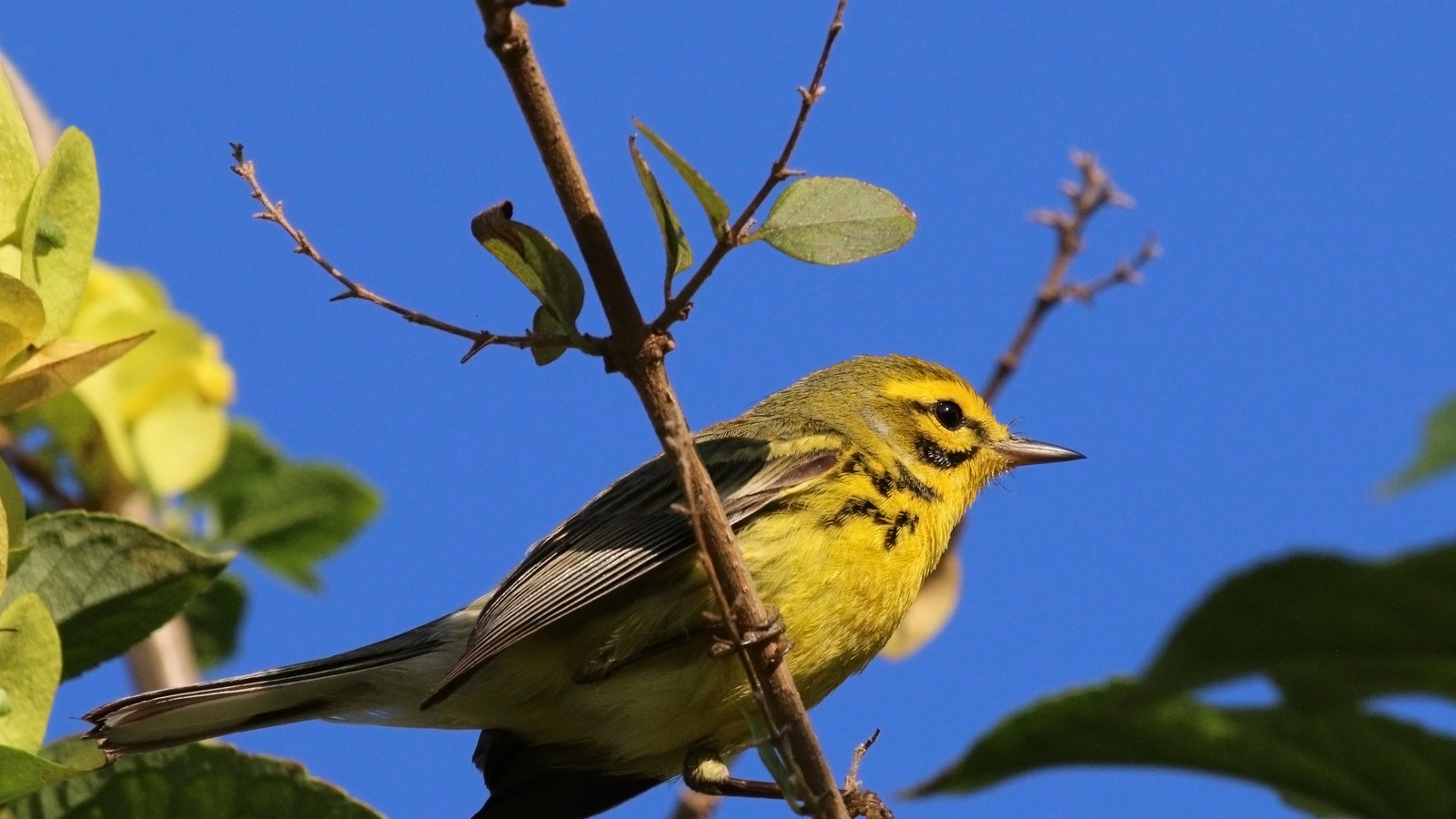
The prairie warbler is a small yellow songbird of Florida scrub, young pine habitat, shrubby openings, and coastal vegetation.
Despite its name, the prairie warbler favors shrubby habitat rather than open prairie. In Florida it uses scrub, young pine stands, regenerating clearings, coastal thickets, and mangrove edges.
The species forages close to the ground and through low branches. Habitat becomes unsuitable when shrubs are cleared completely or when natural succession creates a closed forest without periodic disturbance.
Habitat:
Scrub and Dry Prairie, Pine Flatwoods and Sandhills, Forests and Woodlands, Mangroves and Salt Marshes
Area / Range:
Statewide
Diet:
Prairie warblers eat caterpillars, beetles, flies, leafhoppers, spiders, and other small invertebrates taken from leaves and branches.
Behavior:
They move deliberately through low vegetation, glean insects from foliage, and sing a rising series of buzzy notes from exposed branches during breeding season.
Day
Active Times:
Best time to see:
Early morning in spring and summer around scrub, young pine habitat, shrubby clearings, and coastal thickets.
Florida Native Status:
Native
Conservation Status:
Near Threatened globally because of sustained population declines and loss of suitable early-successional habitat.
Safety Level:
Harmless
Safety Information:
Observe from established paths and avoid repeated approaches to singing birds during nesting season. Keep cats indoors and avoid spraying shrubs where birds forage.
Benefits to Property:
Prairie warblers consume many leaf-feeding insects. Properties near natural habitat support them with layered native shrubs and reduced pesticide use.
Property Concerns:
They cause no property damage. Clearing all understory vegetation, frequent disturbance, cats, and reflective windows reduce habitat quality and survival.
Fun Fact:
The prairie warbler's song climbs the scale in a series of quick buzzy notes. The sound helps birders locate a bird hidden in dense shrubs.
Wildlife Laws:
Prairie warblers are protected by the federal Migratory Bird Treaty Act. Do not capture birds or disturb active nests, eggs, or young.
Identification:
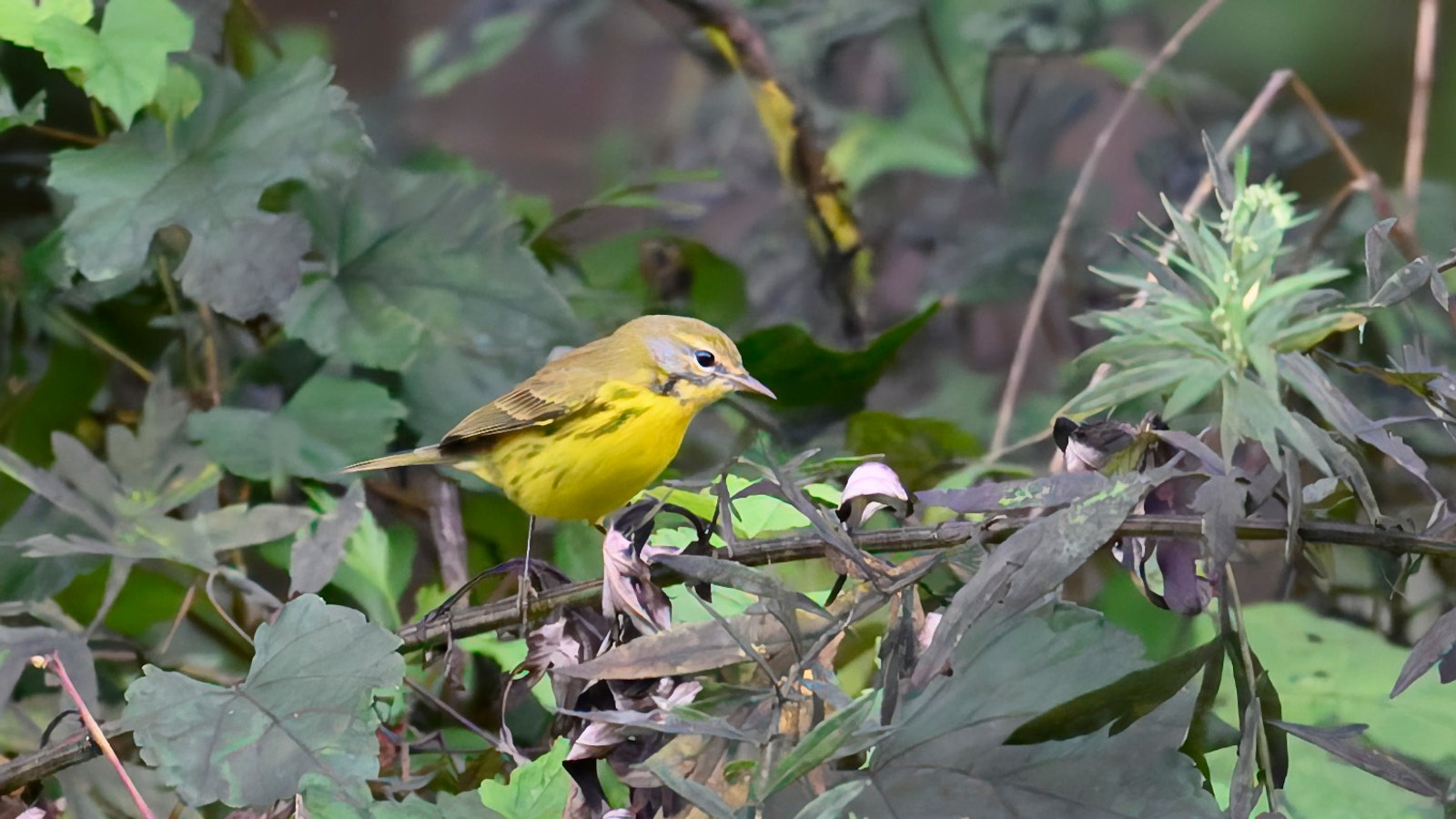
Adults are bright yellow below with dark streaks along the sides, an olive back, a dark line through the eye, and a curved dark mark beneath it. Males show stronger facial markings and chestnut streaks on the back.
Credits:
Facts: Cornell Lab of Ornithology. Images: primary and secondary, Wikimedia Commons.