
Purple Martin
Progne subis
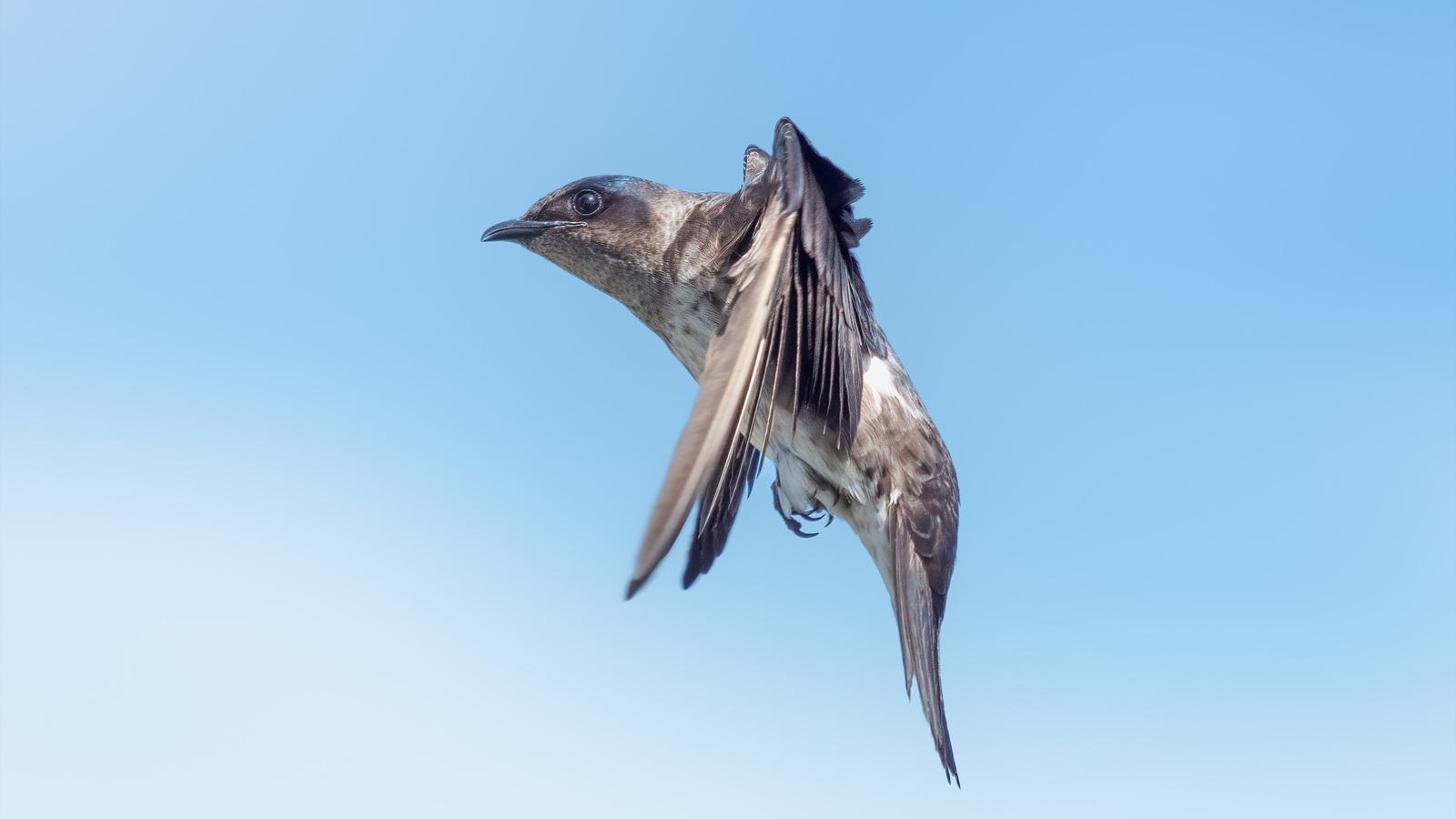
Florida’s largest swallow, known for fast aerial feeding, deep chattering calls, and strong dependence on human-provided nest housing.
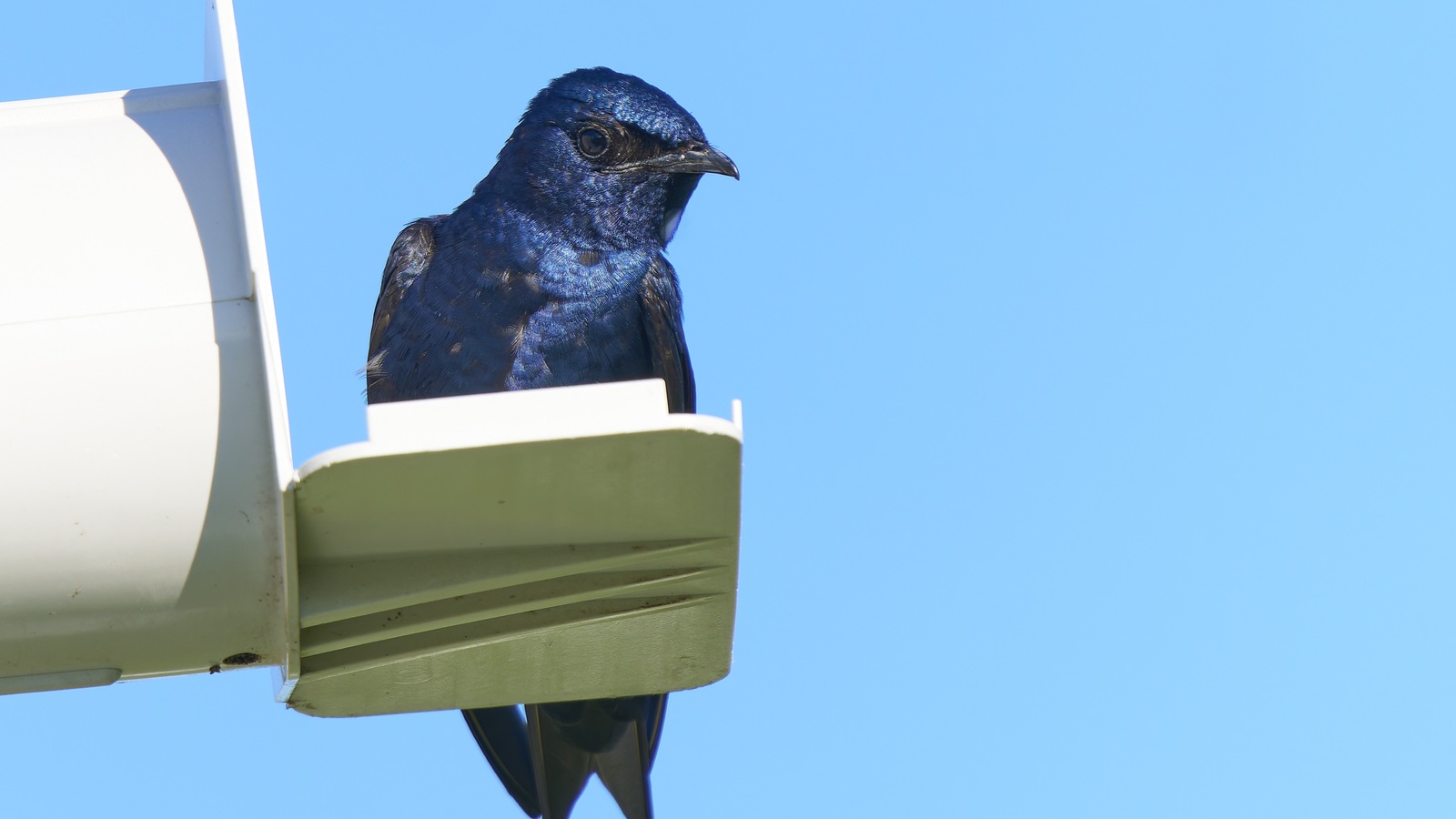
Purple Martins return to Florida early each year to breed before migrating to South America. Adult males appear glossy blue-black, while females and young birds show gray underparts.
Well-managed martin houses placed in open areas near water or lawns provide nesting opportunities. Houses require annual cleaning and protection from invasive nest competitors.
Habitat:
Lakes and Ponds, Grasslands and Agricultural Areas, Urban and Residential Areas
Area / Range:
Statewide
Diet:
Catches flying insects in the air, including beetles, dragonflies, flies, moths, and winged ants.
Behavior:
Highly social and colonial. Martins forage high in the air, gather near nest housing, and communicate with rich chortles and clicks.
Daytime
Active Times:
Best time to see:
Late winter through summer near active martin houses and open water.
Florida Native Status:
Native
Conservation Status:
Not federally listed; nesting success depends heavily on properly managed housing in eastern North America.
Safety Level:
Low
Safety Information:
Do not handle birds or open occupied compartments except as part of responsible nest monitoring.
Benefits to Property:
Consumes large numbers of flying insects and adds visible bird activity above open landscapes.
Property Concerns:
Nest housing needs routine cleaning and monitoring. Poorly managed houses may be taken over by European Starlings or House Sparrows.
Fun Fact:
- It is the largest swallow in North America.
- Florida hosts some of the earliest returning migrants.
- Eastern populations rely heavily on nest houses and gourds.
Wildlife Laws:
Protected under the Migratory Bird Treaty Act. Active nests, eggs, and young must remain protected during maintenance.
Identification:
Large swallow with broad pointed wings, a slightly forked tail, and powerful gliding flight. Adult males are dark iridescent purple-blue; females are duller above and pale below.