
Raccoon
Procyon lotor
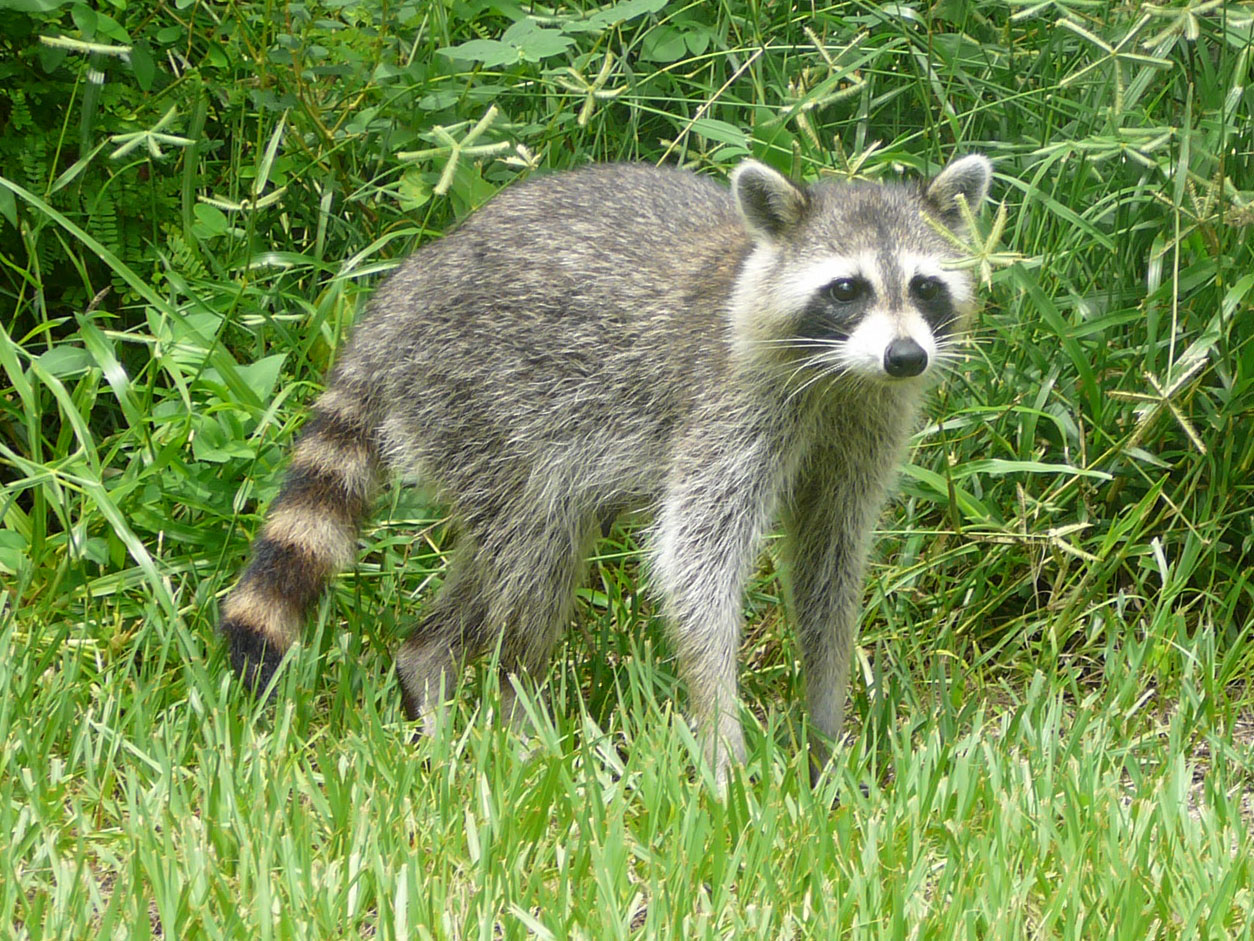
Their front paws are highly sensitive and well suited for manipulating food.
Their front paws are highly sensitive and well suited for manipulating food. Secure garbage and pet food. Avoid direct contact due to bites and disease risk. Removal follows FWC rules.
Habitat:
Freshwater Wetlands, Forests and Woodlands, Urban and Residential Areas
Area / Range:
Statewide
Diet:
Fruit, insects, crayfish, eggs, small animals, pet food, and garbage.
Behavior:
Mostly nocturnal. Uses trees, attics, hollow logs, and storm drains for shelter.
Night
Active Times:
Best time to see:
Look during night in suitable Florida habitat.
Florida Native Status:
Native
Conservation Status:
Common native furbearer
Safety Level:
Use Caution. Never Handle
Safety Information:
Secure garbage and pet food. Avoid direct contact due to bites and disease risk. Removal follows FWC rules.
Benefits to Property:
Raccoons consume insects, fruit, and carrion.
Property Concerns:
They raid garbage, damage roofs, enter attics, and threaten poultry.
Fun Fact:
Their front paws are highly sensitive and well suited for manipulating food.
Wildlife Laws:
Secure garbage and pet food. Avoid direct contact due to bites and disease risk. Removal follows FWC rules.
Identification:
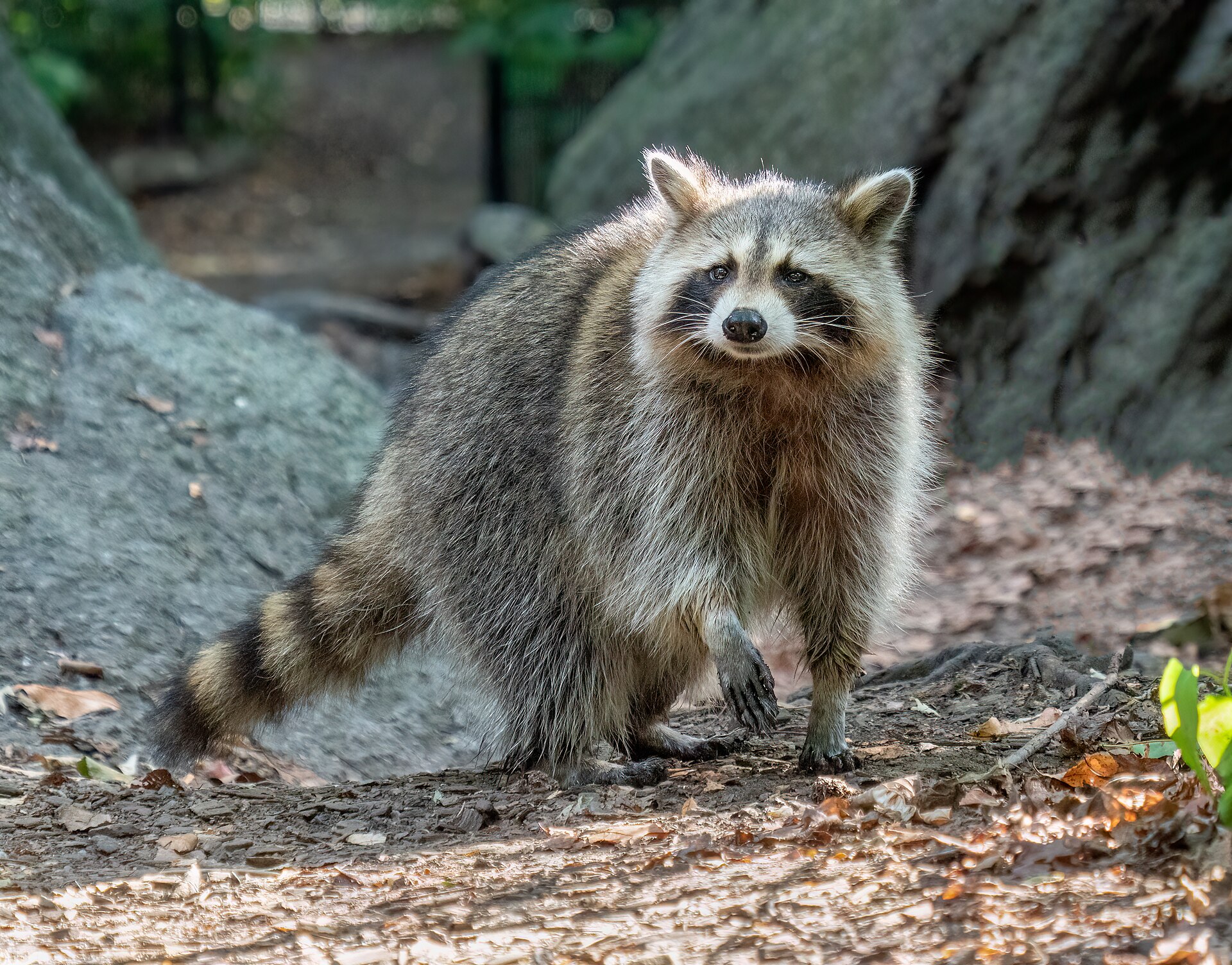
Gray body, black facial mask, pointed muzzle, and ringed tail.
Credits:
Facts: wildlife reference. Images: primary image and secondary image, Wikimedia Commons.