
Red-Cockaded Woodpecker
Leuconotopicus borealis
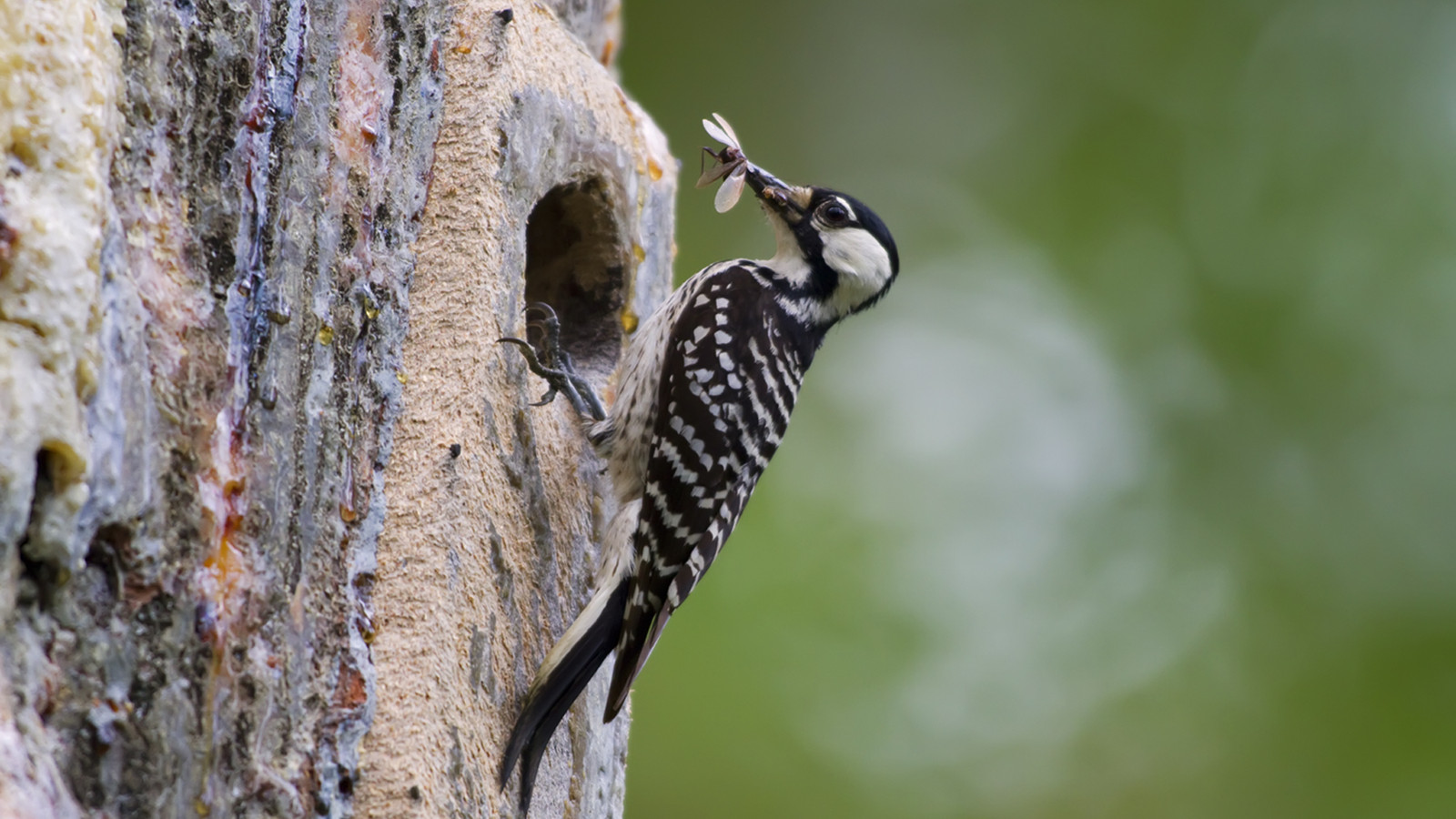
A cooperative-breeding woodpecker that excavates nesting cavities in living mature pine trees.
Red-Cockaded Woodpeckers occupy open, fire-maintained pine forests. Unlike other North American woodpeckers, they excavate roost and nest cavities in living pines, often trees softened by heartwood decay.
Family groups defend clusters of cavity trees. Young males sometimes remain as helpers and assist the breeding pair with feeding and protecting nestlings.
Habitat:
Pine Flatwoods and Sandhills, Forests and Woodlands
Area / Range:
Florida Panhandle, North Florida, Central Florida, South Florida
Diet:
Feeds on ants, beetles, roaches, spiders, caterpillars, and other arthropods picked from pine trunks and limbs. Fruits and seeds supplement the diet.
Behavior:
Lives in territorial family groups centered on cavity-tree clusters. Birds forage by climbing mature pines and flaking bark in search of prey.
Dawn and Dusk, Daytime
Active Times:
Best time to see:
Early morning near marked cavity clusters in managed longleaf pine forests.
Florida Native Status:
Native
Conservation Status:
Federally threatened; recovery remains tied to mature pine habitat and prescribed fire.
Safety Level:
Low
Safety Information:
Harmless. Stay outside posted cavity-tree buffers and avoid repeated close approaches.
Benefits to Property:
Cavity excavation creates shelter later used by other birds, reptiles, frogs, and small mammals.
Property Concerns:
Occupied cavity trees and surrounding habitat require professional review before tree work, burning, construction, or clearing.
Fun Fact:
- It is the only North American woodpecker that routinely excavates cavities in living pines.
- Family helpers assist breeding pairs.
- Resin wells around cavities discourage climbing snakes.
Wildlife Laws:
Protected as threatened under the Endangered Species Act and under the Migratory Bird Treaty Act. Do not damage cavity trees, disturb active clusters, or modify occupied habitat without required consultation and permits.
Identification:
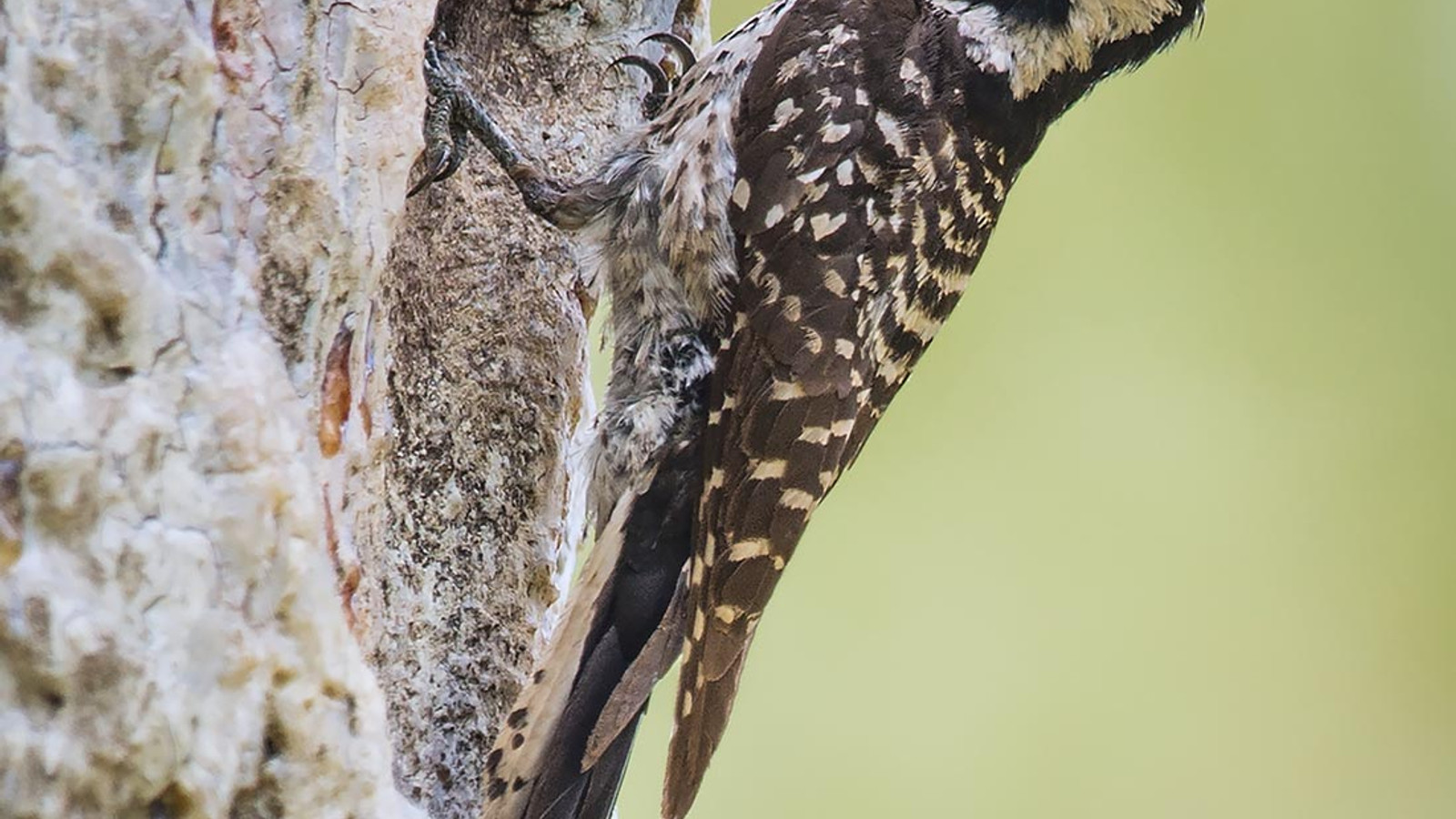
Small black-and-white woodpecker with bold white cheek patches, a black cap, and a barred back. The tiny red cockade on adult males is usually difficult to see.