
Red-Jointed Fiddler Crab
Minuca minax
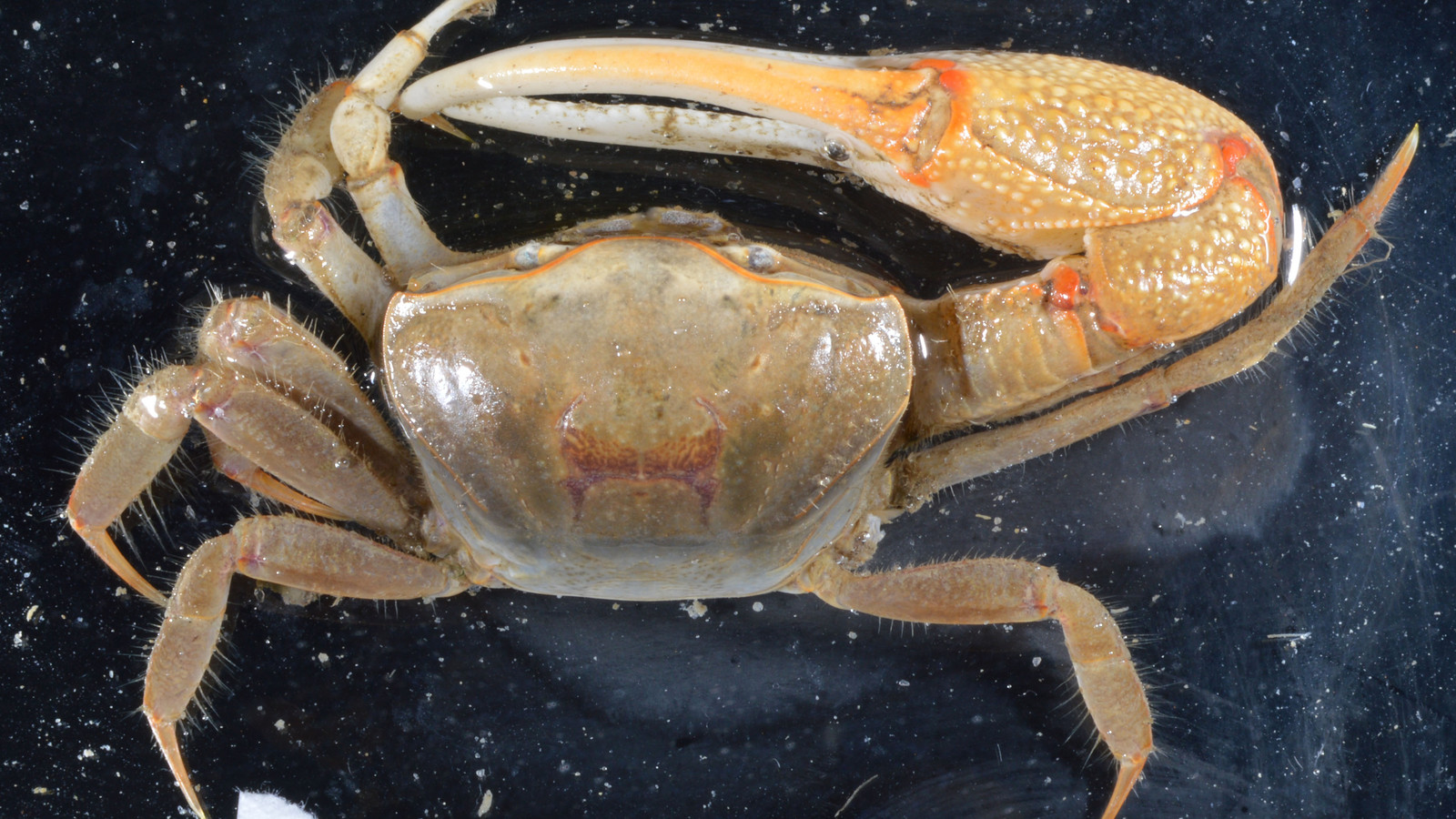
A burrowing salt-marsh crab whose males wave one oversized claw while feeding across muddy Florida shoreline edges.
Red-Jointed Fiddler Crabs live along brackish marshes, muddy estuary banks, and tidal creeks. Their burrows provide refuge from predators, heat, and high tide.
Colonies process surface sediment while feeding on organic particles. This constant digging and sifting helps aerate marsh soil and recycle nutrients.
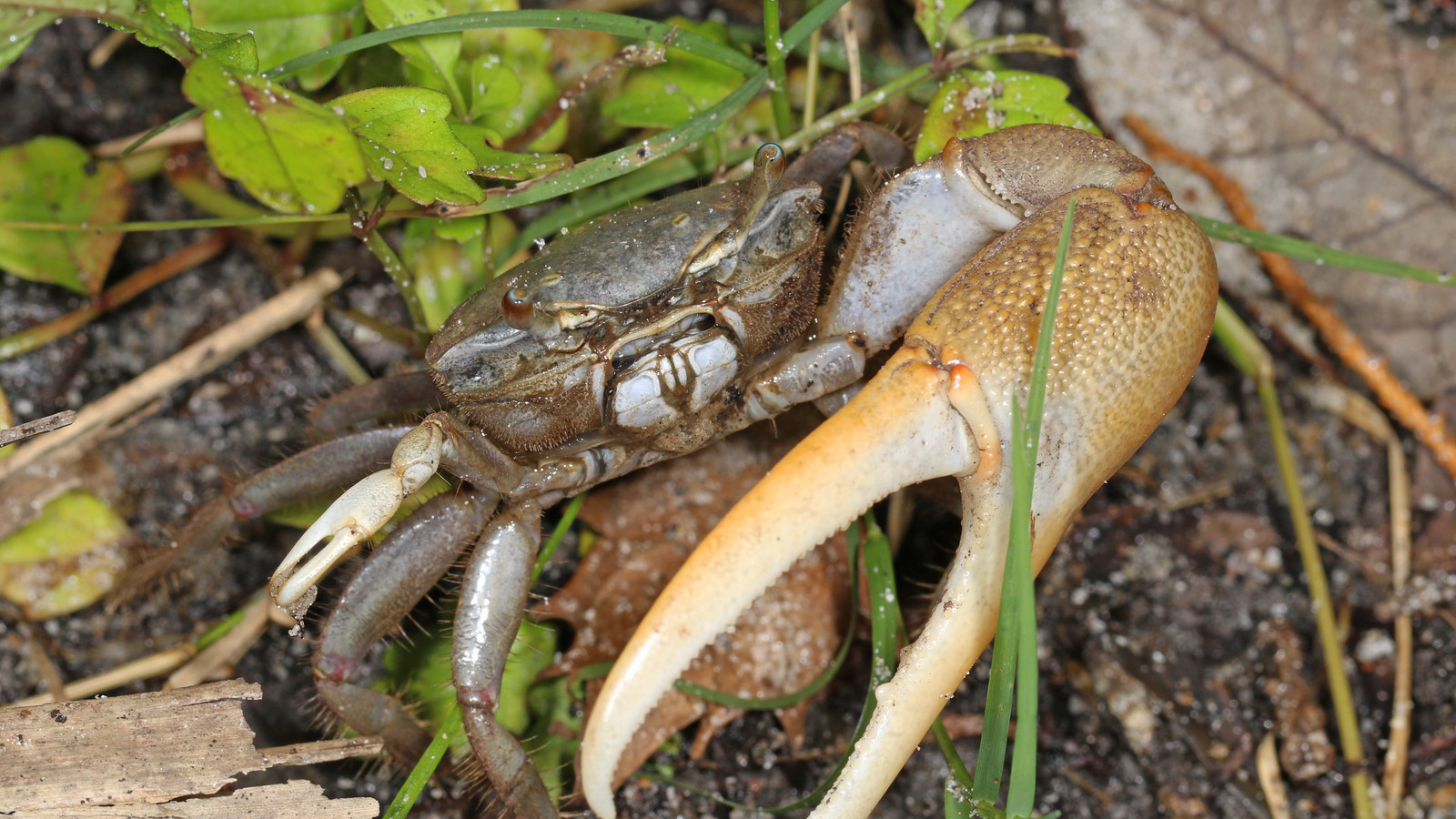
Habitat:
Estuaries and Bays, Mangroves and Salt Marshes
Area / Range:
Atlantic Coast, Gulf Coast
Diet:
Sifts algae, bacteria, detritus, and other organic particles from moist surface sediment.
Behavior:
Lives in colonies and retreats quickly into burrows. Males wave the enlarged claw during courtship and territorial displays while feeding with the smaller claw.
Daytime, Dawn and Dusk
Active Times:
Best time to see:
Warm daylight hours during low tide on exposed muddy banks and high salt-marsh edges.
Florida Native Status:
Native
Conservation Status:
Not federally or state listed; local colonies depend on intact tidal marshes, natural hydrology, and clean estuarine sediment.
Safety Level:
Low
Safety Information:
Harmless when observed. Do not grab the enlarged claw, dig out burrows, or walk repeatedly through dense colonies.
Benefits to Property:
Aerates tidal soil, recycles organic matter, and provides food for fish, birds, raccoons, and other marsh wildlife.
Property Concerns:
Burrows occur in naturally muddy tidal ground and do not damage normal upland structures. Shoreline hardening can eliminate colonies.
Fun Fact:
- A male feeds with only the smaller claw.
- Claw waving communicates during courtship and rivalry.
- Burrows help marsh sediment exchange oxygen and nutrients.
Wildlife Laws:
Collection and use may fall under Florida fishing, bait, protected-area, and local regulations. Never remove animals from parks or refuges where collection is prohibited.
Identification:
Small brown to olive fiddler crab with reddish joints. Adult males carry one greatly enlarged claw, while females have two smaller feeding claws.