
Red-Shouldered Hawk
Buteo lineatus
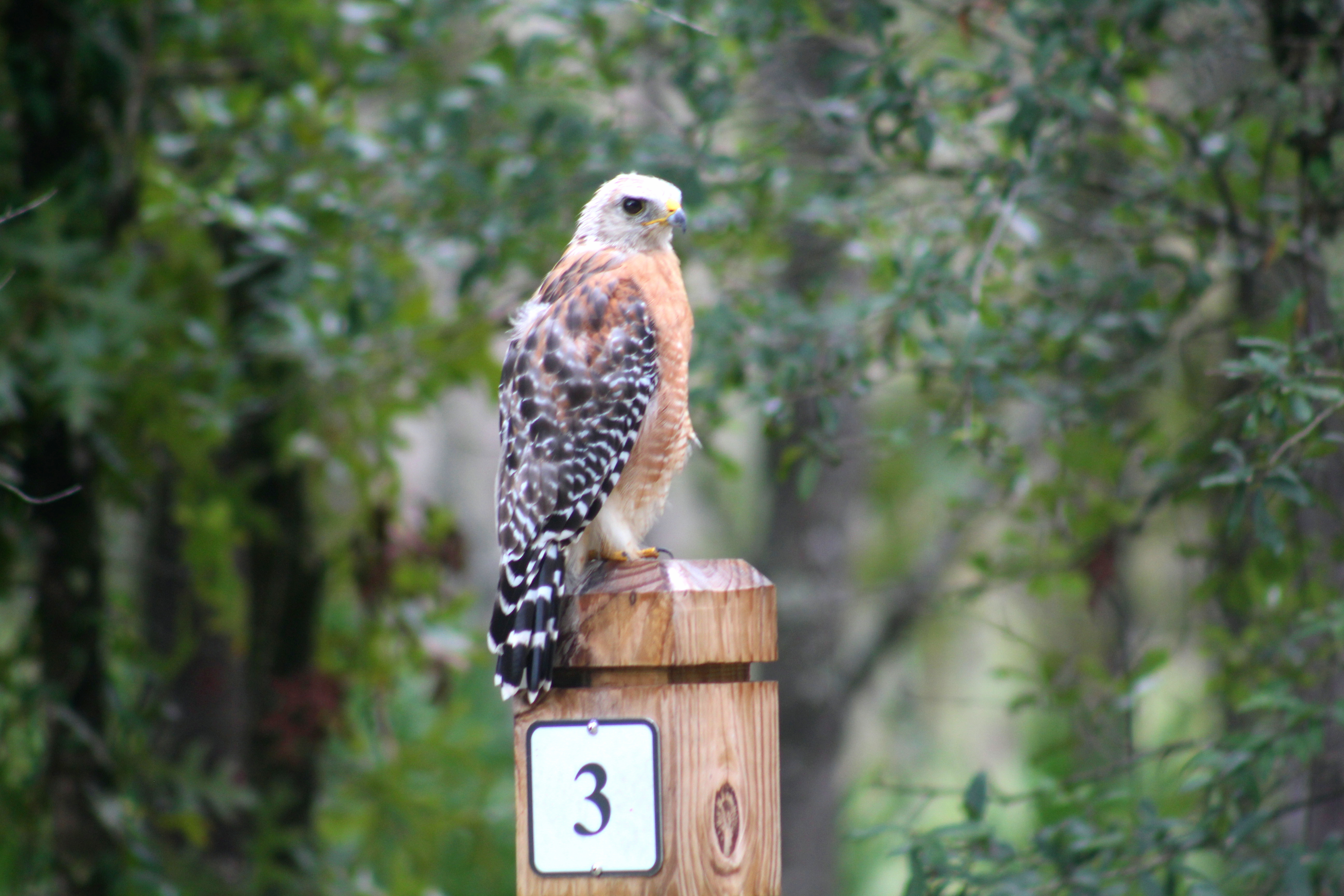
Red-Shouldered Hawks thrive near Florida wetlands and wooded neighborhoods.
Red-Shouldered Hawks thrive near Florida wetlands and wooded neighborhoods. Give nests and fledglings space. Keep small pets supervised and avoid trimming active nest trees. Protected under the Migratory Bird Treaty Act. Active nests, eggs, young, and adults must not be harmed.
Habitat:
Freshwater Wetlands, Forests and Woodlands, Urban and Residential Areas
Area / Range:
Statewide
Diet:
Snakes, frogs, lizards, rodents, crayfish, and small birds.
Behavior:
Perches quietly before dropping onto prey. Pairs call loudly and defend nesting territories.
Day, Dawn, Dusk
Active Times:
Best time to see:
Observe from a respectful distance in suitable Florida habitat.
Florida Native Status:
Native
Conservation Status:
Protected migratory bird
Safety Level:
Harmless. Respect Active Nests
Safety Information:
Give nests and fledglings space. Keep small pets supervised and avoid trimming active nest trees.
Benefits to Property:
Controls rodents, snakes, frogs, and other small animals.
Property Concerns:
Nesting adults sometimes dive near people or pets that approach fledglings.
Fun Fact:
Red-Shouldered Hawks thrive near Florida wetlands and wooded neighborhoods.
Wildlife Laws:
Protected under the Migratory Bird Treaty Act. Active nests, eggs, young, and adults must not be harmed.
Identification:
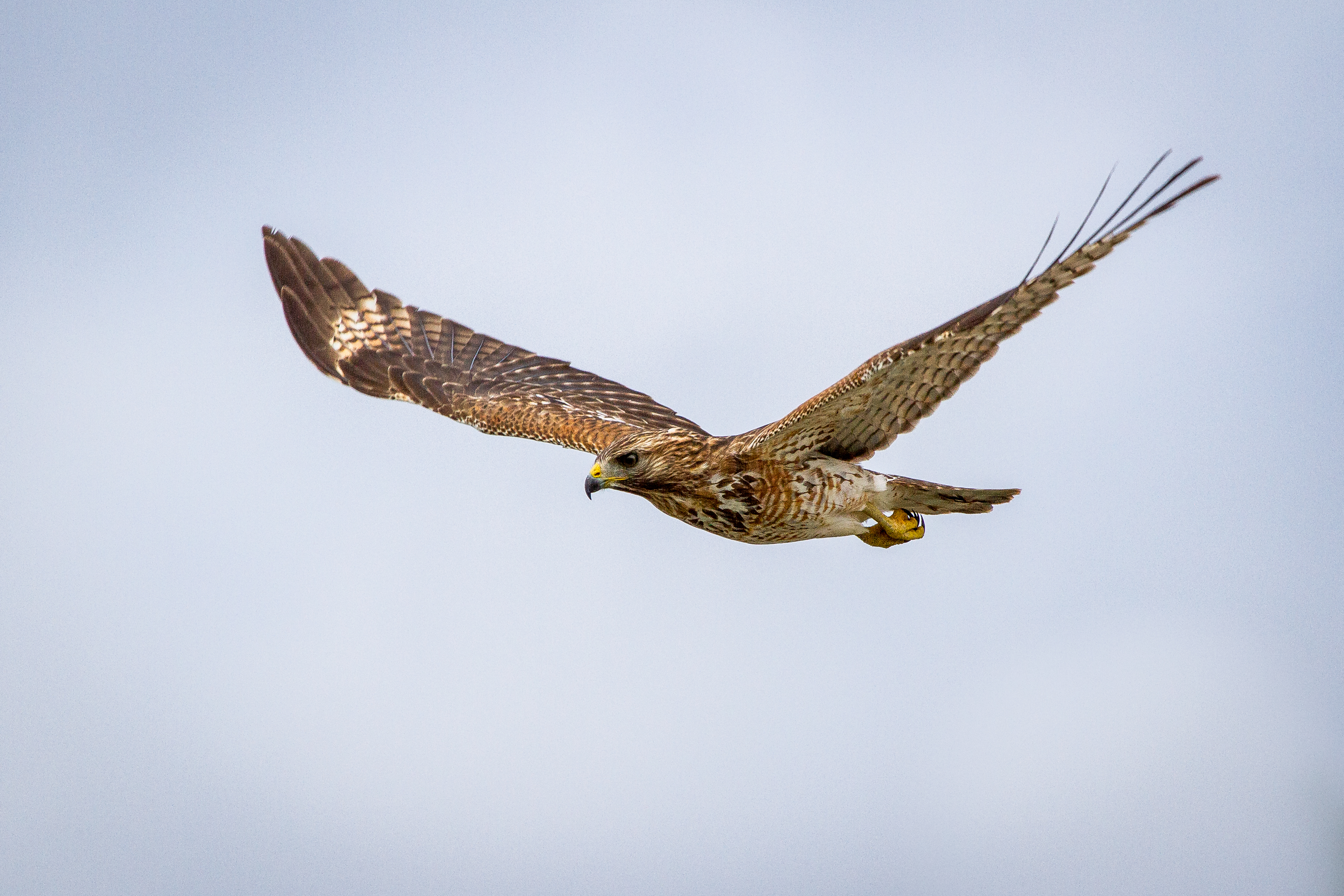
Medium hawk with reddish shoulders and chest, barred wings, and a banded tail.
Credits:
Facts: wildlife reference. Images: Wikimedia Commons.