
Royal Tern
Thalasseus maximus
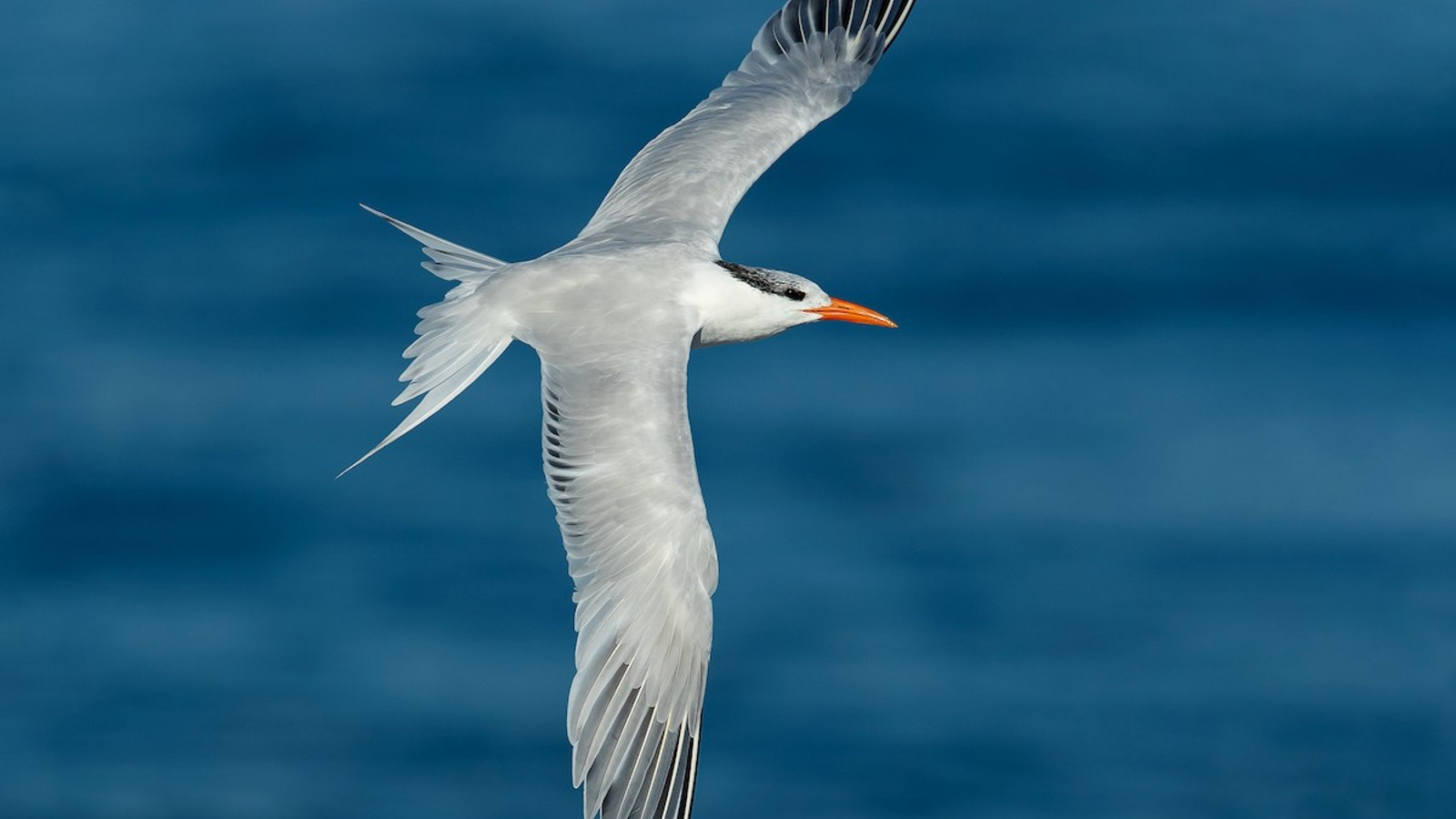
A large coastal tern recognized by its long orange bill, pale gray wings, and shaggy black crest.
Royal Terns gather on Florida beaches, sandbars, inlets, and nearshore waters throughout the year. Their streamlined bodies and long wings suit repeated flights over surf and bays.
They nest in dense coastal colonies and rest in groups above the high-tide line. Giving flocks room reduces wasted energy and protects eggs and chicks.
Habitat:
Coastal Waters, Beaches and Dunes, Estuaries and Bays
Area / Range:
Atlantic Coast, Gulf Coast
Diet:
Feeds mainly on small fish, shrimp, squid, and other marine animals captured by plunging into shallow coastal water.
Behavior:
Flies with steady wingbeats, hovers briefly, and plunge-dives after prey. Large flocks rest close together on open sandbars and beaches.
Daytime
Active Times:
Best time to see:
Year-round on beaches and near inlets, especially around falling tides and active baitfish.
Florida Native Status:
Native
Conservation Status:
IUCN Least Concern; nesting colonies remain vulnerable to disturbance, storms, and coastal change.
Safety Level:
Low
Safety Information:
Never walk through resting flocks or approach nesting colonies. Keep pets leashed and give agitated adults a wide buffer.
Benefits to Property:
Signals productive coastal waters and contributes to the ecological value of beach and bayfront landscapes.
Property Concerns:
Large resting flocks may leave droppings on docks or seawalls. Feeding concentrates birds and worsens conflicts.
Fun Fact:
- Royal Terns often carry fish crosswise in the bill.
- Parents and chicks recognize one another by voice.
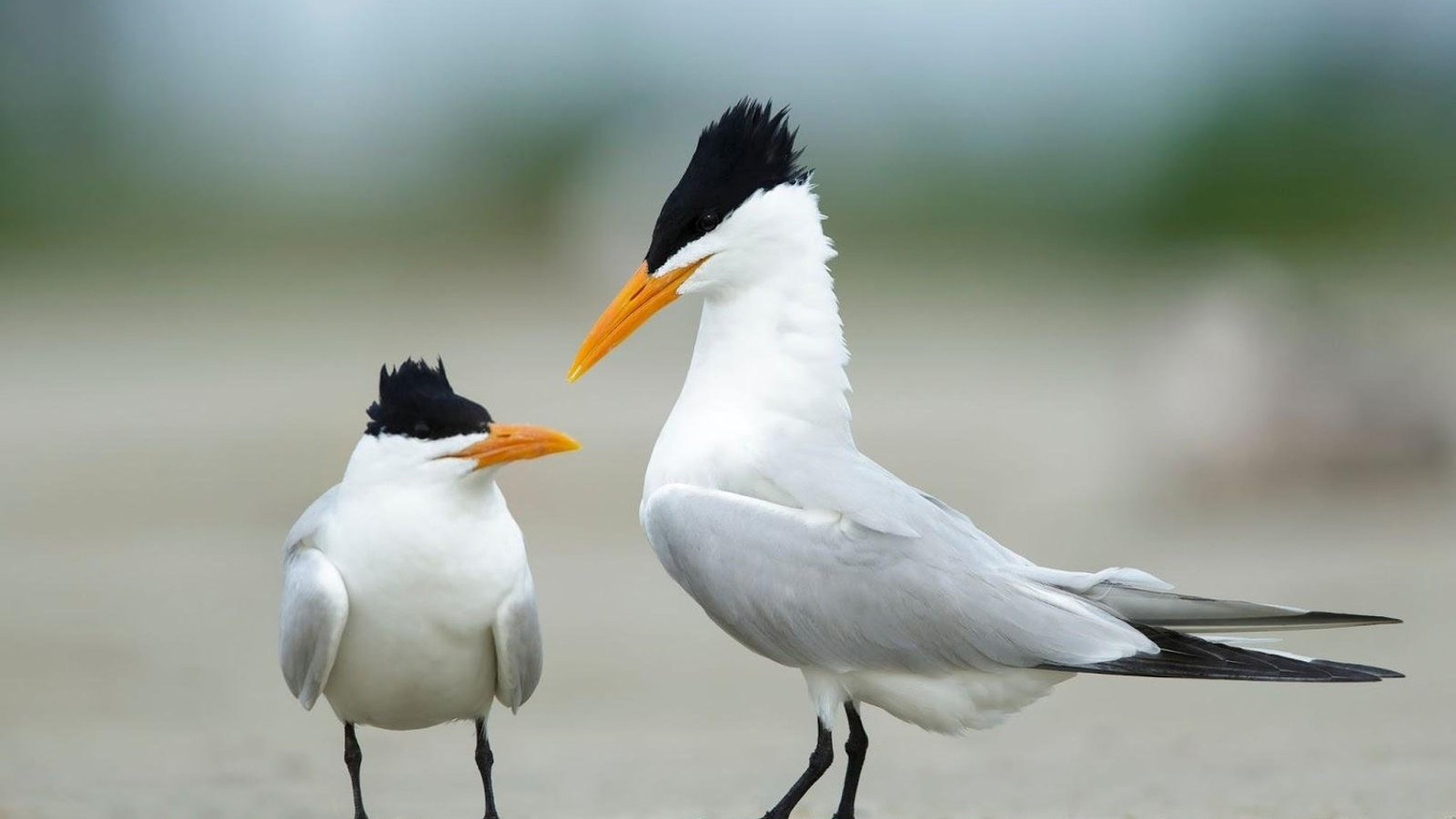
- The black cap becomes a shaggy rear crest outside breeding season.
Wildlife Laws:
Protected under the Migratory Bird Treaty Act. Active colonies, nests, eggs, and chicks must not be disturbed or removed.
Identification:
Large tern with a bright orange bill, black legs, white body, pale gray upperwings, and a black cap or shaggy rear crest.