
Royal Walnut Moth
Citheronia regalis
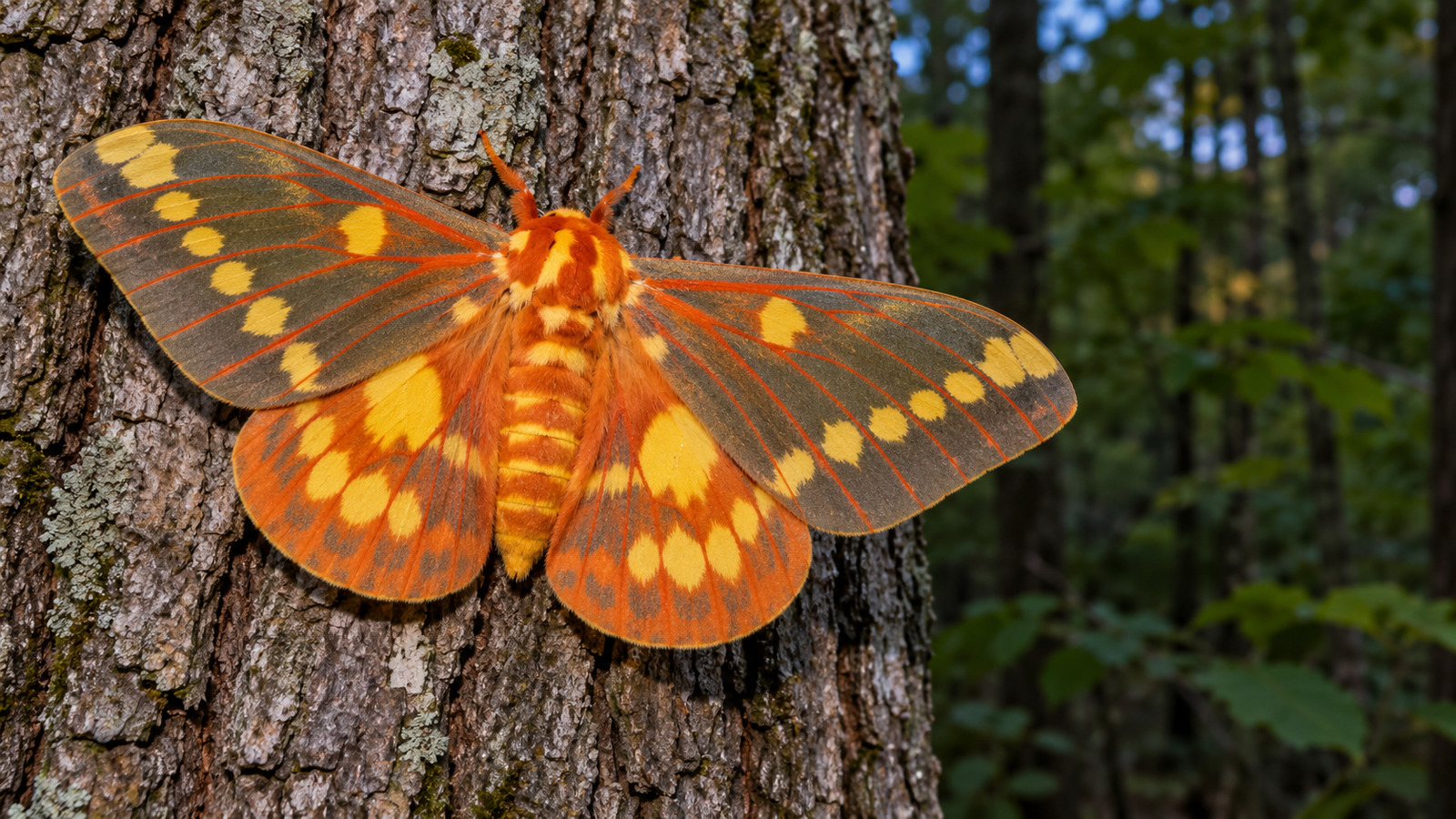
The Royal Walnut Moth is one of Florida's largest native moths, and its dramatic but harmless caterpillar is known as the hickory horned devil.
The Royal Walnut Moth, also called the Regal Moth, is a large native silk moth found in deciduous woodland from northern Florida into central Florida. Adults have gray-green forewings traced with orange veins, orange hindwings, yellow spots, and a thick orange body.
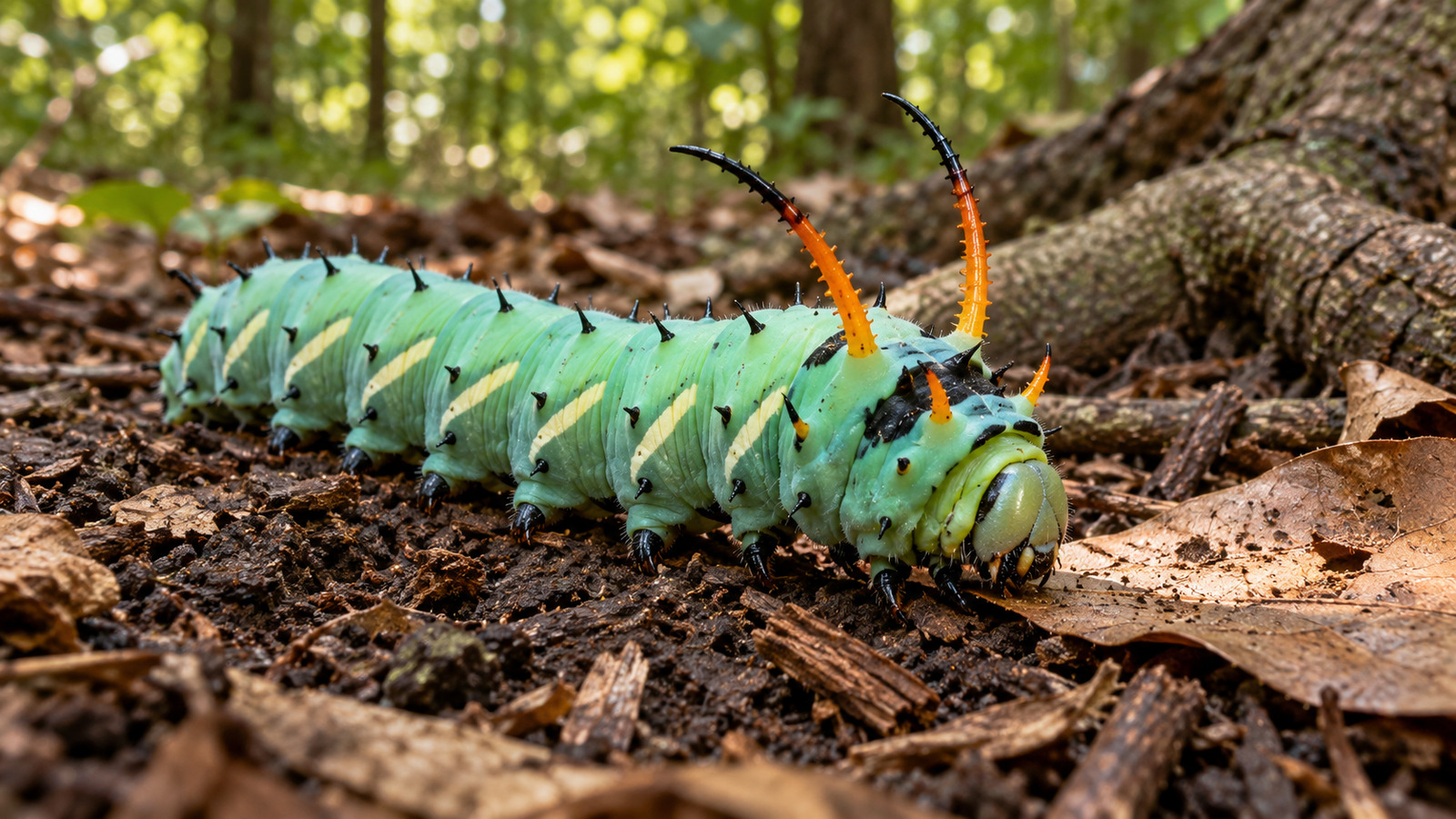
Its caterpillar, the hickory horned devil, can grow longer than a person's finger and carries long orange and black-tipped projections. Despite its fierce appearance, the larva does not sting and is harmless.
Habitat:
Forests and Woodlands, Urban and Residential Areas
Area / Range:
North Florida, Central Florida
Diet:
Caterpillars feed on leaves of hickory, pecan, walnut, persimmon, sweetgum, and sumac. Adults have vestigial mouthparts and do not feed.
Behavior:
Adults are nocturnal and may visit lights during late spring and summer. Females lay eggs on host trees. Mature caterpillars descend to the ground, burrow into soft soil, and spend winter as pupae.
Night
Active Times:
Best time to see:
Watch for adults near lights on warm summer nights. Mature caterpillars are most often seen crossing the ground in late July and August while searching for soft soil.
Florida Native Status:
Native
Conservation Status:
Native and not federally or state listed in Florida. It remains more common in the southern part of its range but has declined in portions of the Northeast.
Safety Level:
Harmless. Does Not Sting
Safety Information:
The dramatic horns and spines of the hickory horned devil are harmless and do not sting. If a caterpillar is stranded on pavement, gently guide it toward soft soil or mulch without squeezing it.
Benefits to Property:
Supports native woodland food webs as prey for birds and other animals. Its caterpillars connect mature host trees with a diverse community of predators and parasitoids.
Property Concerns:
Caterpillars eat tree leaves but are solitary and rarely cause meaningful damage to established landscape trees. Adults do not feed and do not damage property.
Fun Fact:
Adults live on energy stored during the caterpillar stage because their mouthparts are vestigial. Some pupae can remain underground through more than one winter before emerging.
Wildlife Laws:
The Royal Walnut Moth has no special federal or Florida protected status. Avoid unnecessary pesticide use, and never collect wildlife from parks or protected lands without permission.
Identification:
Adult moths have a wingspan of roughly 3.75 to 6 inches. Look for gray to gray-green forewings with orange veins and rows of yellow spots, orange hindwings with yellow patches, and an orange body marked with narrow yellow bands.
The mature caterpillar is blue-green, 5 to 5.5 inches long, with long orange and black-tipped horns behind the head, smaller black spines along the body, and pale diagonal side stripes.