
Six-Spotted Fishing Spider
Dolomedes triton

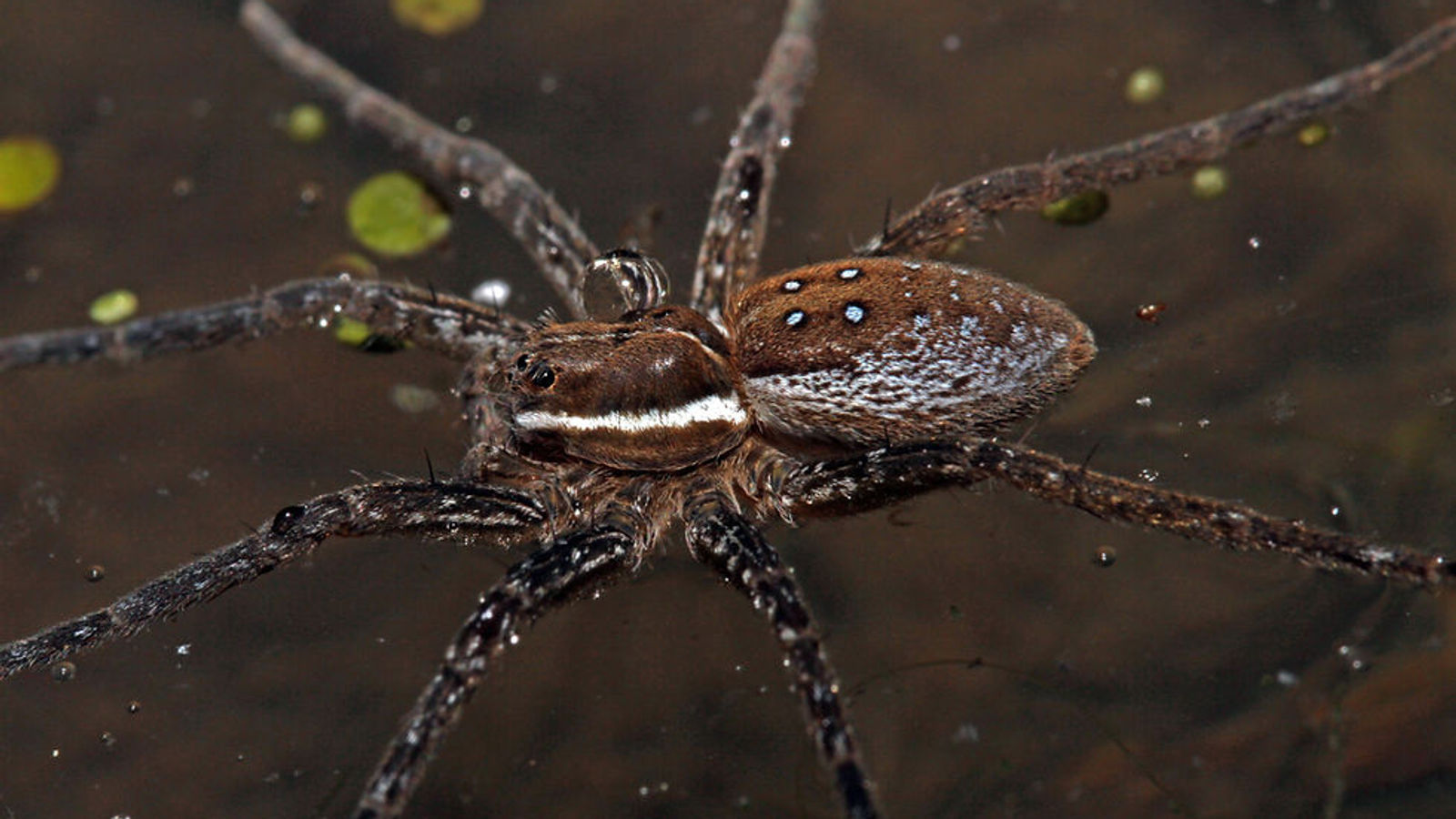
The Six-Spotted Fishing Spider is a large semi-aquatic Florida spider that runs across water and hunts insects, tadpoles, and small aquatic prey.
Six-Spotted Fishing Spiders live along Florida ponds, streams, marshes, canals, and other freshwater edges. They often rest on vegetation, docks, or debris beside water.
Despite their size, they avoid people and play a useful predatory role in wetland food webs.
Habitat:
Freshwater Wetlands, Lakes and Ponds, Rivers and Springs, Canals and Ditches
Area / Range:
Statewide
Diet:
They eat aquatic insects, terrestrial insects near water, tadpoles, and occasionally very small fish.
Behavior:
Fishing spiders sense ripples through their legs, run across the surface, and dive underwater when hunting or escaping danger.
Day, Night, Dawn, Dusk
Active Times:
Best time to see:
Along calm freshwater edges, lily pads, docks, vegetation, and floating debris during warm weather.
Florida Native Status:
Native
Conservation Status:
Widespread native spider associated with healthy freshwater habitat and vegetated shorelines.
Safety Level:
Harmless if Left Alone
Safety Information:
Do not handle or corner the spider. Give it an open route back toward cover or water. Bites are uncommon and usually occur only during handling.
Benefits to Property:
They consume many insects near ponds and provide food for fish, frogs, birds, and other predators.
Property Concerns:
They occasionally appear on docks, pool edges, boats, or outdoor structures near water but cause no structural damage.
Fun Fact:
Fine hairs trap air around the body, allowing the spider to remain underwater for extended periods.
Wildlife Laws:
Use humane relocation when necessary and follow protected-area collection rules. Avoid pesticide applications that enter waterways.
Identification:
This long-legged brown or gray spider has pale stripes along the body and small white spots on the abdomen. Six dark spots occur underneath the cephalothorax.
Credits:
Facts and images: Everglades Foundation and Wikimedia Commons.