
Southeastern American Kestrel
Falco sparverius paulus
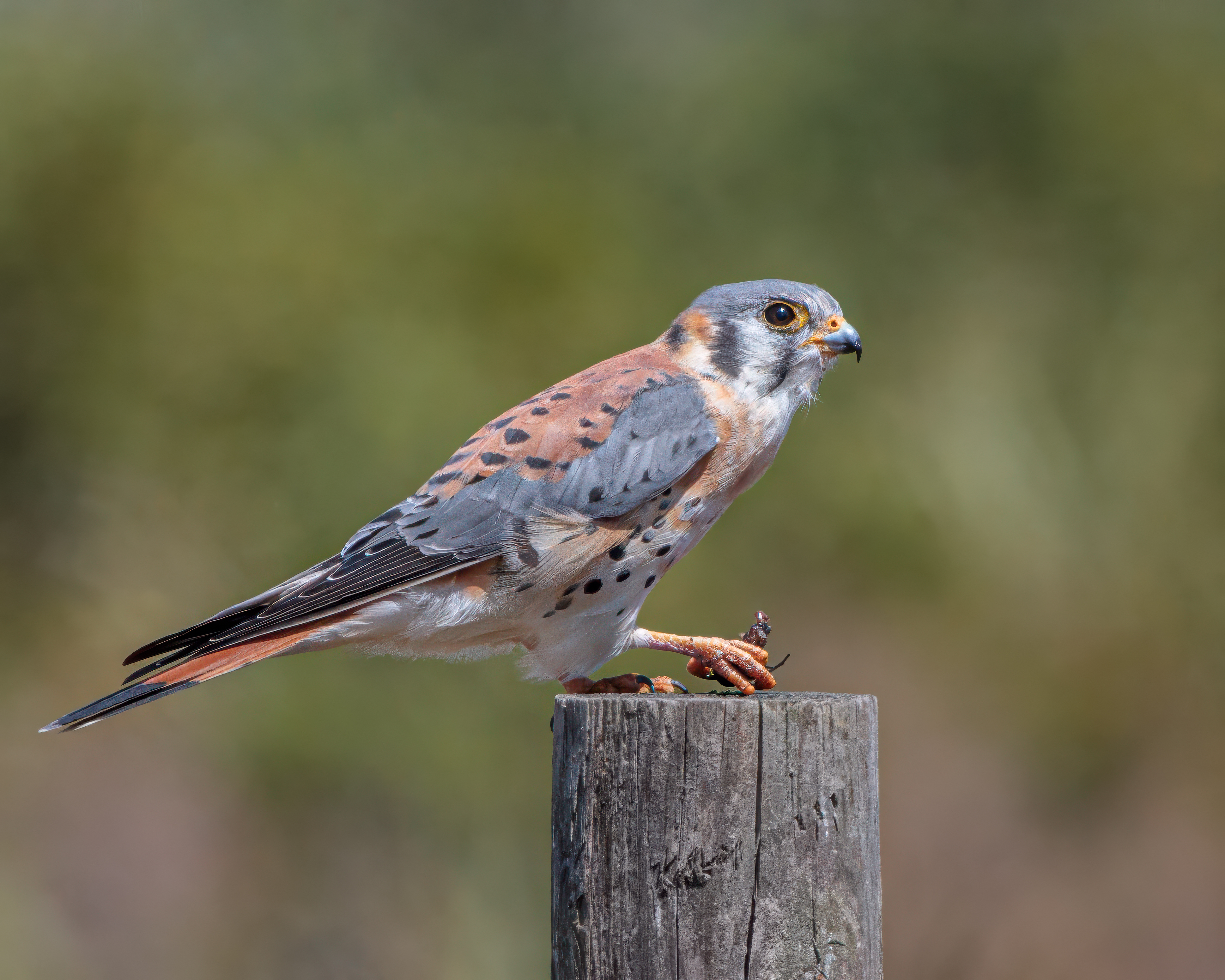
The Southeastern American Kestrel is one of the smallest falcons in North America.
The Southeastern American Kestrel is one of the smallest falcons in North America. Avoid trimming or removing active cavity trees. Keep distance from nest boxes and fledglings. Protected by Florida law and the Migratory Bird Treaty Act. Adults, eggs, young, and active nests must not be harmed.
Habitat:
Pine Flatwoods and Sandhills, Grasslands and Agricultural Areas, Urban and Residential Areas
Area / Range:
North Florida, Central Florida
Diet:
Grasshoppers, beetles, lizards, mice, frogs, and small birds.
Behavior:
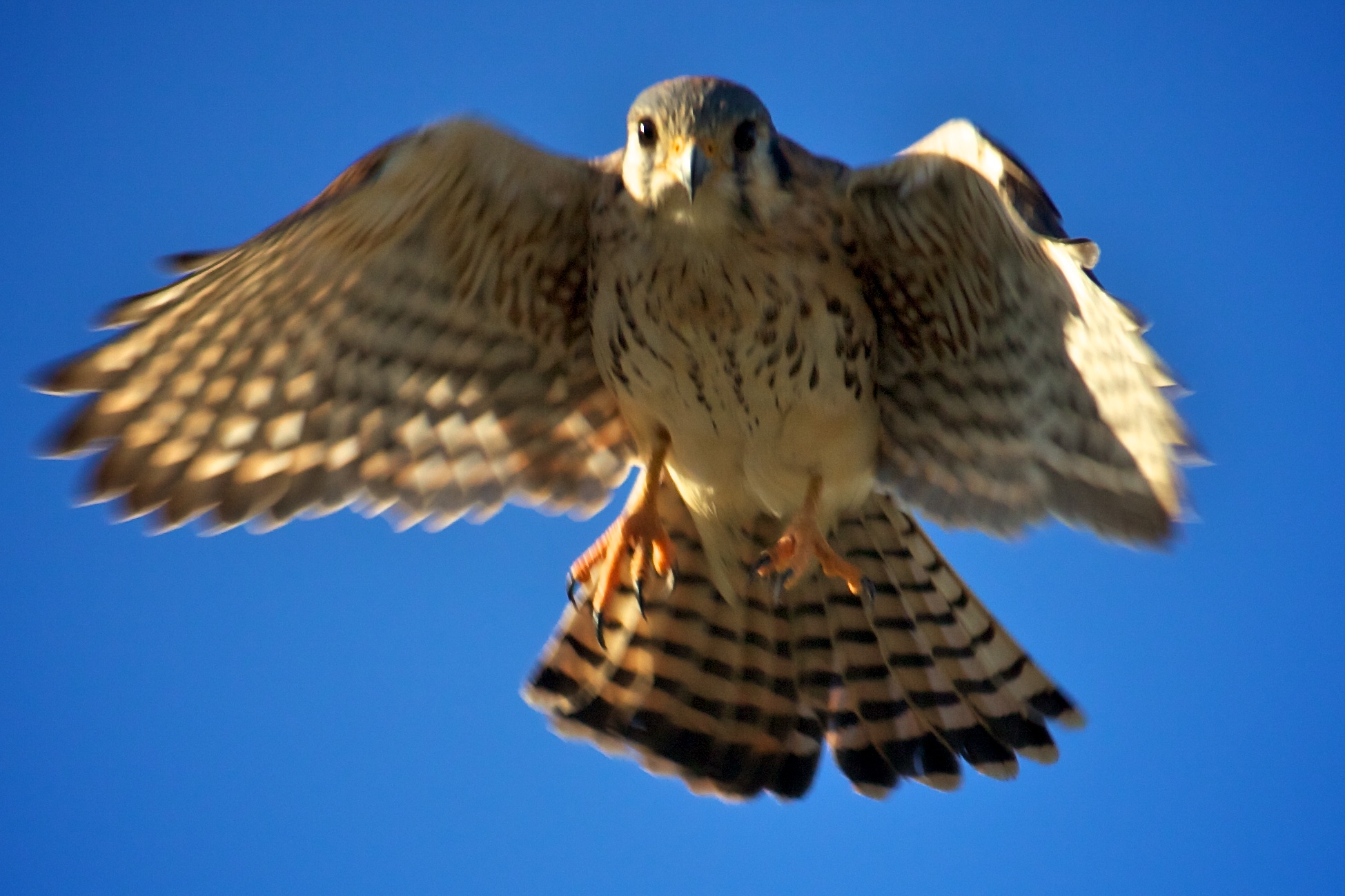
Perches on wires or dead trees and hovers over open ground before diving on prey.
Day
Active Times:
Best time to see:
Observe from a respectful distance in suitable Florida habitat.
Florida Native Status:
Native
Conservation Status:
State-designated threatened
Safety Level:
Protected. Respect Nest Cavities
Safety Information:
Avoid trimming or removing active cavity trees. Keep distance from nest boxes and fledglings.
Benefits to Property:
Controls insects, rodents, and small reptiles in open landscapes.
Property Concerns:
Loss of nesting cavities, removal of dead trees, pesticides, and nest disturbance threaten populations.
Fun Fact:
The Southeastern American Kestrel is one of the smallest falcons in North America.
Wildlife Laws:
Protected by Florida law and the Migratory Bird Treaty Act. Adults, eggs, young, and active nests must not be harmed.
Identification:
Small falcon with pointed wings, two dark facial marks, a rusty back, and blue-gray wings on males.
Credits:
Facts: wildlife reference. Images: Wikimedia Commons.