
Spring Peeper
Pseudacris crucifer
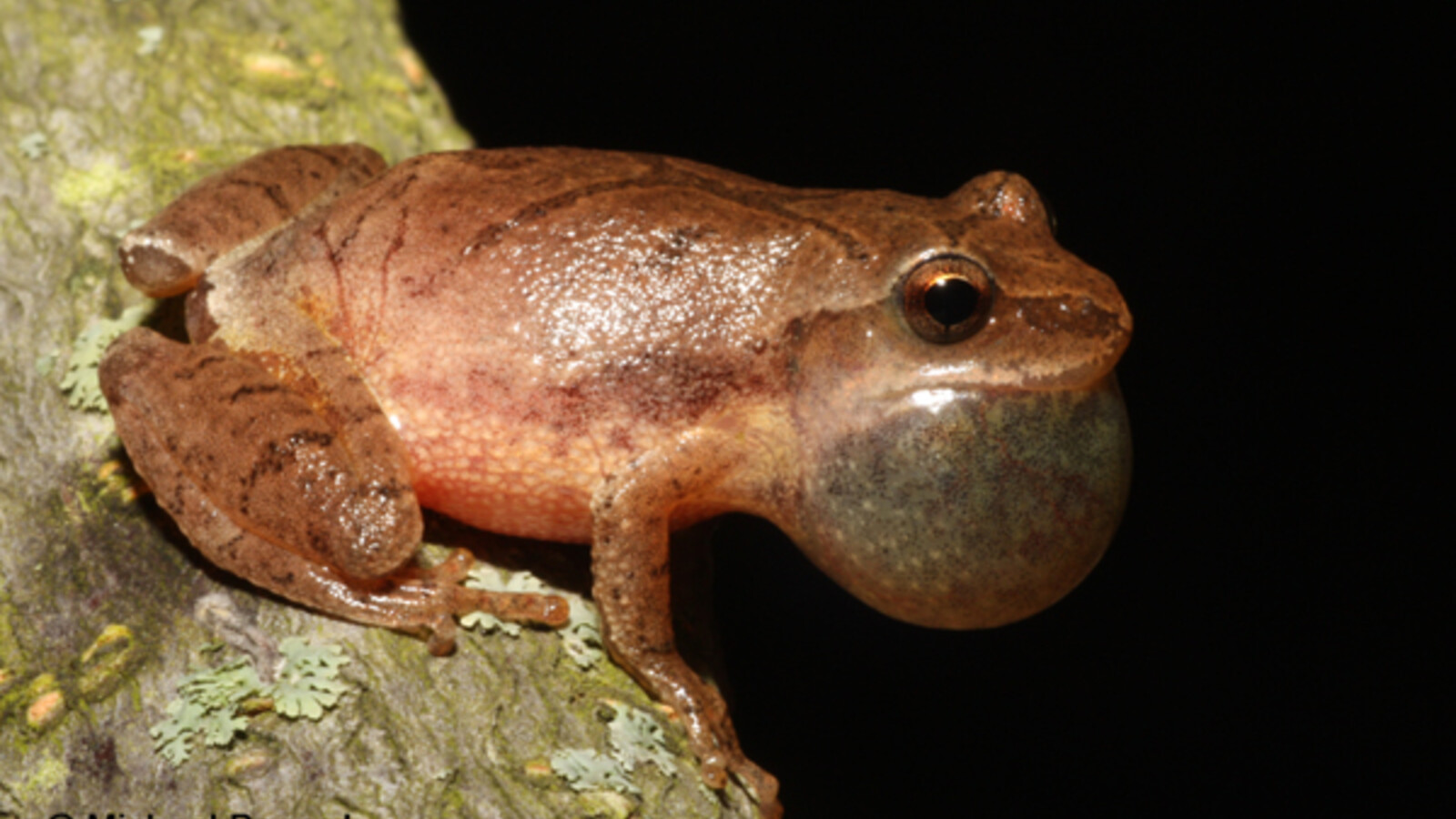
The Spring Peeper is a tiny treefrog whose piercing calls rise from wooded wetlands during Florida’s cool breeding season.
Spring Peepers live around forested wetlands, shallow ponds, ditches, and temporary pools in northern Florida.
Males gather after dark and produce clear peeps that carry a surprising distance.
Habitat:
Freshwater Wetlands, Lakes and Ponds, Canals and Ditches, Forests and Woodlands
Area / Range:
Florida Panhandle, North Florida
Diet:
Tiny flies, beetles, ants, spiders, and other small invertebrates. Tadpoles graze algae and organic material.
Behavior:
Adults climb low plants and hide in leaf litter. Males call at night from pond edges and floating vegetation.
Night, Dusk
Active Times:
Best time to see:
Cool rainy evenings from late fall through early spring near shallow wooded ponds.
Florida Native Status:
Native
Conservation Status:
Widespread and locally secure where clean seasonal wetlands remain.
Safety Level:
Low Risk
Safety Information:
Observe without touching because lotions, repellent, and skin oils harm amphibian skin.
Benefits to Property:
They eat small insects and signal a healthy connection between forest cover and wetlands.
Property Concerns:
No property damage. Draining temporary pools and broad pesticide use reduce populations.
Fun Fact:
A large chorus sounds like sleigh bells, though each male produces one sharp peep at a time.
Wildlife Laws:
Leave native frogs, eggs, and tadpoles in place. Collection and movement between wetlands remain subject to Florida rules.
Identification:
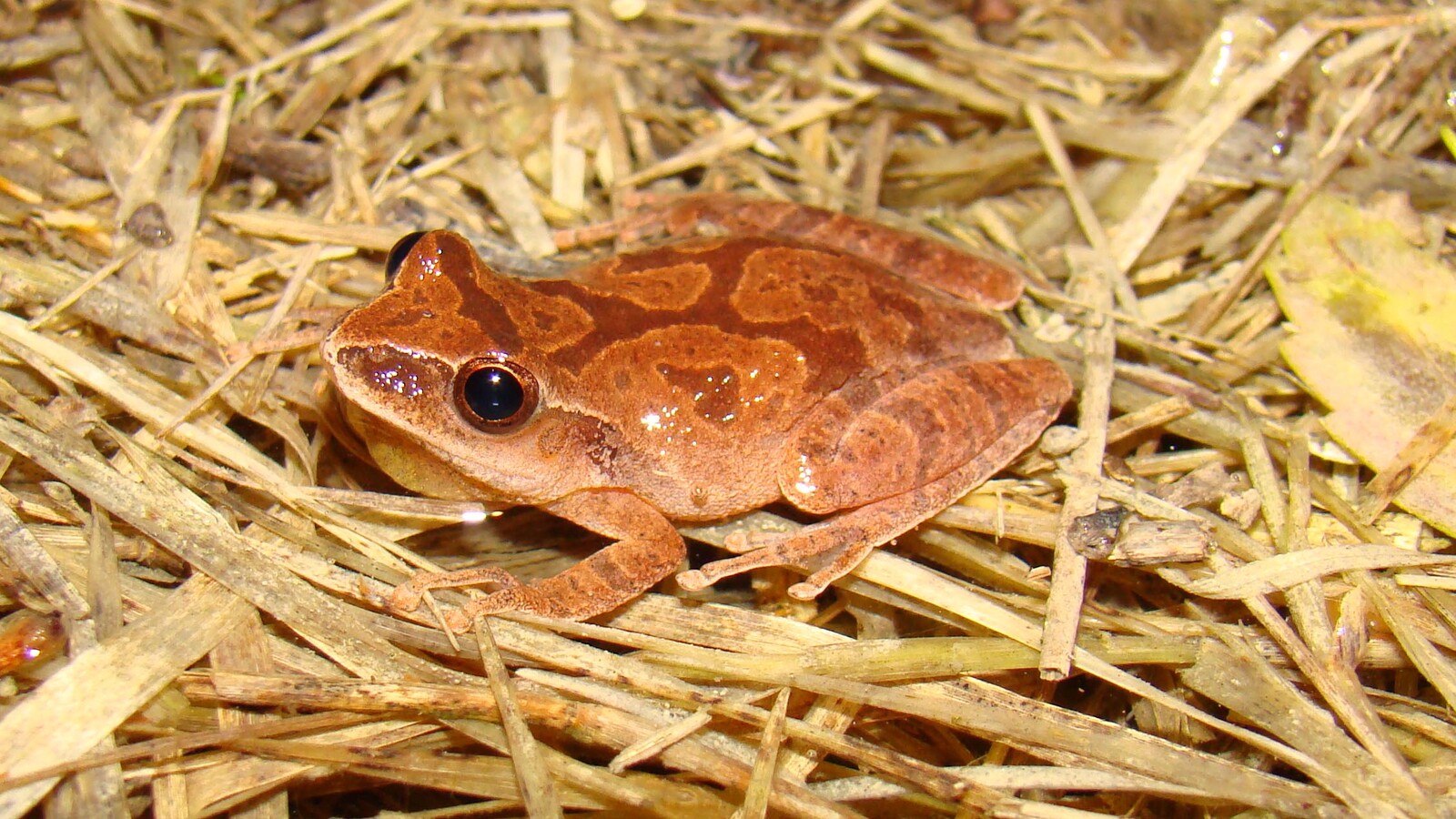
A small tan, brown, gray, or reddish frog with a dark X across the back and a stripe through each eye.
Credits:
Facts: Florida Museum. Images: calling male and forest floor.