
Suwannee Cooter
Pseudemys concinna suwanniensis
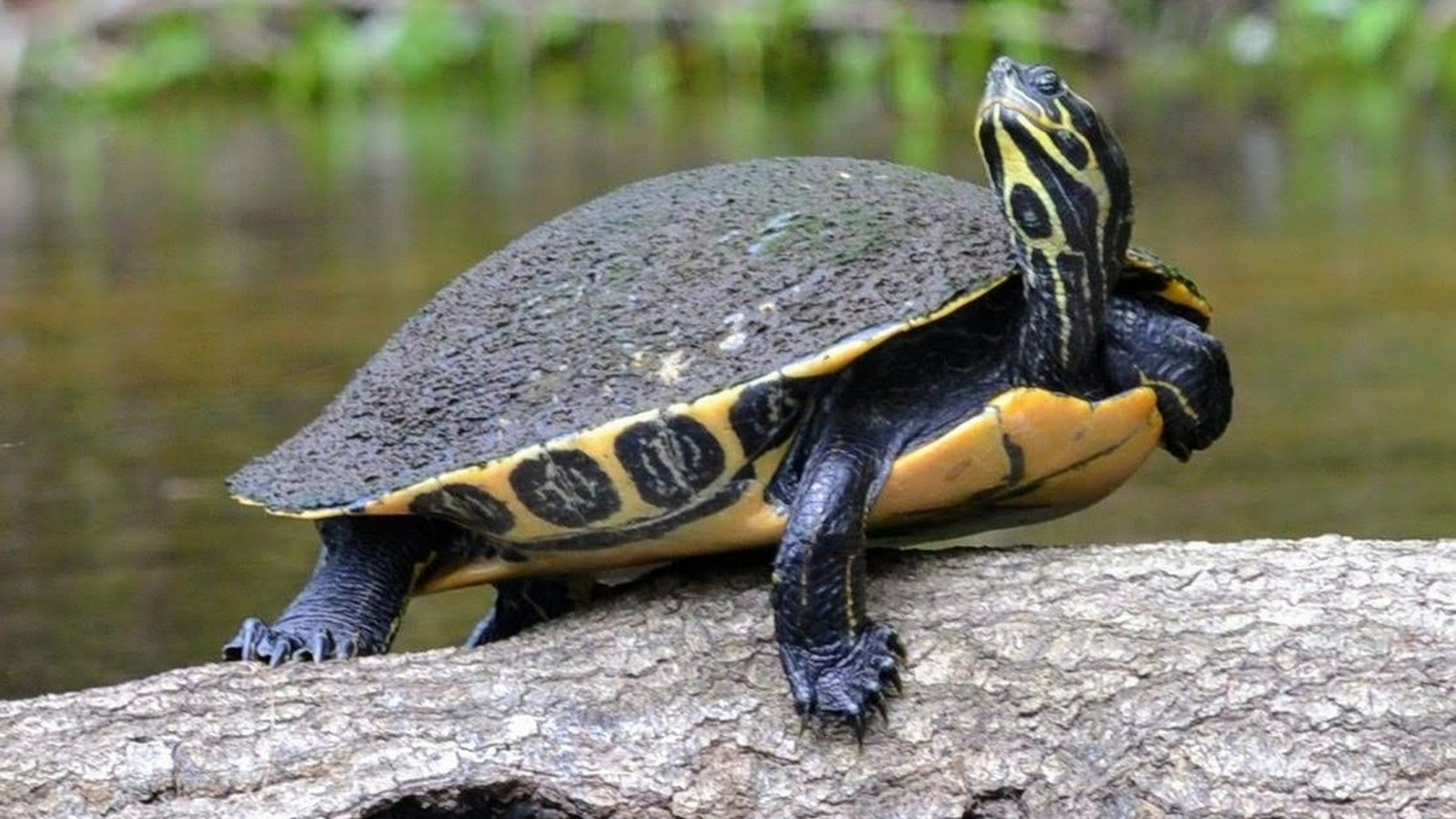
A large Florida river turtle with bright yellow striping and a range centered on Gulf-draining waterways.
The Suwannee Cooter is associated with northwestern Florida rivers, springs, and connected lakes. Adults bask on exposed logs and feed heavily on aquatic vegetation.
Clean flowing water, submerged plants, basking sites, and protected nesting areas support this localized turtle. Road crossings and shoreline alteration place females at risk.
Habitat:
Rivers and Springs, Lakes and Ponds
Area / Range:
North Florida, Gulf Coast
Diet:
Adults eat mostly aquatic plants and algae. Younger turtles include more snails, insects, crustaceans, and other small animals.
Behavior:
Basks communally on logs and rocks, dives rapidly when approached, and feeds in clear or tannin-stained river systems.
Daytime
Active Times:
Best time to see:
Sunny days from spring through fall on logs and exposed banks along northwestern Florida rivers.
Florida Native Status:
Native Florida subspecies
Conservation Status:
Not federally listed; localized populations depend on healthy connected river systems and secure nesting habitat.
Safety Level:
Low
Safety Information:
Do not handle or remove basking turtles. Help a road-crossing turtle only when safe and move it in its original direction.
Benefits to Property:
Grazes aquatic plants and algae, recycles nutrients, and contributes to healthy river and spring ecosystems.
Property Concerns:
Rarely damages property. Shoreline walls, boat traffic, fishing line, and loss of basking logs threaten the turtle.
Fun Fact:
- Females grow much larger than males.
- Algae often covers older shells.
- The subspecies is tied to Gulf-draining rivers.
Wildlife Laws:
Collection, possession, sale, and transport of native freshwater turtles are regulated by FWC. Follow current rules.
Identification:
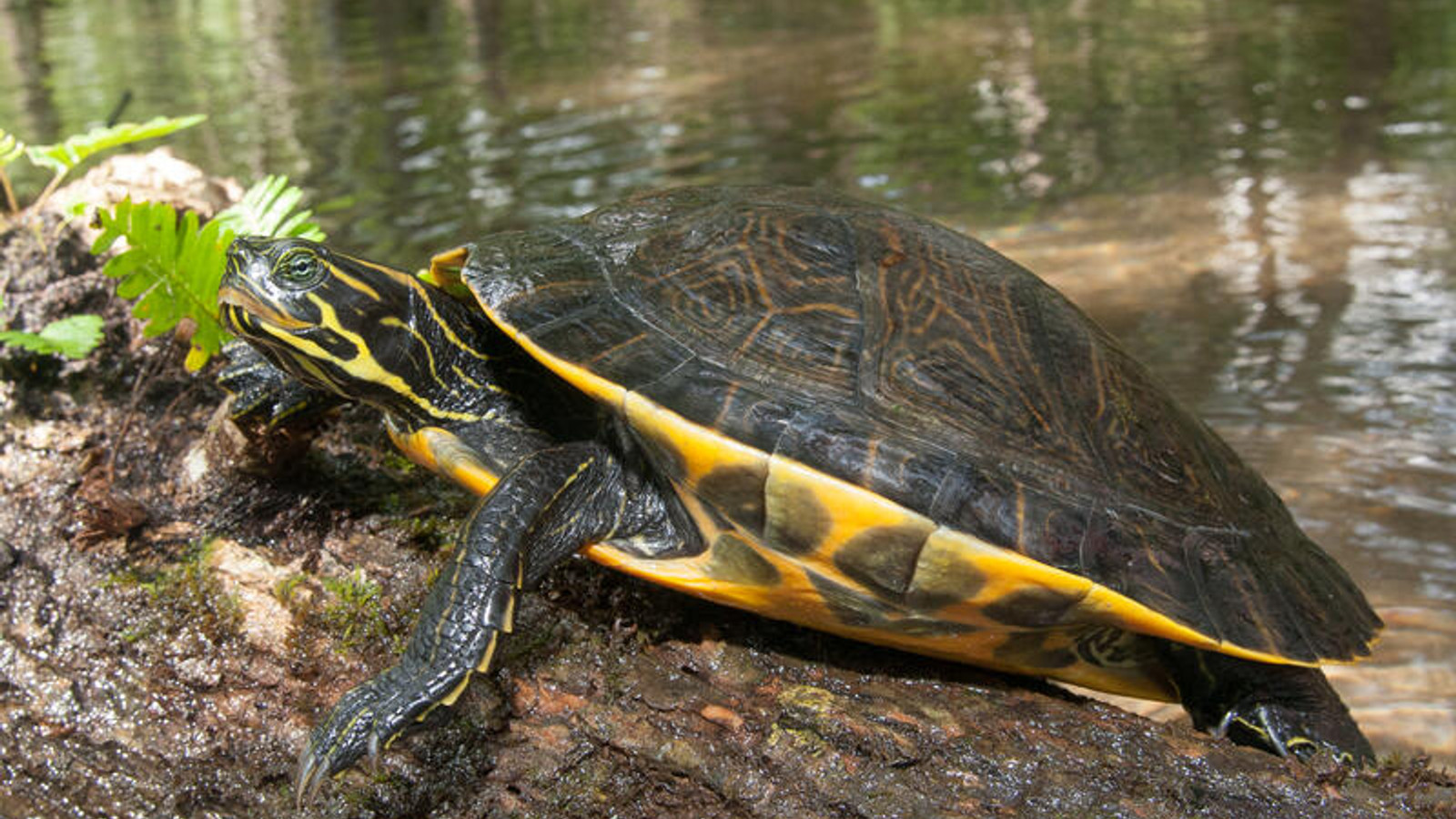
Large dark-shelled turtle with yellow markings on the head, neck, and legs. The broad shell may carry algae, and the plastron is yellow to orange.