
Swallow-Tailed Kite
Elanoides forficatus
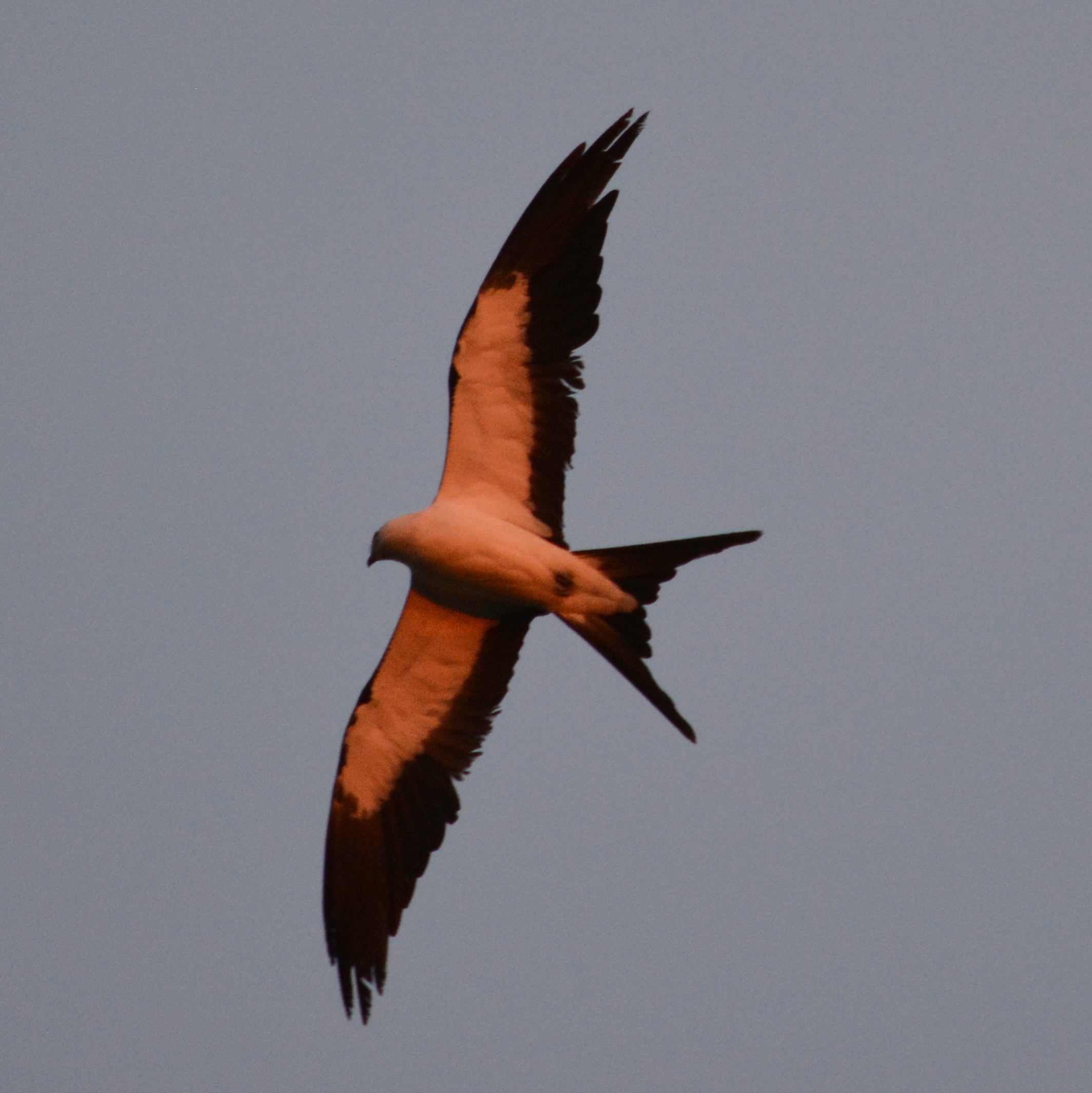
Its deeply forked tail allows precise turns while hunting through the air.
Its deeply forked tail allows precise turns while hunting through the air. Watch from a distance and avoid tree work near active nests during the breeding season. Protected under the Migratory Bird Treaty Act. Birds, eggs, young, and active nests must not be harmed.
Habitat:
Freshwater Wetlands, Rivers and Springs, Pine Flatwoods and Sandhills, Forests and Woodlands
Area / Range:
North Florida, Central Florida, South Florida
Diet:
Insects, frogs, lizards, snakes, small birds, and nestlings.
Behavior:
Captures food while flying and often eats without landing. Returns to Florida during spring and summer.
Day
Active Times:
Best time to see:
Observe from a respectful distance in suitable Florida habitat.
Florida Native Status:
Native
Conservation Status:
Protected migratory bird
Safety Level:
Protected. Respect Nest Trees
Safety Information:
Watch from a distance and avoid tree work near active nests during the breeding season.
Benefits to Property:
Controls insects and small vertebrates while indicating healthy forest and wetland habitat.
Property Concerns:
Loss of tall nesting trees, nest disturbance, and pesticides reduce breeding success.
Fun Fact:
Its deeply forked tail allows precise turns while hunting through the air.
Wildlife Laws:
Protected under the Migratory Bird Treaty Act. Birds, eggs, young, and active nests must not be harmed.
Identification:
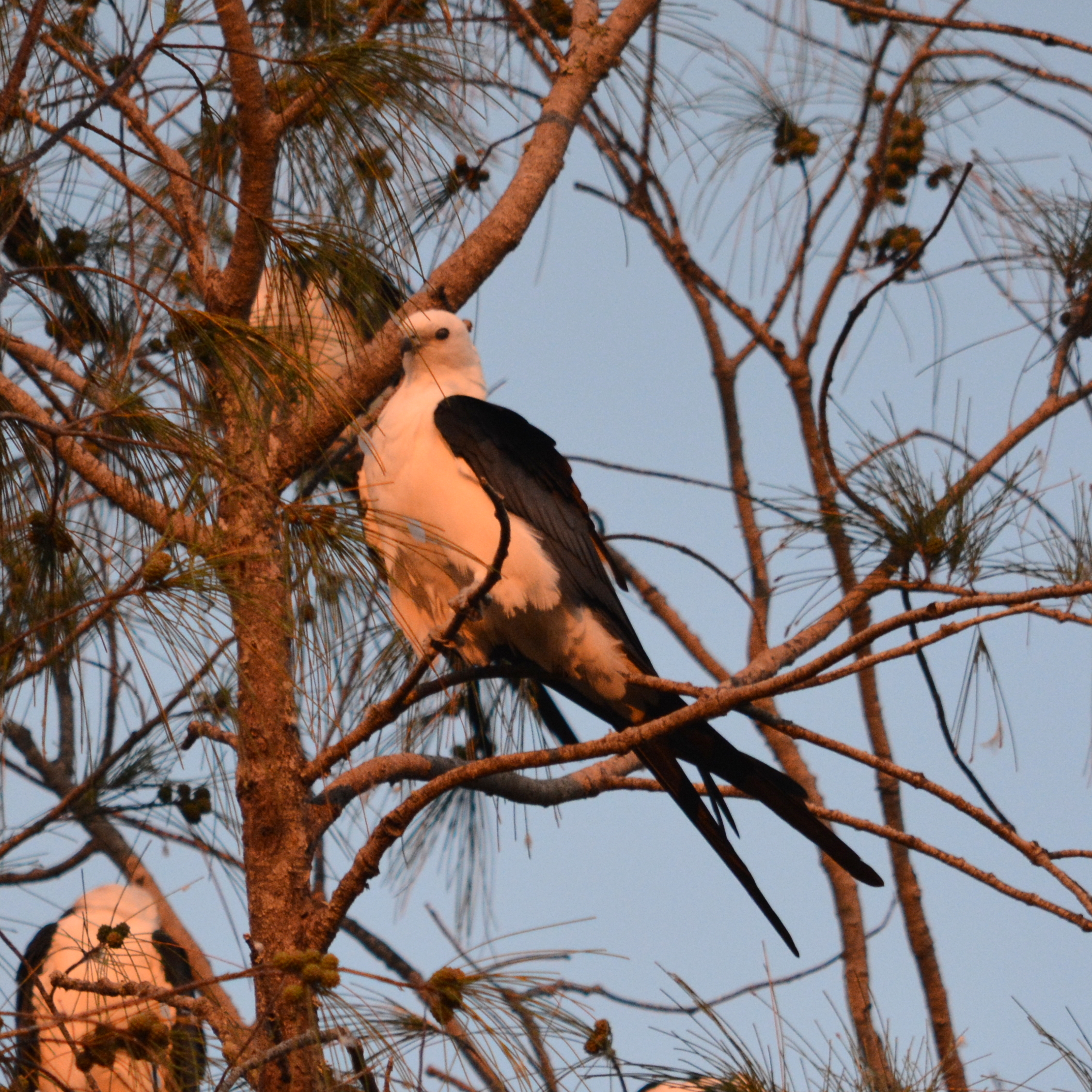
Striking black-and-white raptor with long narrow wings and a deeply forked tail.
Credits:
Facts: wildlife reference. Images: Wikimedia Commons.