
Swamp Darter
Etheostoma fusiforme
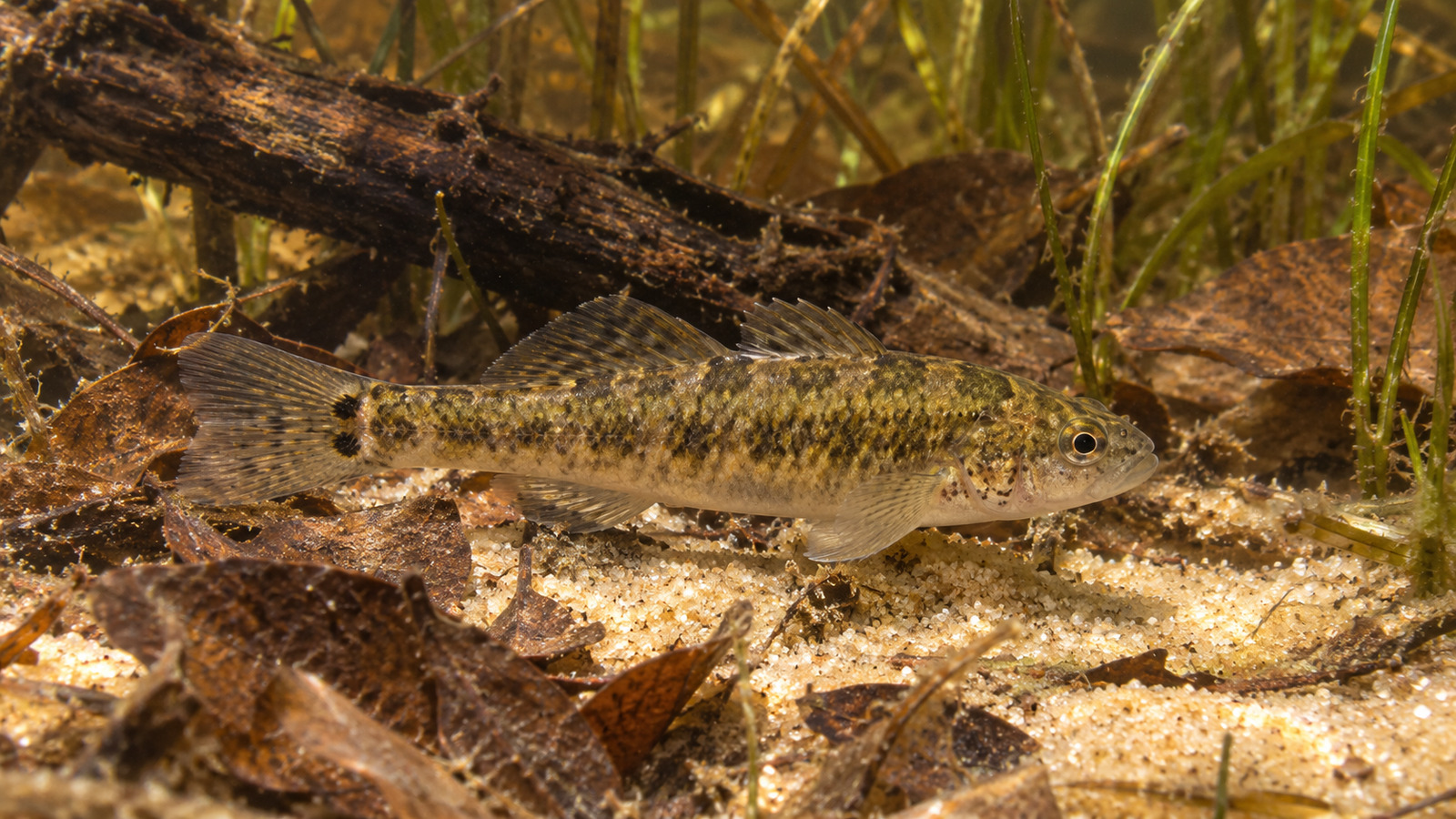
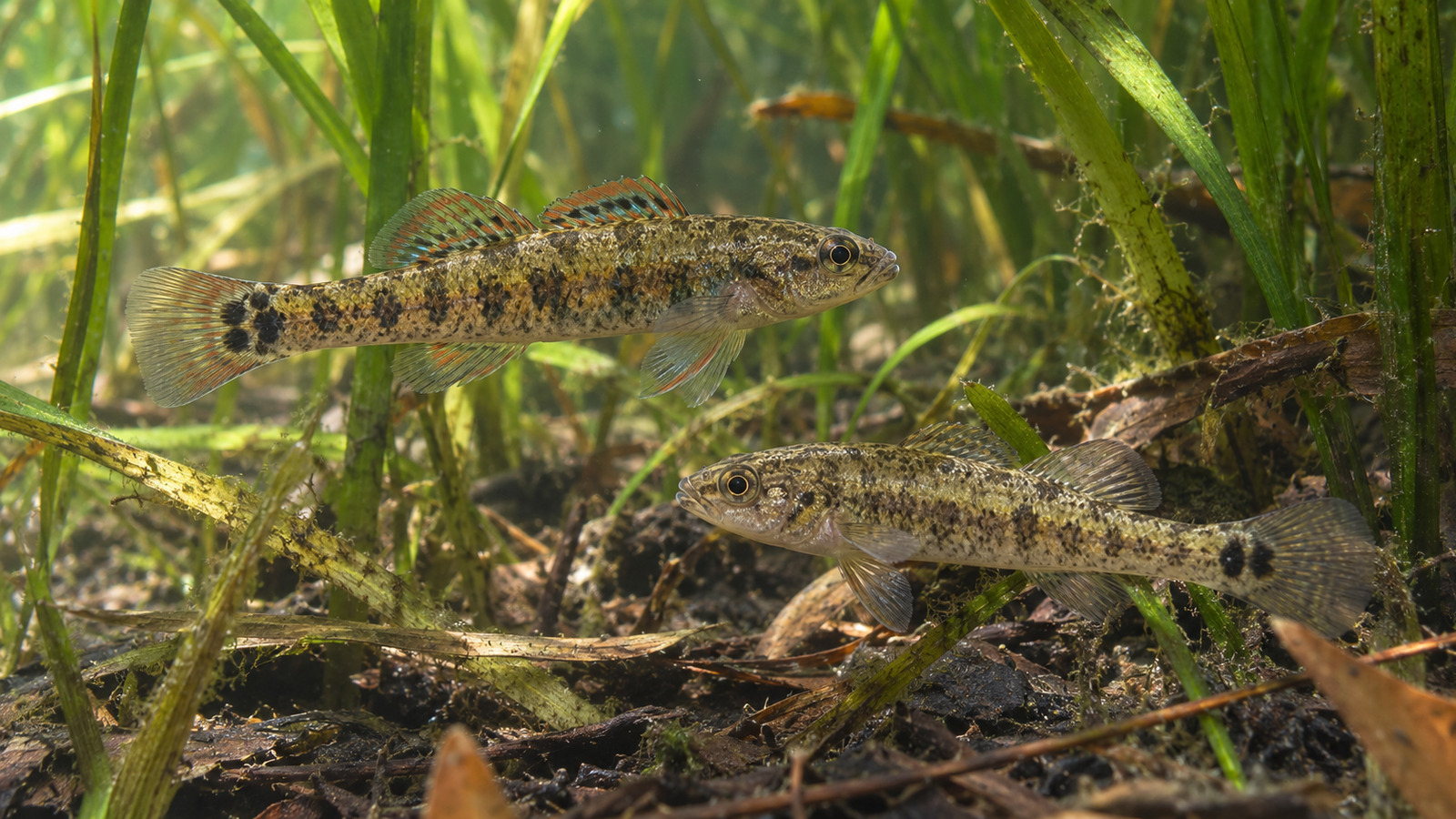
The Swamp Darter is a small native bottom fish identified by its mottled green-brown body, short snout, and black spots at the base of its tail.
The Swamp Darter is a small member of the perch family found across much of Florida. It favors quiet pools, backwaters, vegetated canals, ditches, lake margins, and slow sections of creeks and rivers.
Its subdued green, tan, and brown pattern blends with leaf litter and submerged plants. Unlike stream darters that live in fast current, this species is adapted to still or gently moving water with soft bottom cover.
Habitat:
Canals and Ditches, Freshwater Wetlands, Lakes and Ponds, Rivers and Springs
Area / Range:
Florida Panhandle, North Florida, Central Florida, South Florida
Diet:
Aquatic insect larvae, tiny crustaceans, worms, and other small invertebrates taken from bottom sediments, plants, and woody debris.
Behavior:
Spends much of its time close to the bottom or within dense aquatic vegetation. It makes short darting movements to capture prey and relies on mottled camouflage to avoid larger fish and wading birds.
Day
Active Times:
Best time to see:
Look during daylight in shallow, quiet water with submerged plants, leaf litter, or woody debris. A clear viewing container or underwater camera provides safer observation than handling.
Florida Native Status:
Native
Conservation Status:
Native and not federally or state listed in Florida. Healthy populations depend on clean, vegetated backwaters and stable shallow-water habitat.
Safety Level:
Harmless. Avoid Handling
Safety Information:
This tiny fish is harmless to people and pets. Avoid netting or handling it unless current collection rules permit the activity.
Benefits to Property:
Consumes aquatic insect larvae and other small invertebrates and provides food for larger fish, turtles, wading birds, and other wetland wildlife.
Property Concerns:
It causes no property damage. Draining shallow water, removing all aquatic vegetation, and allowing sediment, fertilizer, or pesticide runoff can degrade its habitat.
Fun Fact:
The Swamp Darter lives farther south than any other North American darter species. It is equally at home in natural backwaters and slow, plant-filled canals.
Wildlife Laws:
Follow current Florida freshwater fishing, baitfish, aquarium collection, and protected-area rules before capturing or possessing native fish.
Identification:
Look for an elongated, laterally compressed fish with an olive-green to tan back, irregular dark brown mottling, small dark saddles, a short blunt snout, and a terminal mouth. One or more black spots mark the base of the tail fin.
The lateral line is incomplete and curves strongly upward near the front of the body. Its quiet-water habitat and tail-base spots help separate it from similar Florida darters.