
Tokay Gecko
Gekko gecko
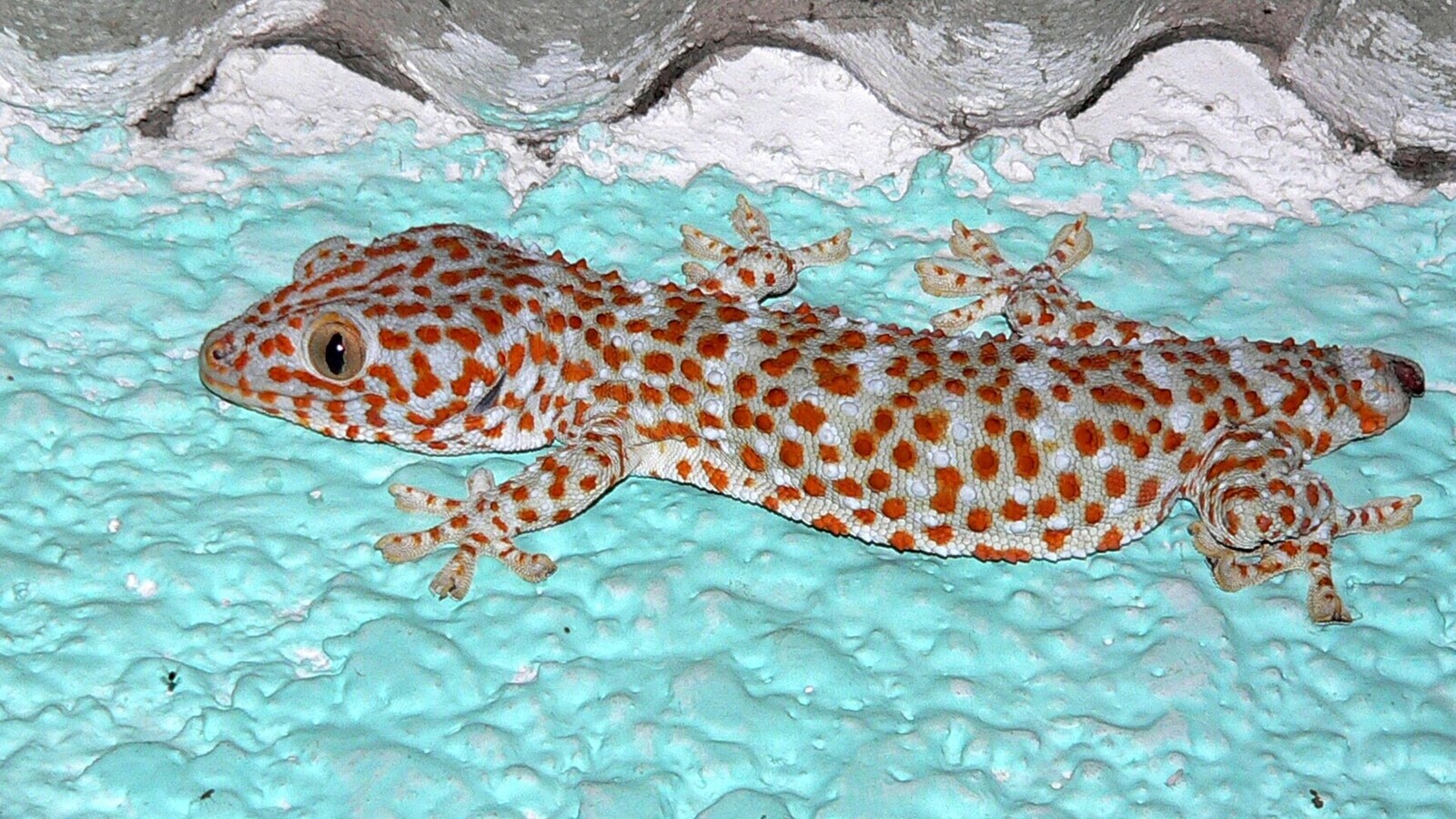
Tokay geckos are large nocturnal lizards with blue-gray skin, orange spots, loud calls, and a strong defensive bite.
Tokay geckos began in Florida through the pet trade and now persist in scattered warm locations. Buildings, mature trees, and exterior lights create ideal nighttime hunting sites.
Their loud repeated call travels far after dark. Secretive daytime shelter makes populations easy to overlook.
Habitat:
Urban and Residential Areas, Forests and Woodlands
Area / Range:
South Florida
Diet:
They eat moths, roaches, beetles, spiders, small frogs, lizards, and occasionally small vertebrates.
Behavior:
Tokay geckos hide in cracks by day, emerge at night, cling to smooth surfaces, and defend shelter sites. Males make a loud two-part call.
Night
Active Times:
Best time to see:
After dark on exterior walls, tree trunks, rooflines, and around lights that attract insects.
Florida Native Status:
Introduced
Conservation Status:
Localized introduced populations occur in South Florida. The species is native to South and Southeast Asia.
Safety Level:
Use Caution
Safety Information:
Never handle one bare-handed. The bite is strong and the animal may hold on. Use a secure container or trained professional for removal.
Benefits to Property:
They consume many nocturnal insects around buildings.
Property Concerns:
They may enter wall voids, leave droppings, call loudly at night, and prey on native reptiles and frogs.
Fun Fact:
The common name copies the male’s loud call. Microscopic structures on the toes let the gecko climb glass and other smooth surfaces.
Wildlife Laws:
Tokay geckos are nonnative in Florida. Do not release captured pets or wild individuals. Removal must be humane and performed with property permission.
Identification:
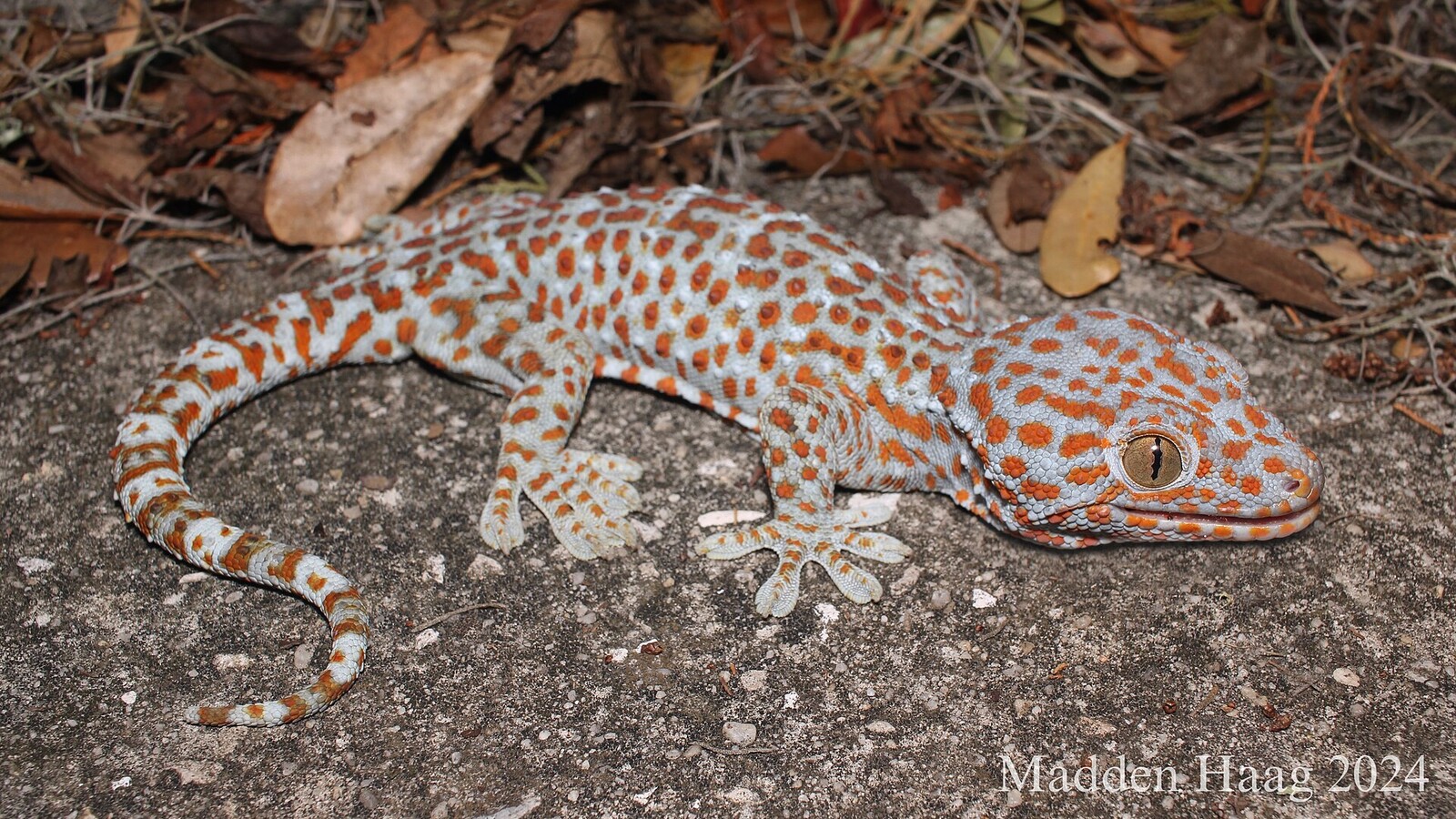
Look for a thick-bodied gecko with large eyes, wide toe pads, blue-gray skin, and bright orange or reddish spots. The head is broad and the jaws are powerful.
Credits:
Facts: species reference. Images: primary and secondary, Wikimedia Commons.