
Virginia Rail
Rallus limicola
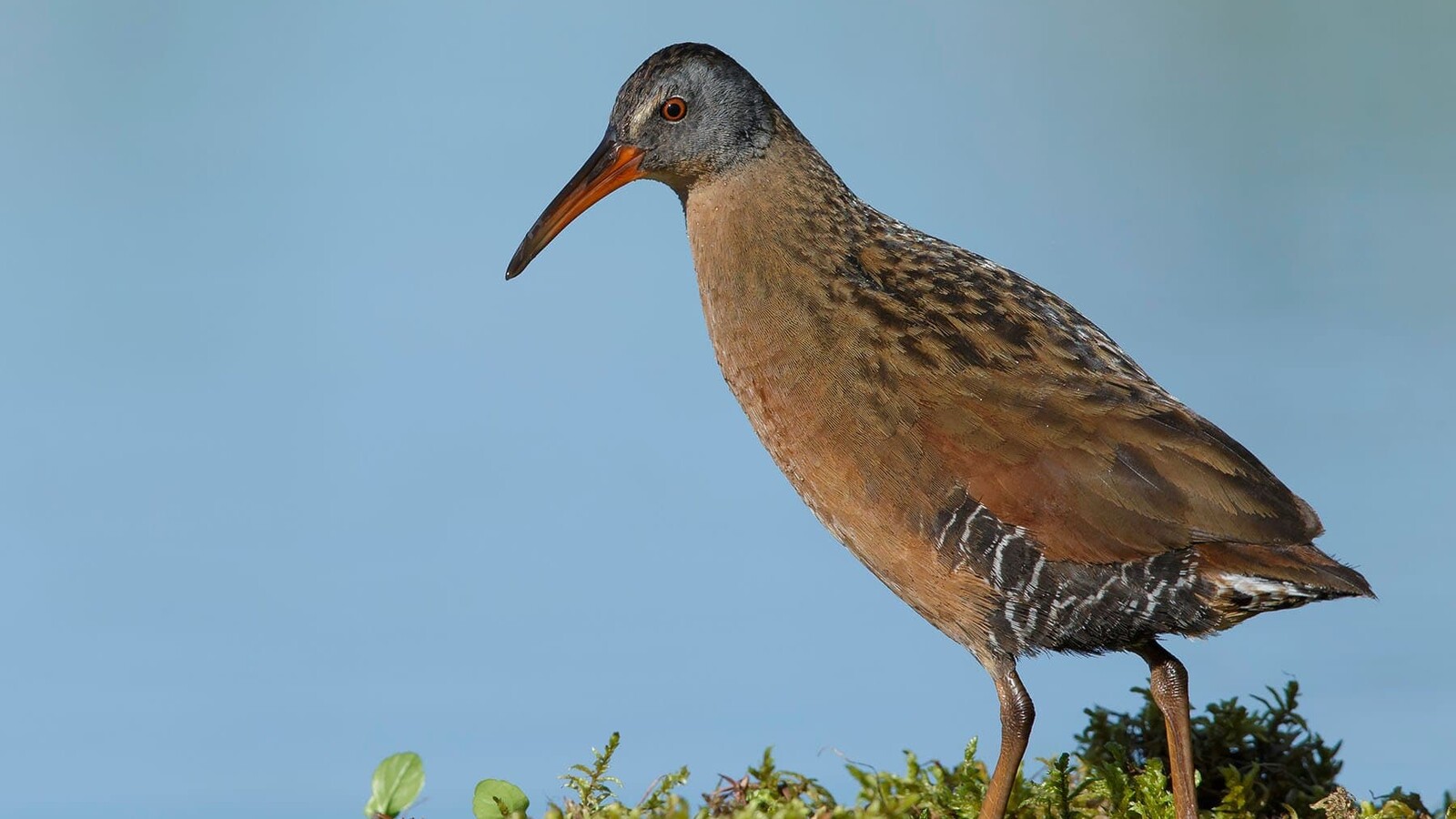
Virginia Rails are secretive marsh birds with long reddish bills, rusty breasts, and bodies built to move through dense reeds.
Virginia Rails use shallow marshes with cattails, sedges, and exposed mud. They winter widely in Florida and breed in suitable wetlands.
Grunting calls and paired kid-ick notes often carry across a marsh at dawn, dusk, or night.
Habitat:
Freshwater Wetlands, Lakes and Ponds, Mangroves and Salt Marshes, Canals and Ditches
Area / Range:
Statewide
Diet:
Insects, worms, snails, small crustaceans, seeds, and occasional small fish or frogs.
Behavior:
They walk and swim through shallow cover and probe mud with the bill.
Dawn, Dusk, Night
Active Times:
Best time to see:
Fall through spring at dawn or dusk along quiet marsh edges and wetland boardwalks.
Florida Native Status:
Native
Conservation Status:
Broadly distributed, with local numbers tied to water levels and marsh quality.
Safety Level:
Low Risk
Safety Information:
This rail poses no danger. Stay on paths to avoid trampling nests and wetland plants.
Benefits to Property:
Virginia Rails consume wetland insects and increase the ecological diversity of ponds and marshes.
Property Concerns:
No direct damage. Rapid water changes, shoreline clearing, and herbicide drift reduce habitat quality.
Fun Fact:
Laterally compressed body feathers help this rail pass through remarkably narrow gaps.
Wildlife Laws:
Protected by the Migratory Bird Treaty Act. Hunting requires licenses and compliance with current federal and Florida rail rules.
Identification:
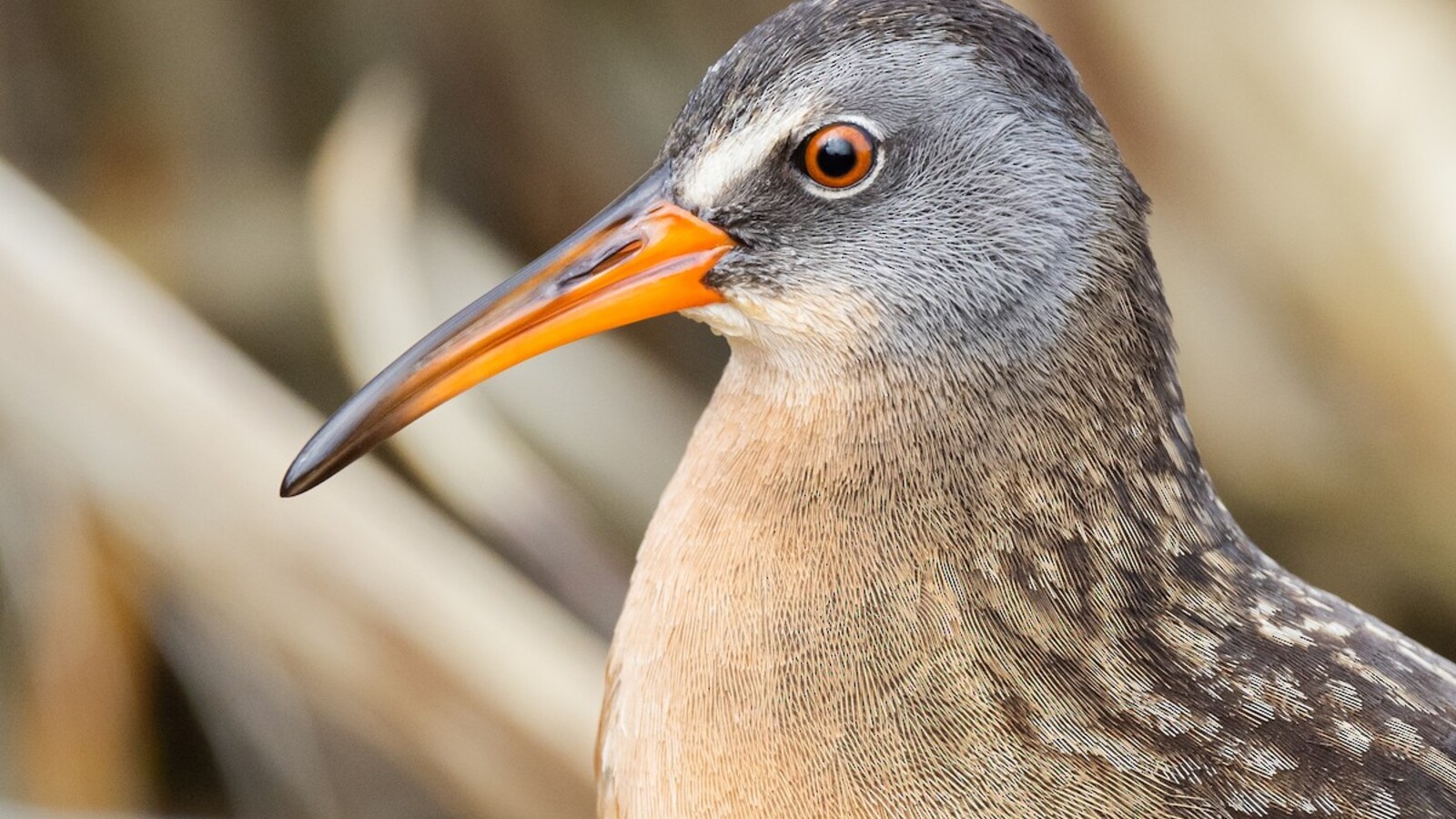
Look for a long reddish-orange bill, gray cheeks, rusty chest, chestnut back, and black-and-white barred flanks.
Credits:
Facts: Cornell Lab. Images: habitat view and portrait.