
White-Crowned Pigeon
Patagioenas leucocephala
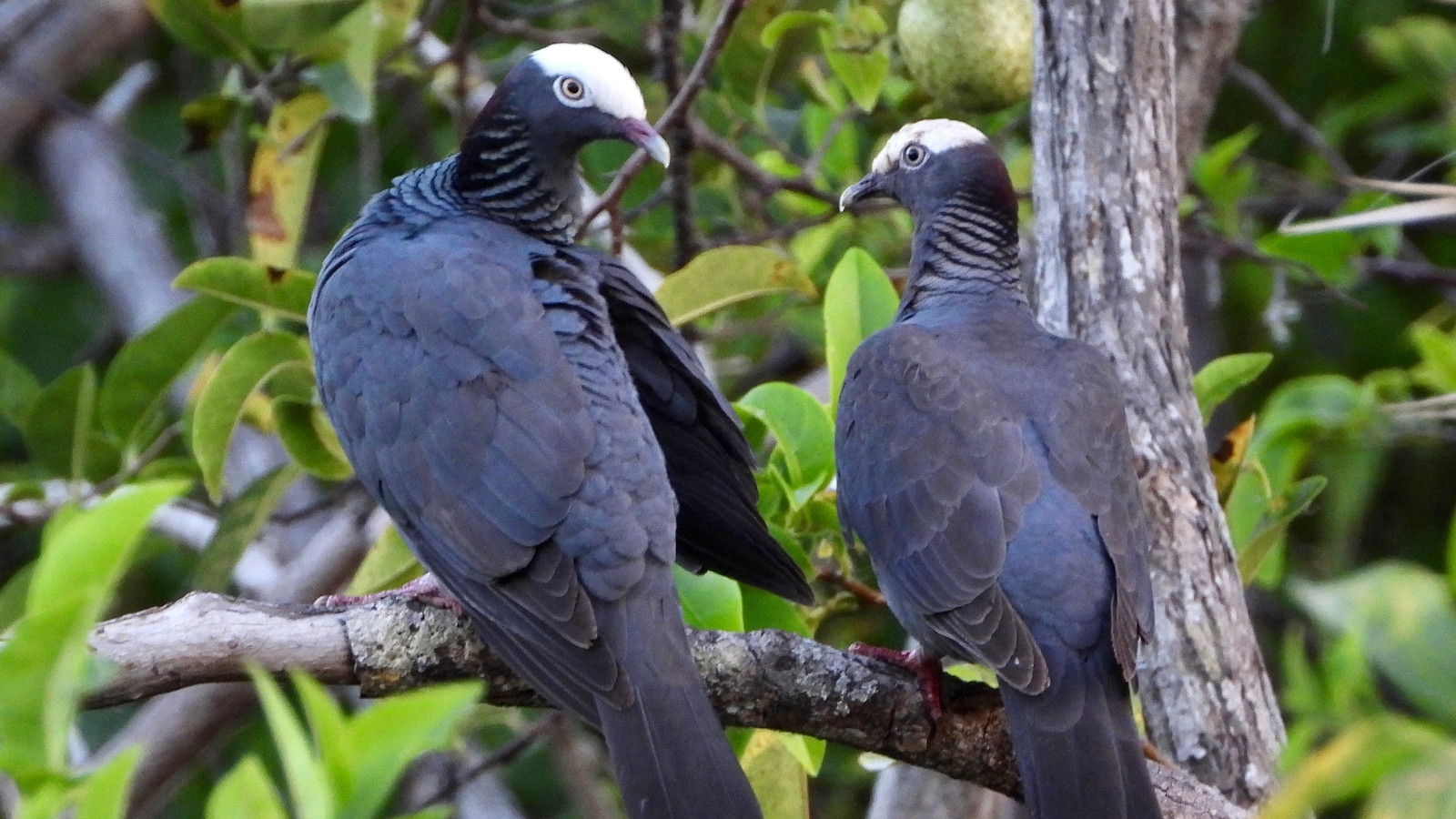
A large dark pigeon of South Florida and the Keys, recognized by its clean white crown, pale eye, and iridescent neck.
White-Crowned Pigeons move between mangrove nesting islands and tropical hardwood hammocks where they feed on native fruits. Florida supports the northern edge of their Caribbean range.
Protecting mature fruiting trees, coastal hammocks, and quiet mangrove islands helps this uncommon pigeon complete its nesting and feeding cycle.
Habitat:
Mangroves and Salt Marshes, Forests and Woodlands
Area / Range:
South Florida, Florida Keys
Diet:
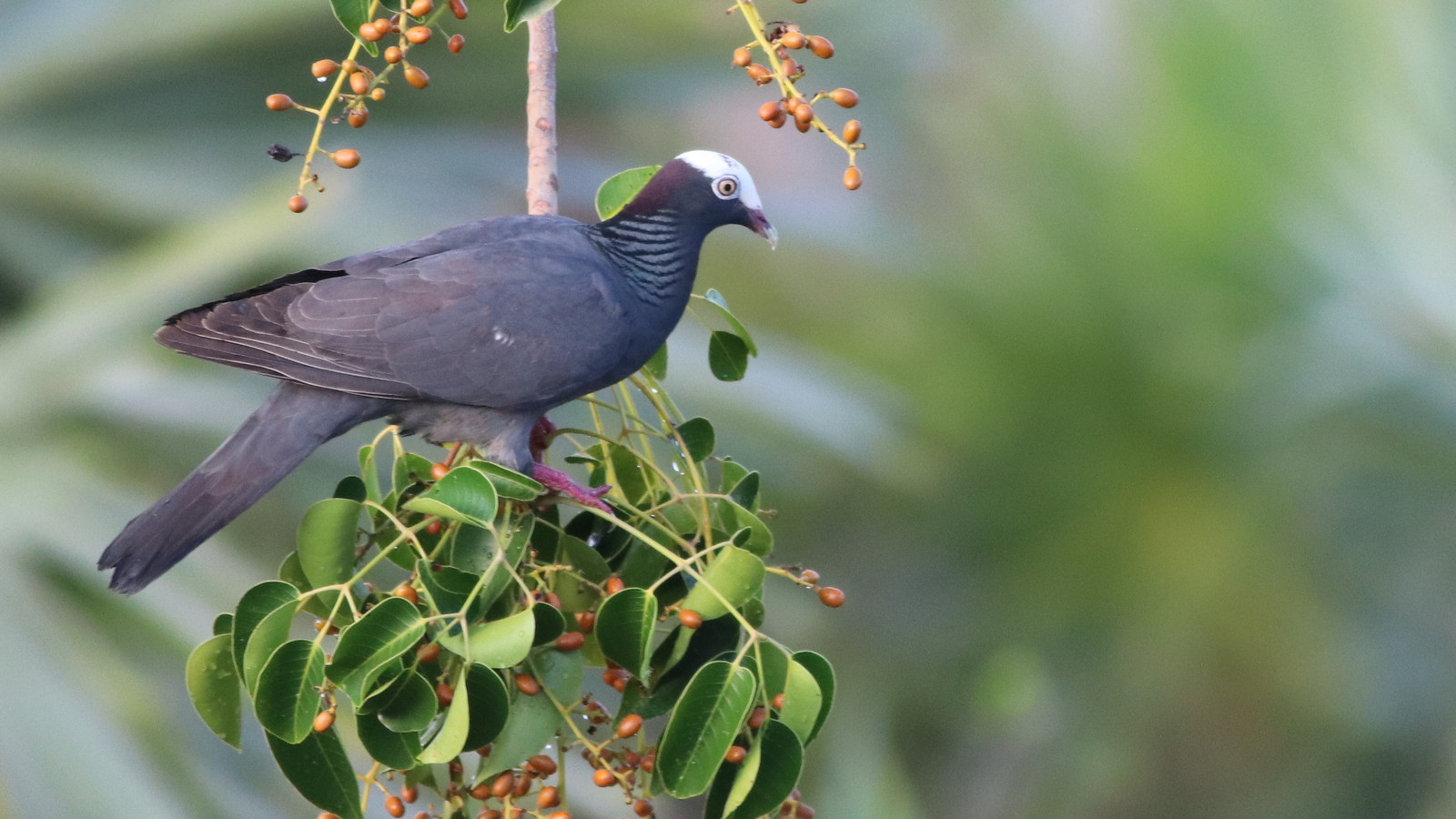
Feeds mainly on fruits from poisonwood, pigeon plum, strangler fig, gumbo limbo, and other native trees.
Behavior:
Strong, direct fliers that often travel between inland feeding sites and coastal nesting islands. They usually forage in tree canopies and remain wary around people.
Daytime, Dawn and Dusk
Active Times:
Best time to see:
Spring through early fall in the Florida Keys and far South Florida, especially near fruiting native trees at dawn or dusk.
Florida Native Status:
Native
Conservation Status:
State-designated Threatened in Florida because of habitat loss, disturbance, and pressure across its Caribbean range.
Safety Level:
Low
Safety Information:
Watch quietly from a distance. Avoid approaching mangrove nesting islands or pruning occupied fruiting and nesting trees.
Benefits to Property:
Disperses seeds from native fruiting trees and supports the ecological value of tropical South Florida landscapes.
Property Concerns:
Usually causes no property damage. Droppings may occur beneath favored roosts or fruiting trees.
Fun Fact:
- Adults develop a white cap that young birds lack.
- Many birds commute daily between mangrove islands and hardwood hammocks.
- Native fruiting trees are central to their survival.
Wildlife Laws:
Protected by the Migratory Bird Treaty Act and Florida wildlife rules. Do not harm birds or disturb active nests, eggs, or young.
Identification:
Look for a slate-gray pigeon with a bright white crown, pale eye, reddish bill, and green-purple iridescence on the neck. Young birds lack the full white crown.