
Wood Duck
Aix sponsa
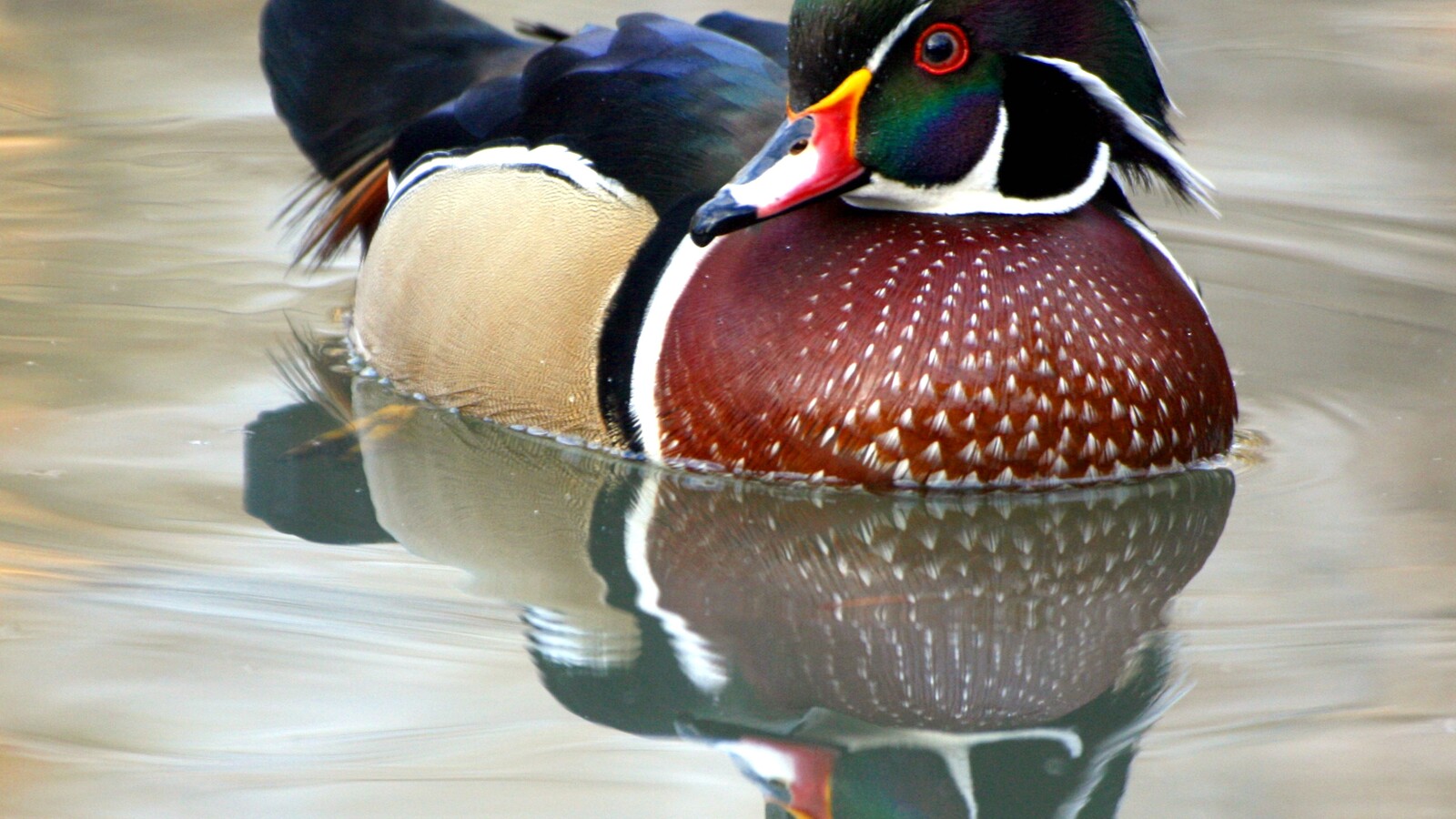
Wood Ducks bring vivid color to wooded Florida wetlands and nest in tree cavities close to quiet water.
Wood Ducks use forested swamps, cypress ponds, river edges, and sheltered lakes with mature trees nearby.
They perch readily in trees and raise young in cavities. Nest boxes support pairs where natural cavities are scarce.
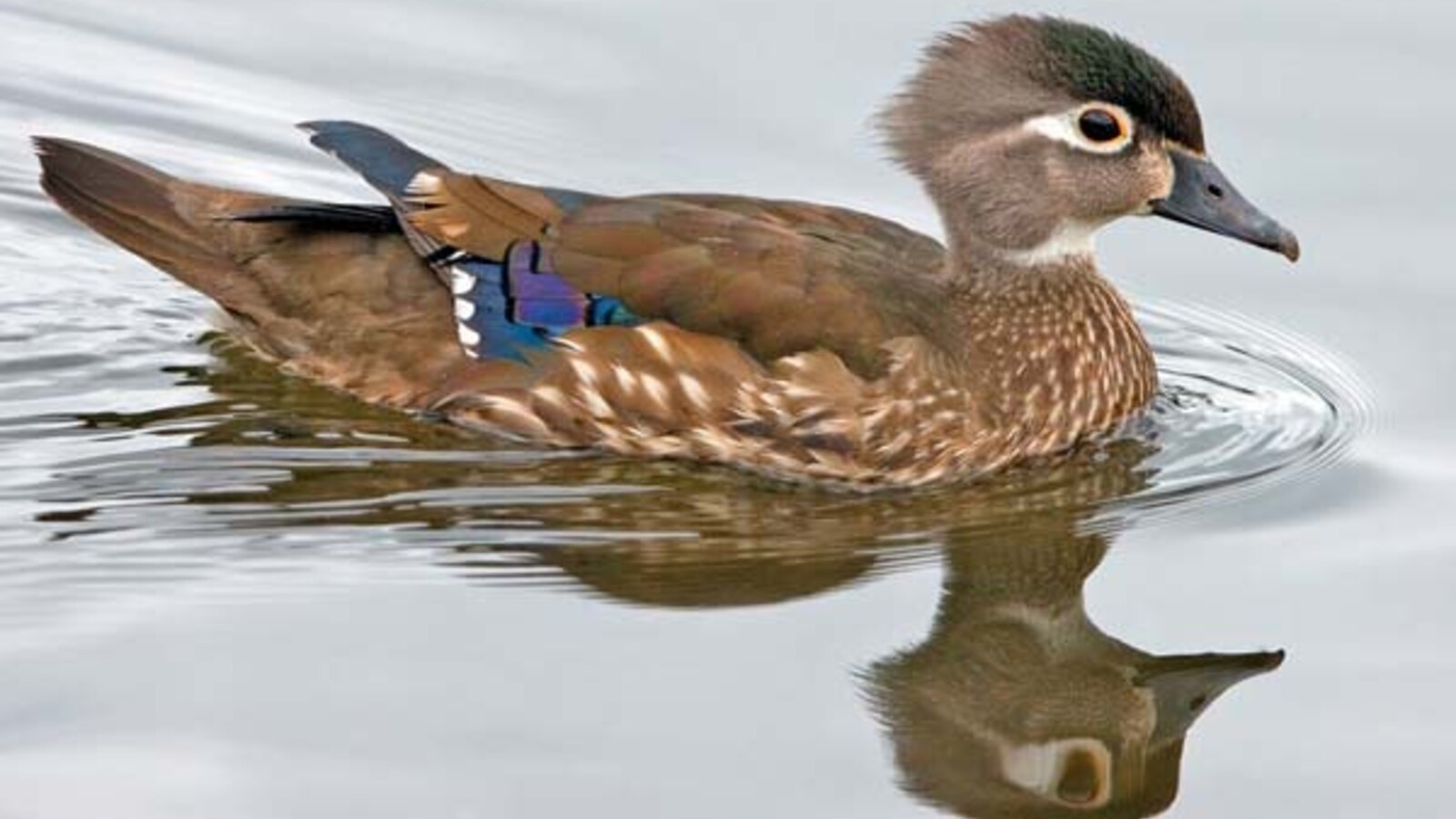
Habitat:
Freshwater Wetlands, Lakes and Ponds, Rivers and Springs, Forests and Woodlands
Area / Range:
Statewide
Diet:
Acorns, seeds, aquatic plants, fruits, insects, snails, and other small invertebrates.
Behavior:
Pairs dabble in shallow water. Females lead ducklings from elevated cavities to water soon after hatching.
Day, Dawn, Dusk
Active Times:
Best time to see:
Early morning or late afternoon on shaded ponds, wooded creeks, and cypress wetlands.
Florida Native Status:
Native
Conservation Status:
Widespread and stable after recovery supported by wetland protection and nest boxes.
Safety Level:
Low Risk
Safety Information:
Observe from a distance around cavities and broods. Never handle ducklings or approach a nesting female.
Benefits to Property:
Wood Ducks add wildlife value and consume insects, acorns, and aquatic plant material.
Property Concerns:
Droppings sometimes collect near pond edges. Poorly placed nest boxes expose young to predators or unsafe landings.
Fun Fact:
Ducklings leave the cavity within a day of hatching and leap to the ground or water below.
Wildlife Laws:
Protected by the Migratory Bird Treaty Act. Hunting requires licenses and compliance with current federal and Florida seasons, limits, and methods.
Identification:
Males show a crested green head, red eyes, chestnut breast, and white facial stripes. Females are gray-brown with a bold white eye ring and blue wing patch.
Credits:
Facts: Cornell Lab. Images: male and female.