
Zebra Swallowtail
Eurytides marcellus
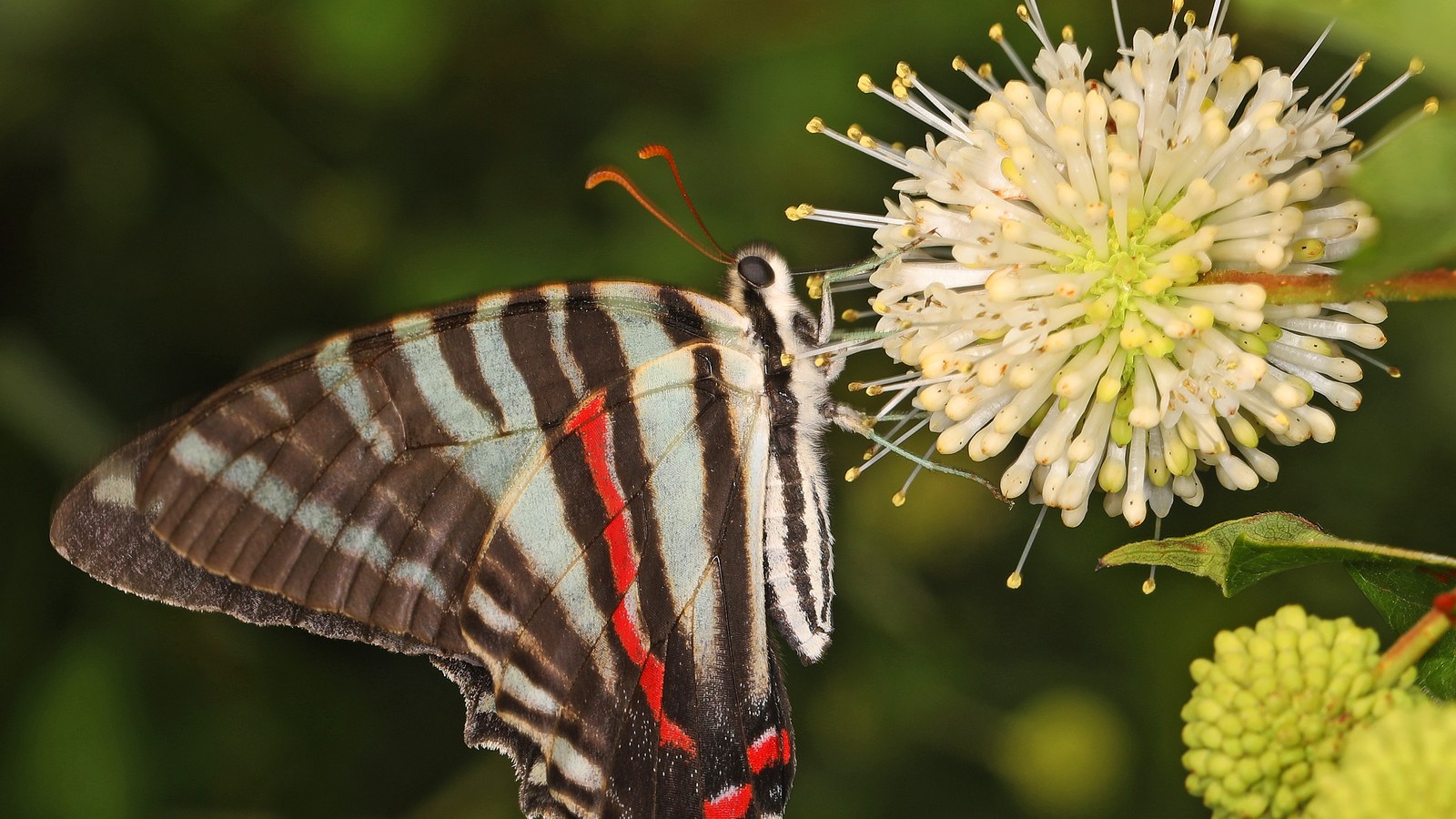
The zebra swallowtail is a distinctive Florida butterfly with black-and-white striped wings, red accents, and exceptionally long tails.
Zebra swallowtails live wherever pawpaw shrubs and small trees grow. They occur in open woods, sandhills, river corridors, woodland edges, and gardens near natural habitat.
Pawpaw is the caterpillar's essential host plant. Adults visit many flowers, but a property will not support breeding zebra swallowtails without suitable native pawpaw nearby.
Habitat:
Forests and Woodlands, Pine Flatwoods and Sandhills, Urban and Residential Areas, Rivers and Springs
Area / Range:
Statewide
Diet:
Adults drink nectar from verbena, milkweed, blueberry, lantana, and other flowers. Caterpillars feed only on pawpaw species in the genus Asimina.
Behavior:
Zebra swallowtails fly low and quickly around pawpaw patches. Females inspect fresh leaves for egg laying, while males patrol open areas and visit damp soil for minerals.
Day
Active Times:
Best time to see:
Warm, sunny days from spring through fall near pawpaw plants, woodland edges, and native flowering gardens.
Florida Native Status:
Native
Conservation Status:
Secure across much of its range. Local populations disappear when pawpaw host plants are removed or repeatedly treated with insecticide.
Safety Level:
Harmless
Safety Information:
Avoid insecticides on pawpaw and blooming plants. Leave caterpillars in place so they can complete development.
Benefits to Property:
Adults pollinate flowers, while pawpaw plantings support the butterfly's full life cycle and add native plant diversity.
Property Concerns:
Caterpillars eat pawpaw leaves but seldom harm established plants. The butterfly causes no structural or turf damage.
Fun Fact:
Zebra swallowtail caterpillars absorb defensive compounds from pawpaw leaves, making them less appealing to many predators.
Wildlife Laws:
Zebra swallowtails are native wildlife. Collection may be prohibited or limited on preserves, parks, and other public lands. Follow all pesticide labels and site rules.
Identification:
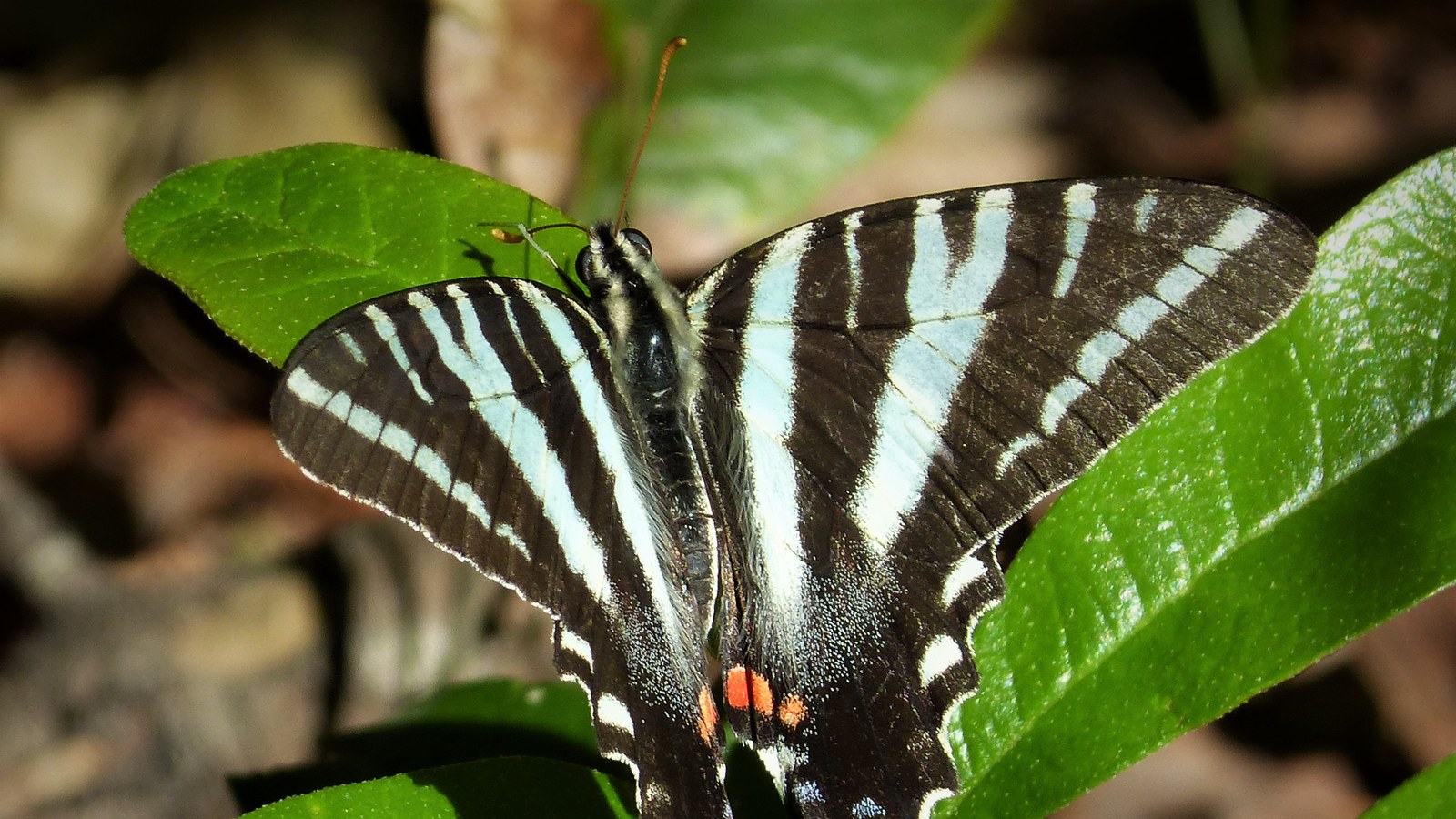
Adults have pale greenish-white wings crossed by black zebra stripes, red spots near the hindwing base, and two long slender tails. Spring adults are often smaller and paler than summer individuals.
Credits:
Facts: UF/IFAS Featured Creatures. Images: primary and secondary, Wikimedia Commons.