
Plants & Conservation
Hillsborough County Targets Invasive Plants on Conservation Land
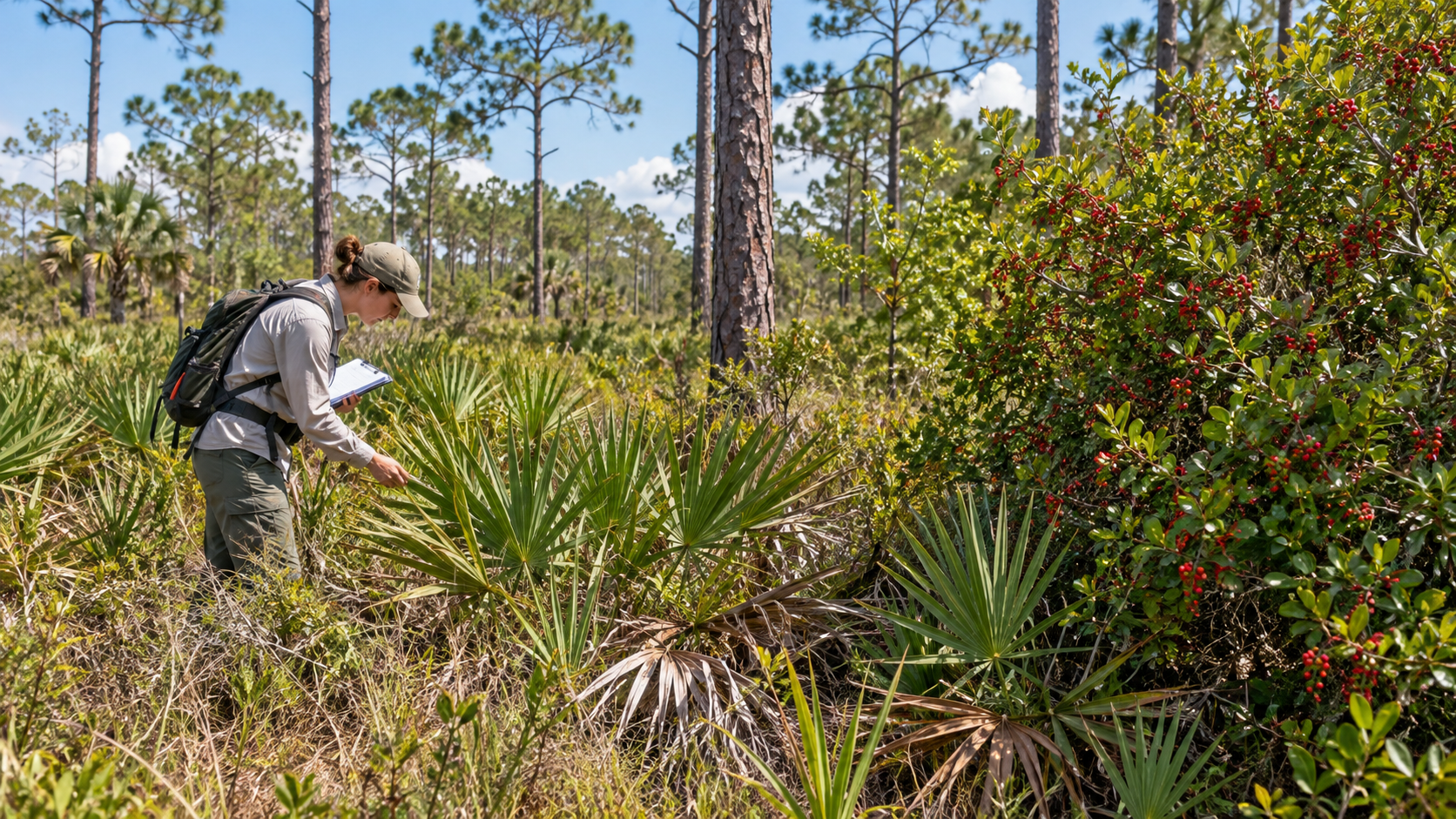
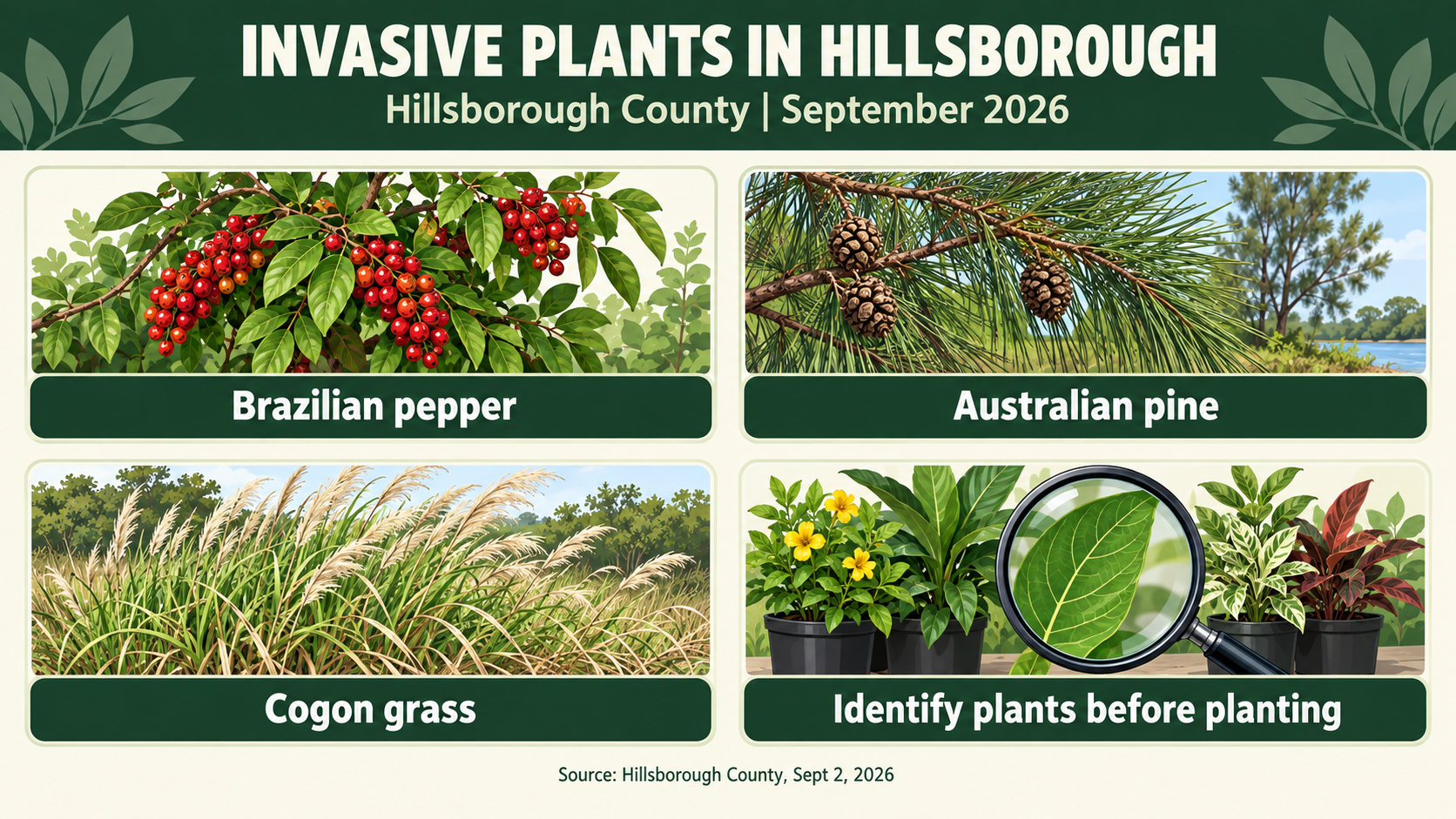
Hillsborough County described its ongoing invasive-species work on September 2, 2026, using Lower Green Swamp Nature Preserve and other conservation lands to show why local plant identification matters. The County's Environmental Lands Management division oversees thousands of acres across four regions. In southwest Hillsborough coastal and mangrove habitats, crews often encounter Brazilian pepper and Australian pine. The article notes an estimate that Brazilian pepper has colonized more than seven million acres across Florida. In the northeast, the County monitors cogon grass, natal grass, lygodium, rosary pea, balsam apple, and other species. These examples reflect different habitats and management needs. A plant harmful in one setting requires proper identification and a suitable control approach before removal or treatment. The County says invasive plants can spread, crowd out native vegetation, and change the conditions on which native wildlife depends. This is relevant to Tampa landscape design because choices made on private property influence which plants are introduced or moved around the region. Residents are encouraged to learn whether a plant is invasive before purchasing it, even when a species is available for sale. The County also advises people against moving plants, seeds, or other material between natural areas. Its announcement describes continuing conservation work, rather than a new ban on a particular landscape plant. Its coastal and inland examples show why a single list of problem plants cannot substitute for understanding the habitat. The County describes its work as repeated monitoring and management across conservation lands rather than a one-time clearing project or a recommendation to remove every unfamiliar plant.
The County explains that invasive plants do not all create the same ecological problem. Brazilian pepper can interfere with prescribed fire in habitats where fire is a management tool, while highly flammable cogon grass can burn too intensely and damage the ecosystem. In waterways, invasive aquatic plants can obstruct flow and affect fish habitat. The County uses mechanical removal, prescribed fire, biological control, cultural prevention, and targeted chemical control according to the species and site. It cites the air potato beetle as an example of biological control. Rosary pea deserves special caution because the County describes it as highly poisonous. For homeowners and landscape crews, the useful lesson is to identify plants accurately and match any removal method to the site instead of treating all vigorous growth as the same problem. Native plant communities supply food and shelter for wildlife and support pollinators with specific plant relationships. A South Tampa landscape plan can use those considerations when selecting replacement plants, controlling unwanted growth, and handling removed material. The article does not prescribe a universal herbicide or claim that all nonnative ornamentals are invasive. Its central message is prevention, careful identification, and ongoing management of species that threaten local habitat. The article also notes that prevention can include public education and restrictions on the sale of particularly harmful plants. Residents can help by reporting invasive species and avoiding the transport of plant material from one natural area to another.
Hillsborough County
Source:
September 2, 2026
Date:
Hillsborough County invasive plants, Brazilian pepper Tampa, native landscape plants Florida, cogon grass management, South Tampa landscape plant selection