
Pests & Public Health
Hillsborough Debunks Five Mosquito Myths During Dengue Response
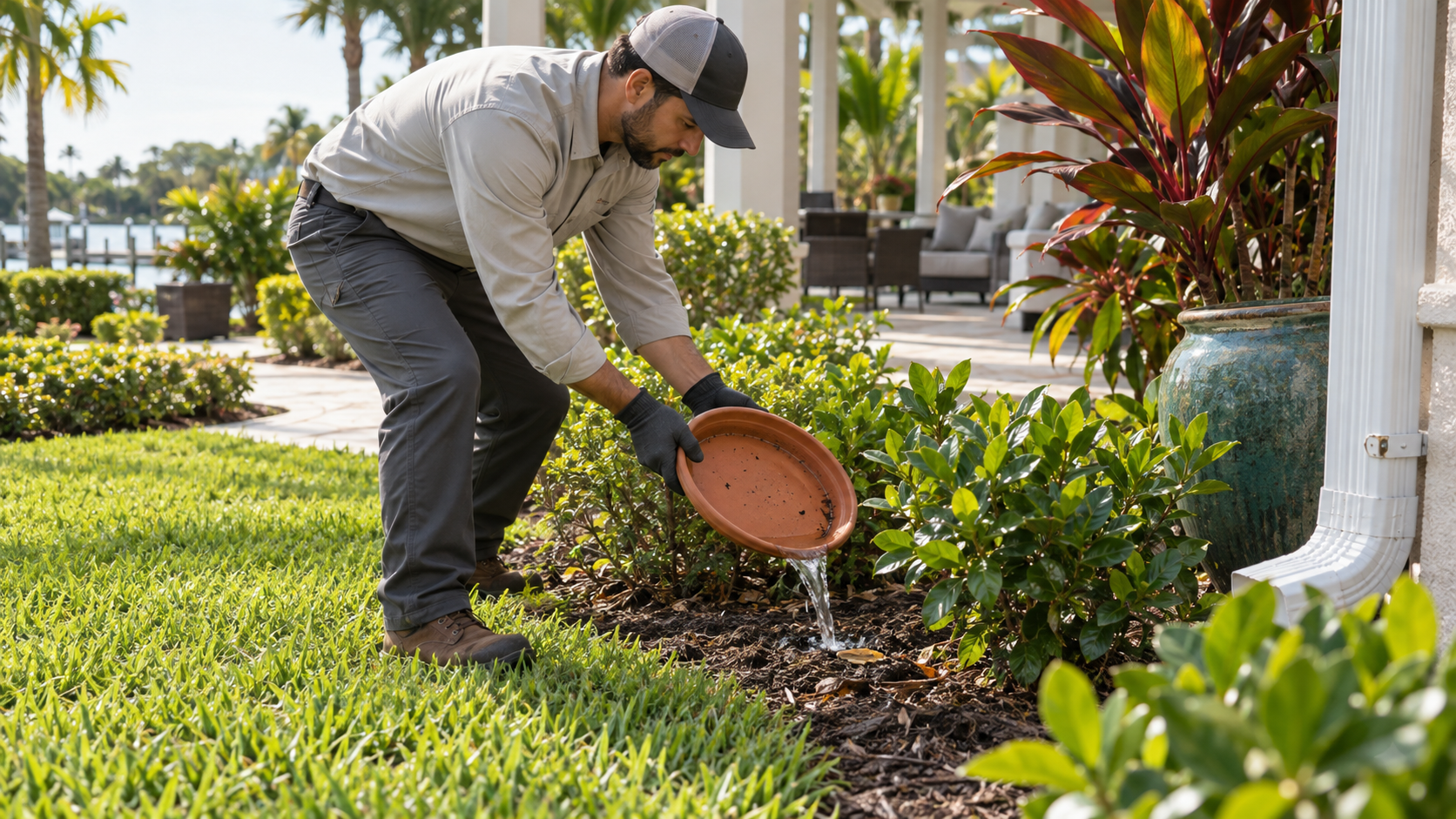
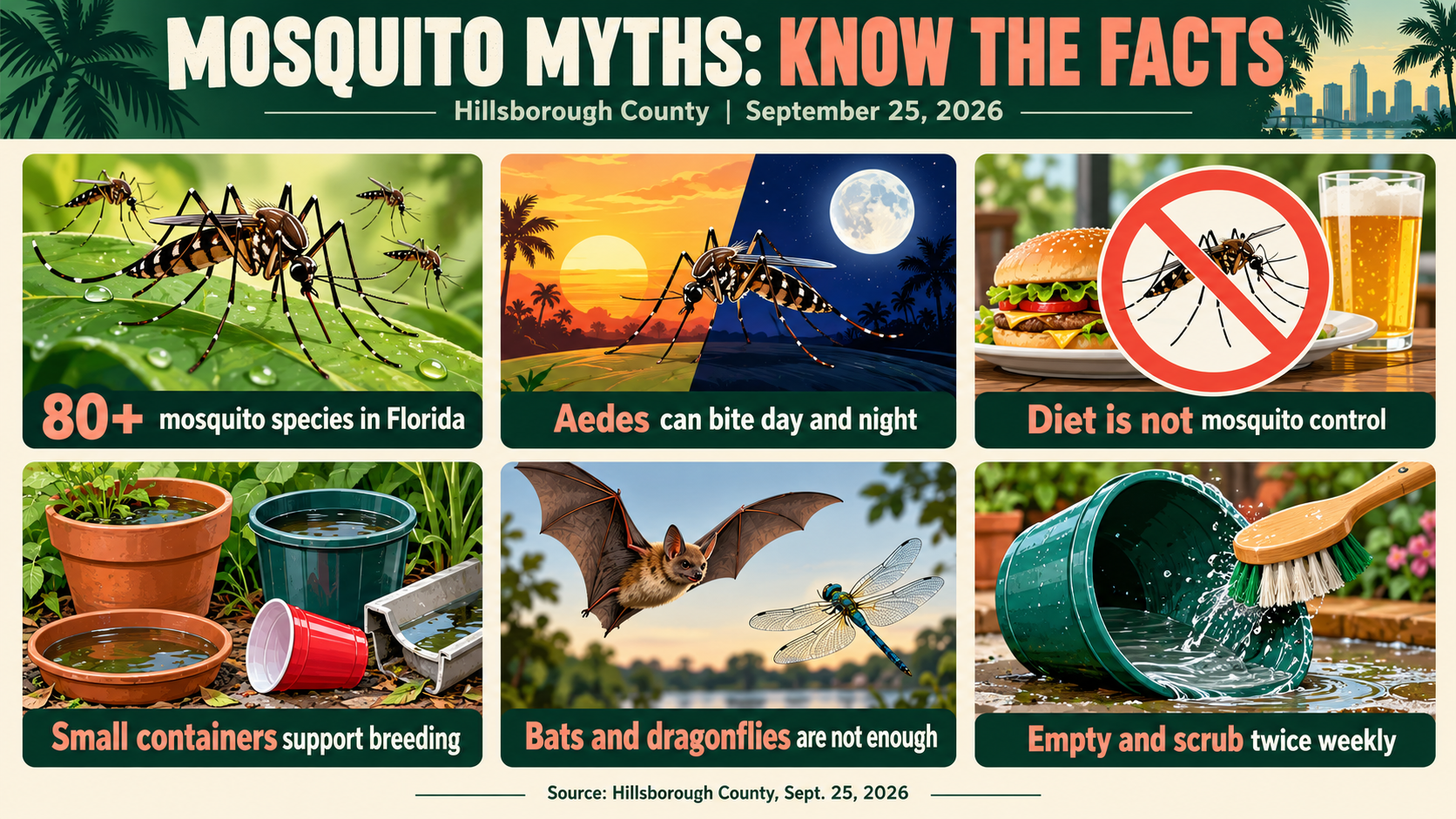
Hillsborough County published new mosquito guidance on September 25, 2026, to correct five common misconceptions during local dengue activity. The County explains that mosquitoes are not one uniform pest. Florida has more than 80 species, while local officials estimate 40 to 50 in Hillsborough County. Only certain species transmit particular diseases, and Aedes aegypti is identified as the main dengue vector locally. This species lives close to people and bites indoors and outdoors. It can bite during daylight and after dark, with activity often strongest around sunrise and sunset. The County also rejects the idea that eating or avoiding a particular food provides meaningful protection. Mosquito attraction involves multiple chemical and visual signals, so changing a diet is not a mosquito-control plan. Residents should rely on practical measures such as labeled insect repellent, long clothing when practical, and intact window or door screens. The County's update expands the public information available during the dengue response, but it does not mean every mosquito carries dengue or every yard contains a breeding site. It gives homeowners and landscape crews a clearer way to inspect properties and separate familiar sayings from useful prevention. For South Tampa landscapes, the most relevant point is that risk does not depend on seeing a pond or large puddle. An ordinary residential property can hold several small water sources after rainfall or irrigation.
The County says Aedes mosquitoes can use small containers such as buckets, bowls, pet dishes, flowerpots, vases, tires, toys, and trash containers. Eggs can remain on container walls above the waterline and hatch when water rises, which is why pouring water out once does not finish the job. Hillsborough County advises residents to empty and scrub, turn over, cover, or discard water-holding items at least twice each week. UF/IFAS likewise describes source reduction as one of the most effective homeowner actions for container mosquitoes. For an Ecoscape crew, a quick exterior check can include flowerpot saucers, wheelbarrows, stored nursery pots, tarps, clogged gutters, disconnected downspouts, irrigation valve boxes, and debris that catches water. Any recurring irrigation leak or drainage problem should be reported to the property owner so the source can be corrected. Bats and dragonflies benefit Florida ecosystems, but the County says they cannot replace an integrated mosquito-management program. Natural predators do not consume every mosquito. Hillsborough's program combines surveillance, trapping, breeding-site reduction, larval control, and treatment of adult mosquitoes. Landscape maintenance supports this broader effort by removing preventable water sources. It is not a substitute for County treatment or personal bite protection. Residents should use current County notices for treatment locations and report mosquito-related concerns through the official service. The September 25 article is a practical reminder to inspect outdoor spaces regularly, especially after rain or irrigation, and to base decisions on verified prevention steps rather than popular mosquito myths.
Hillsborough County
Source:
September 25, 2026
Date:
Hillsborough County mosquito myths, Tampa dengue prevention, South Tampa standing water, Aedes aegypti Tampa, mosquito breeding flowerpot saucers, Tampa landscape mosquito prevention