
Trees & Urban Canopy
UF/IFAS Hillsborough Explains How to Diagnose Declining Trees
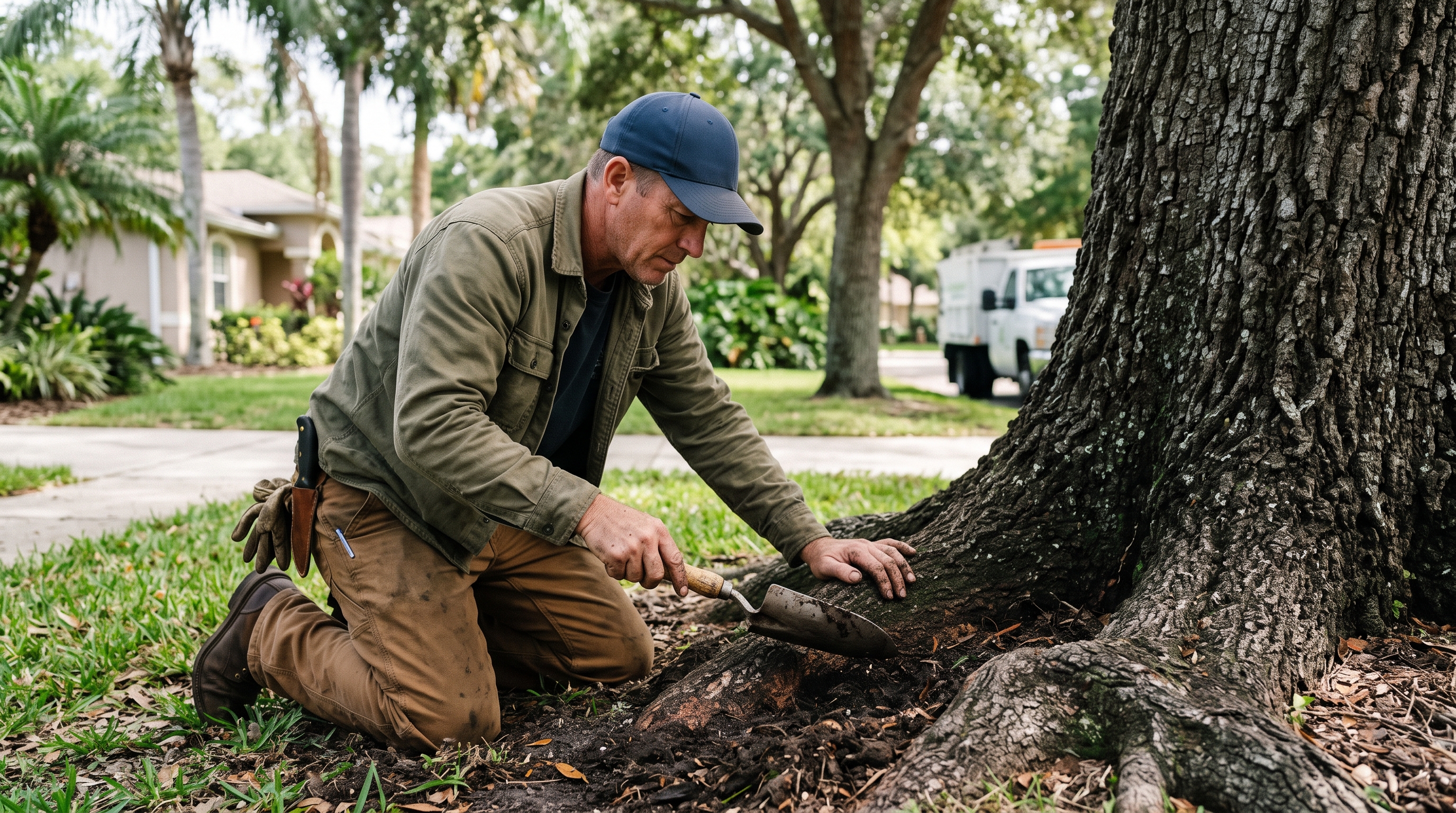
UF/IFAS Extension Hillsborough County published a September 11 discussion of how specialists investigate a declining tree. The article, by urban forestry Extension agent Alyssa Vinson, draws on a conversation with Extension agent and ISA Certified Arborist Maxine Hunter. Their central point is that a brown canopy, thinning leaves, or dead branches do not identify a single cause by themselves. Tree decline often develops over months or years, even when a homeowner first notices it suddenly. A useful assessment starts with the species and the property’s history. Recent construction, changes in irrigation, compacted soil, root disturbance, drought, flooding, and older storm damage all provide clues. Insects on a weakened tree do not automatically mean insects started the problem. The agents explain that some bark beetles arrive after a tree has already been stressed. Likewise, they caution against assuming herbicide exposure without evidence. For South Tampa homeowners, the news is a timely reminder to examine the entire planting site before choosing a treatment or removing a valued tree. A tree near a driveway, building project, or recently changed landscape has a different history from a tree growing in undisturbed soil. Ecoscape crews who notice canopy thinning can record the affected area and ask when the symptoms began, whether irrigation changed, and whether roots were cut or covered. This is a summary of Extension guidance, not a diagnosis of any individual tree.
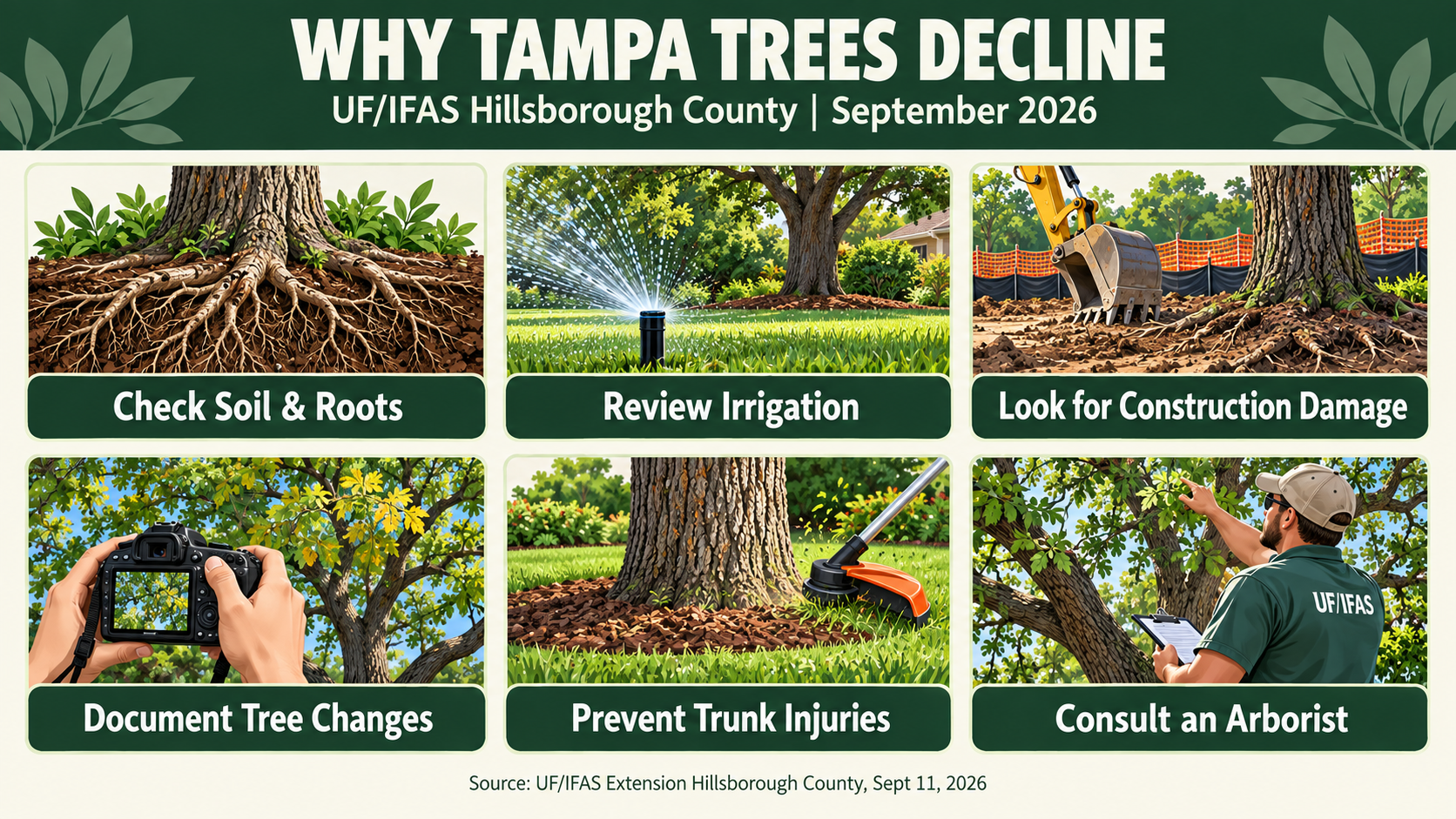
The Extension article also connects recent dry conditions with delayed symptoms. Drought can damage roots and water-conducting tissues. A tree may appear stable for a period, then show more obvious decline when moisture returns and opportunistic fungi find favorable conditions in already weakened tissue. The article names Hypoxylon canker, bot rot diseases, Ganoderma decay fungi, and vascular wilt or canker pathogens as examples discussed in the interview. These names describe possible issues, not conditions a homeowner should infer from a photograph alone. Vinson and Hunter recommend reducing preventable stress through sound care: protect trunks from mowers and string trimmers, avoid soil compaction over roots, provide appropriate irrigation, maintain mulch, and limit unnecessary pruning. Nutrient deficiencies should be addressed when evidence supports that decision. For a useful consultation, photograph the entire tree, close-ups of affected areas, the trunk from several sides, and the surrounding site. Those images give Extension staff or an arborist far more context than a distant canopy photo. If a tree has fungal growth, structural defects, or branches near a home, an on-site assessment by a qualified arborist is a sensible next step. UF/IFAS Extension and ISA Certified Arborists are identified in the source as resources for verification. For landscape planning in South Tampa, the practical lesson is to preserve root space, review drainage and irrigation, and document changes early. The source discusses diagnosis and prevention. It does not announce a new city ordinance or claim every declining tree has a disease.
UF/IFAS Extension Hillsborough County
Source:
September 11, 2026
Date:
South Tampa tree decline, Hillsborough tree diagnosis, Tampa oak tree health, tree root stress Florida, UF IFAS tree care