
Pests & Public Health
UF/IFAS Reviews Five Insects Behind Florida Lawn Damage
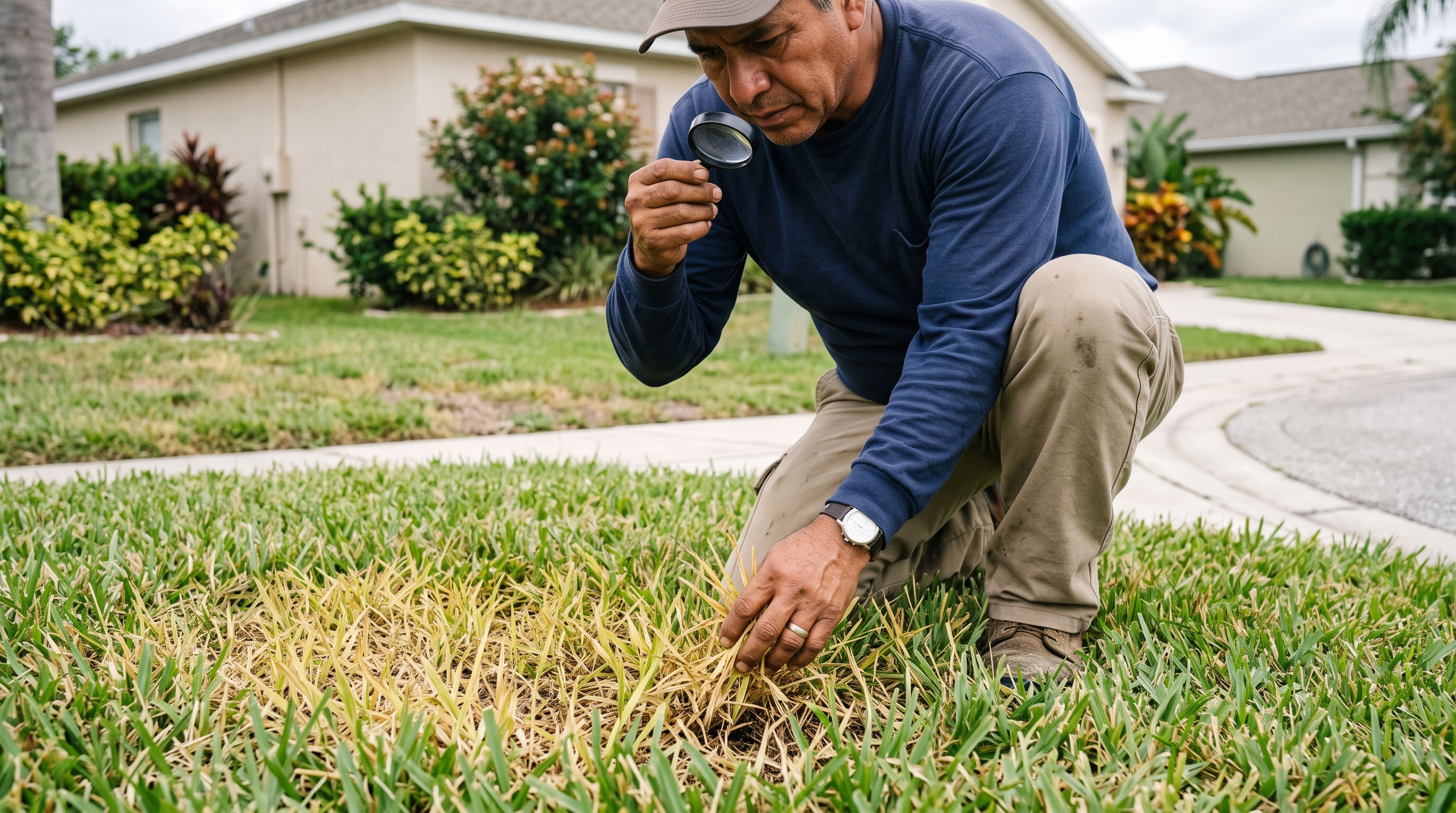
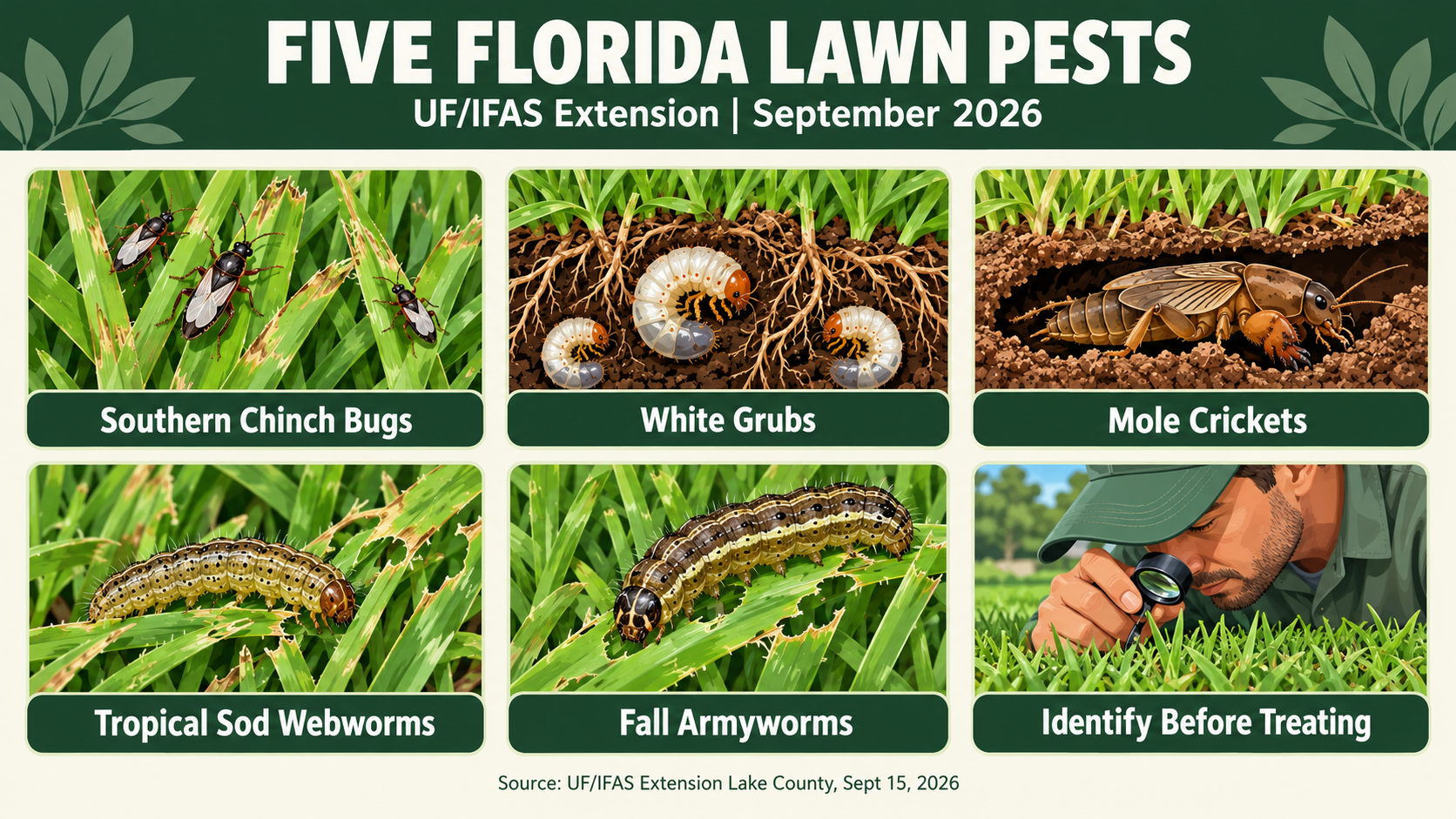
A September 15 article from UF/IFAS Extension Lake County reviews five insect groups that Florida homeowners commonly encounter in damaged lawns: southern chinch bugs, white grubs, mole crickets, tropical sod webworms, and fall armyworms. It describes different feeding patterns that help guide the first inspection. Chinch bugs are especially important in St. Augustinegrass and can produce expanding yellow or brown patches in hot, sunny areas, including turf beside pavement. White grubs feed below ground on roots. One clue is grass that lifts easily because its root system has been damaged. Mole crickets tunnel through soil and can leave raised ridges, thinning grass, or a spongy feel underfoot. Tropical sod webworm caterpillars feed on leaf blades at night, often leaving ragged tips and closely cropped patches. Fall armyworms can chew turf rapidly, with damaged areas expanding over days. These signs are leads for investigation rather than proof of a particular insect. The article is statewide educational guidance from Lake County, not a report of a confirmed outbreak in South Tampa. For Ecoscape clients, it arrives at a useful time to review lawns with fresh brown patches and ask what changed in watering, mowing, weather, and pest activity. A close look at leaf damage and roots provides better direction than replacing sod immediately. The Extension report does not say every pest affects every turf variety equally or recommend treating an entire lawn based on color alone.
UF/IFAS emphasizes that many lawn problems resemble insect damage. Drought stress, fungal disease, nutrient deficiencies, and poor irrigation coverage can also create brown patches. The right response begins with identification. Inspect the boundary between healthy and damaged grass, examine leaf blades for chewing, look at roots in a small sample, and note whether ridges or loose turf are present. The article mentions a soap flush test as one way specialists bring some lawn insects to the surface for identification. It also recommends regular scouting and maintaining proper mowing and irrigation practices. Chinch bug injury beside a driveway, for example, should not automatically prompt additional watering. If the underlying cause is an insect, extra irrigation does not solve it. If the problem is a dry area caused by a blocked sprinkler, an insecticide is equally misplaced. Ecoscape crews can help homeowners by recording photographs and the location of new damage, then recommending a closer inspection before proposing repairs. When a pest is identified, treatment should fit the insect, turf, and product label. The source does not give a single chemical program for all five pests, and this article does not invent one. For South Tampa properties with St. Augustinegrass, it is especially helpful to distinguish leaf feeding from root damage and simple water stress before deciding whether to treat, adjust irrigation, or plan sod replacement. The practical takeaway from the September report is careful, timely diagnosis while the damaged area is still small.
UF/IFAS Extension Lake County
Source:
September 15, 2026
Date:
Florida lawn insects, South Tampa chinch bugs, tropical sod webworms Tampa, lawn grubs, mole crickets, fall armyworms, UF IFAS lawn pest diagnosis