
American Elderberry
Sambucus canadensis
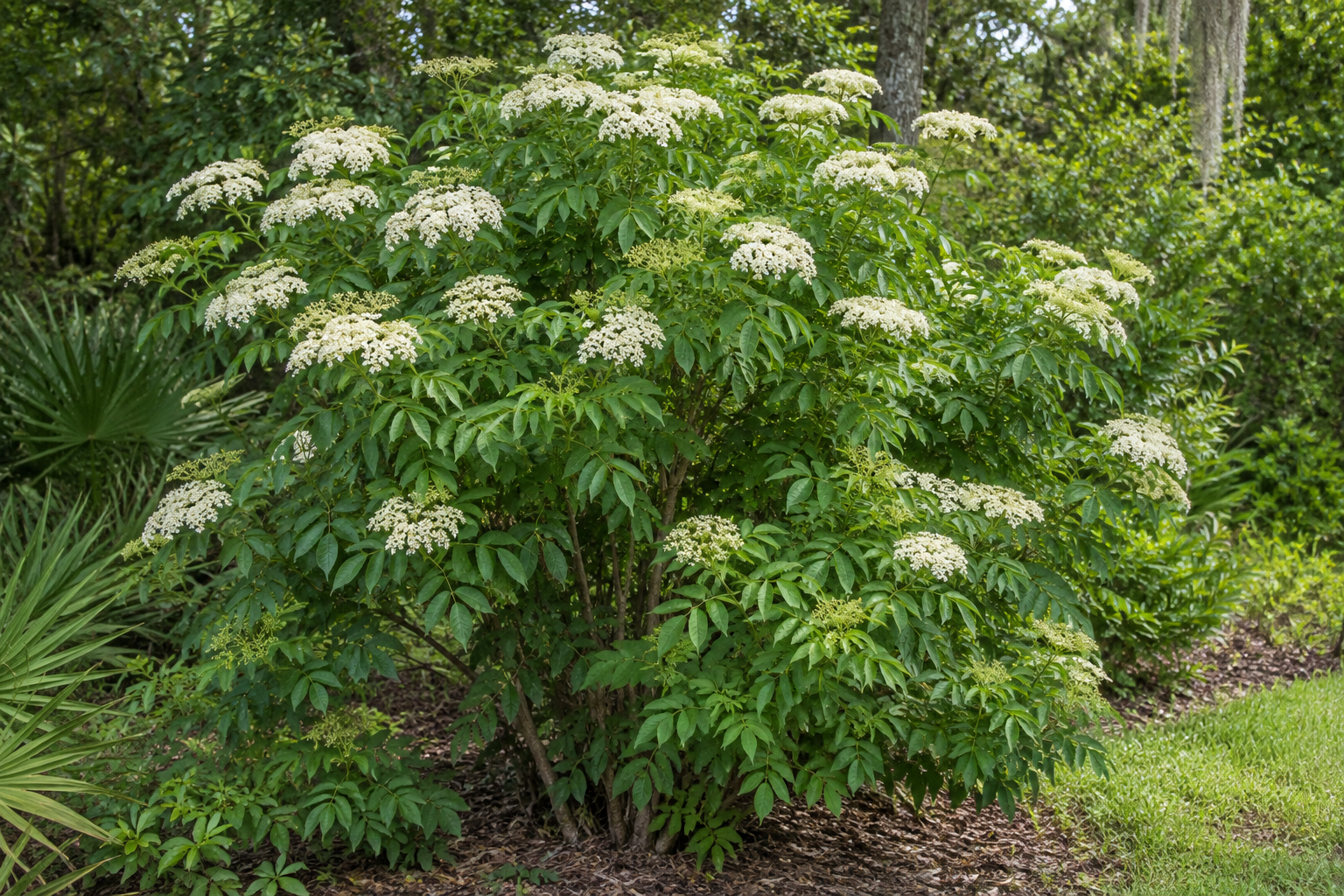
American Elderberry shrub with compound leaves and broad creamy-white flower clusters
Overview
American elderberry is a large Florida native shrub with broad white flower clusters followed by dark purple berries. It grows quickly in moist sites and provides excellent wildlife value.
Mature Size
Expect 8 to 12 feet tall and wide. Suckers may create a broad colony if left unmanaged.
Light and Water
Full sun produces the most flowers and fruit. Partial shade is acceptable. Keep soil moist during establishment and dry periods.
Soil and Drainage
Elderberry adapts to moist sand, loam, and pond-edge soil. It tolerates periodic flooding better than prolonged drought.
Care
Remove old canes and unwanted suckers during winter. Selective pruning keeps the plant vigorous without destroying its natural form.
Landscape Uses
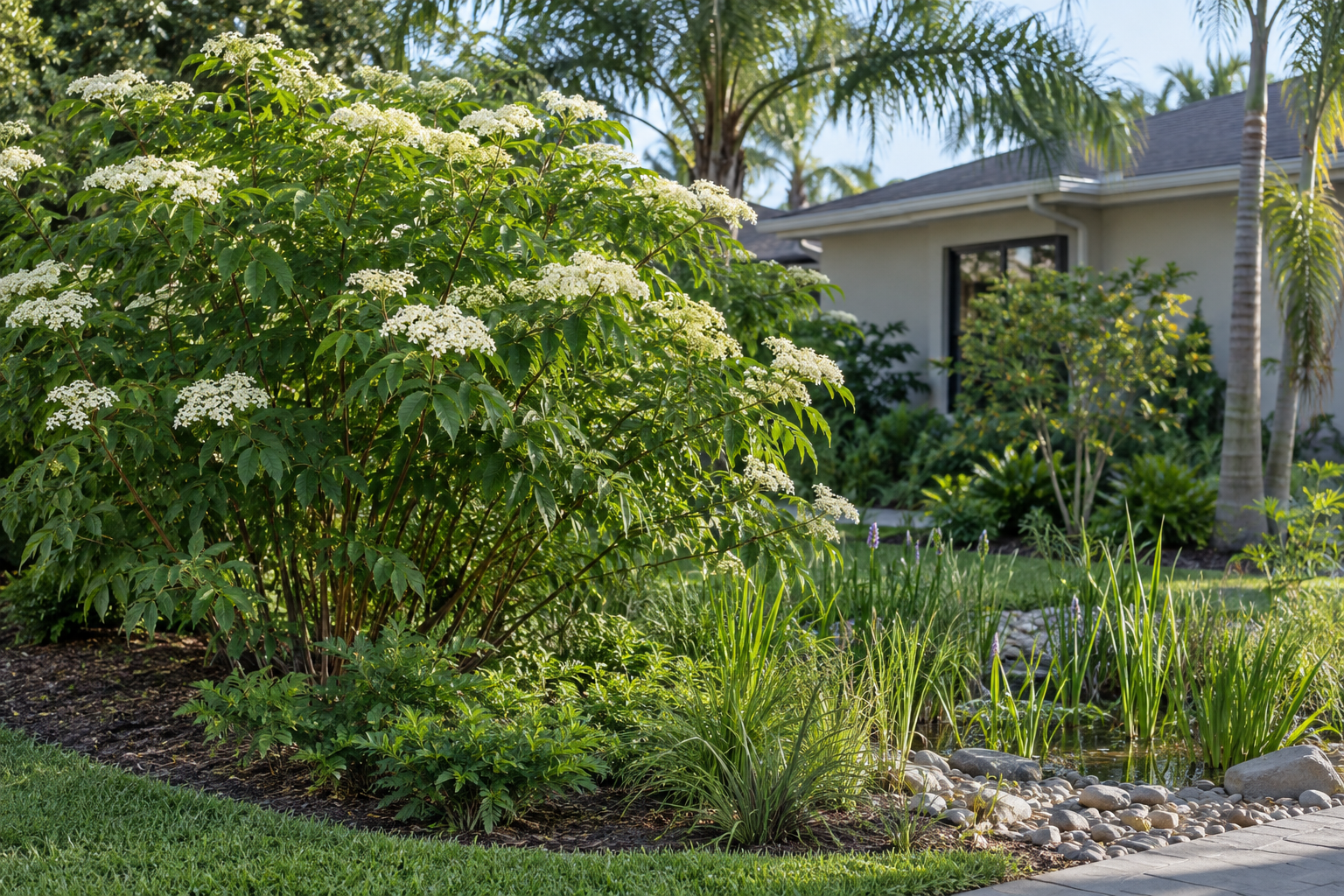
Use as a large native screen, rain-garden backdrop, wildlife hedge, or pond-edge planting. Give it room to spread.
Best Planting Time
Fall through early spring is ideal.
Wildlife and Safety
Flowers support pollinators and ripe berries feed birds. Raw or unripe fruit, leaves, stems, and roots should not be eaten.
Florida Resource
Use the UF/IFAS Florida-Friendly Landscaping Plant Guide to compare regional conditions and placement options.
Installed Prices
(No price means not available)
1 Gallon | 2 Gallon | 3 Gallon | 5 Gallon | 7 Gallon | 15G Price | 25 Gallon | 30 Gallon | 45 Gallon |
|---|---|---|---|---|---|---|---|---|
$30.50 |
Bloom Color
White, Purple
Bloom Season
Spring
Wildlife Benefits
Limited Wildlife Value
Safety Concerns
None Known
Plant Features
Flowering, Berries
Growth Rate
Moderate
Drought Tolerance
Moderate
Water Needs
Moderate
Maintenance Level
Moderate
Landscape Use
Foundation Planting, Accent Plant
Mature Width
4–8 Feet
Mature Height
4–8 Feet
Sun Exposure
Full Sun