
Beach Sunflower
Helianthus debilis
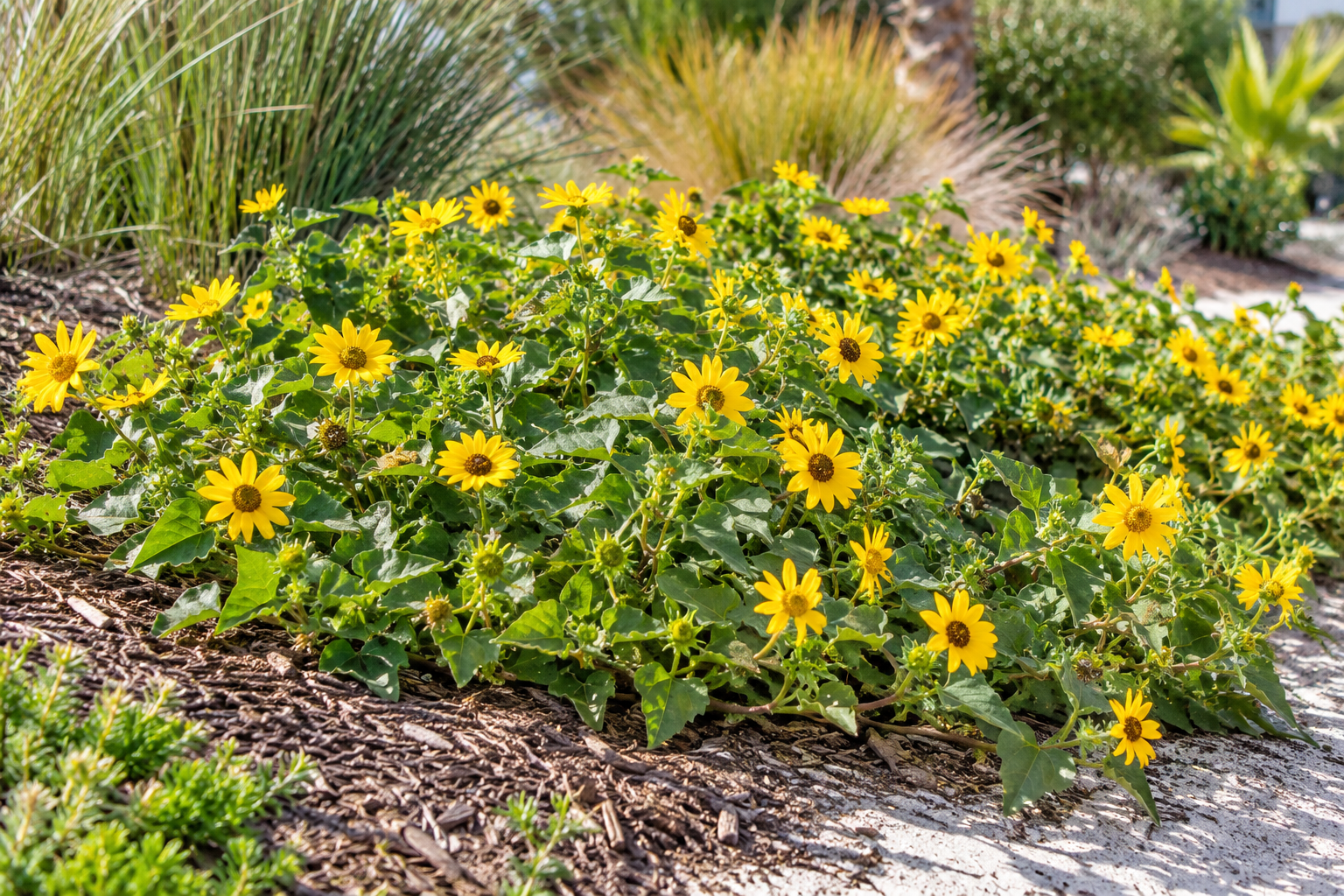
Beach Sunflower groundcover with yellow flowers in a sunny Tampa landscape
Overview
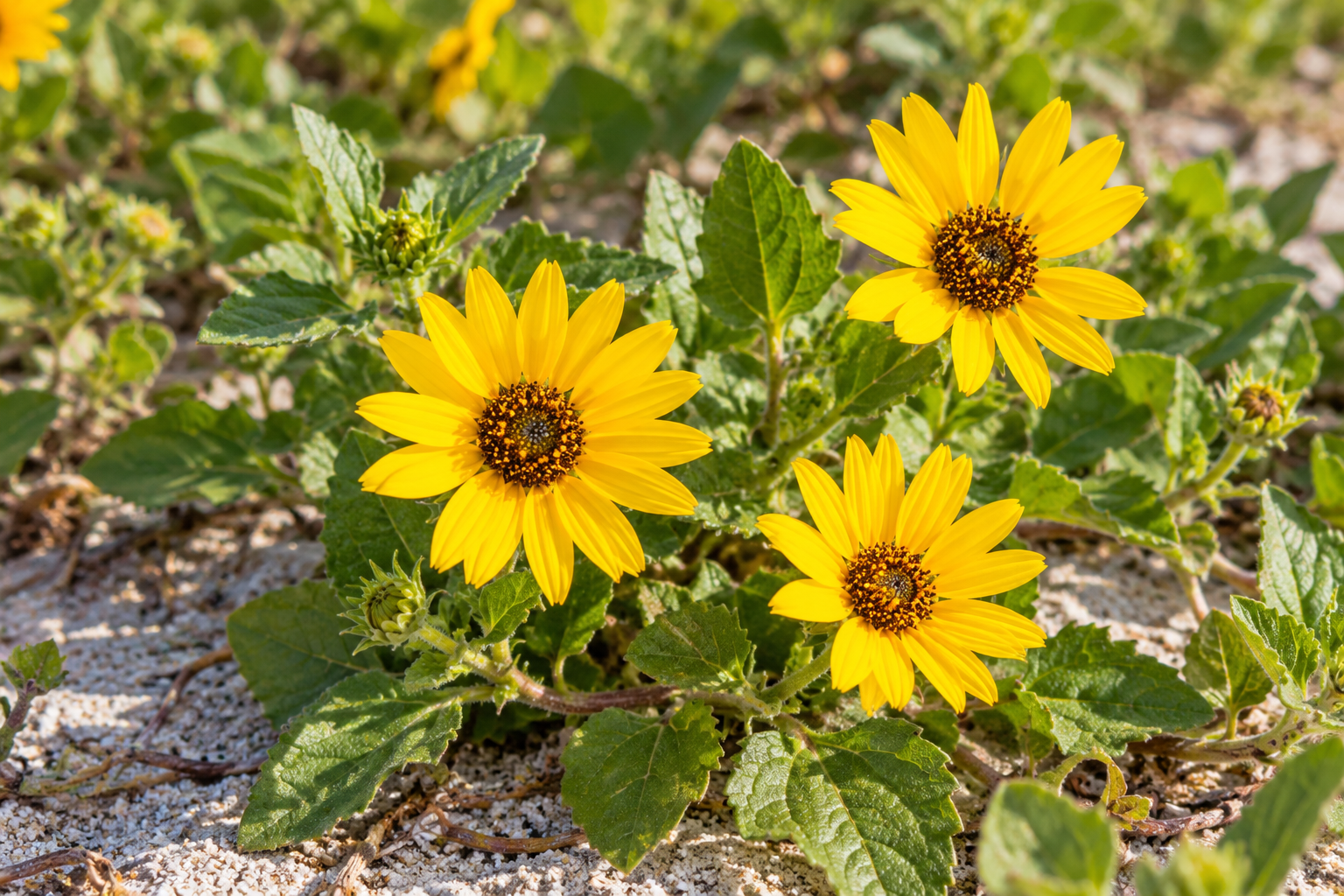
Beach Sunflower is a fast-spreading Florida native perennial groundcover with dark green triangular leaves and yellow daisy-like flowers. It brings long-season color to sunny, dry, sandy Tampa landscapes.
Mature Size and Habit
Plants form a dense spreading mat about 1 to 2 feet tall, with some flowering stems rising higher. Clumps spread 2 to 4 feet through trailing stems, underground runners, and seedlings.
Best Landscape Uses
Use it as a flowering ground cover, sunny border, erosion-control planting, coastal mass, wall cascade, or pollinator feature. Place it where vigorous growth will cover open soil.
Sunlight
Full sun produces the densest growth and strongest flowering. Shade makes stems loose and reduces bloom. Choose a location with at least six hours of direct light.
Soil, Drainage, and Irrigation
Beach Sunflower prefers well-drained sandy soil. Water during establishment, then reduce frequency. Avoid low wet beds, constant irrigation, and heavy fertilizer because excess moisture and fertility weaken growth.
Best Planting Season for Tampa and Central Florida
Spring through early fall supports quick establishment. Irrigate new plants without saturating the soil, then let the root zone dry between deeper waterings.
Pruning and Maintenance
Trim runners when they cross walks or enter nearby beds. Cut tired growth or cold damage back to restore a compact form. Remove excess seedlings and thin crowded sections when needed.
Wildlife Value
Flowers attract butterflies, bees, and other pollinators. Mature seed heads feed birds. Avoid routine insecticide use while flowers are open.
Cold and Heat Sensitivity
Heat, sun, drought, and salt spray suit this plant. Freezes can damage top growth, but plants often reseed or return in Central Florida. Wet winter soil creates greater risk.
Safety, Roots, and Placement Warnings
No major toxicity or thorn concern is widely reported. Spreading runners and seedlings need space and routine edging. Keep stems back from sidewalks to prevent a trip hazard.
Invasive Concerns
Beach Sunflower is native to Florida and is not known as invasive. Its vigorous local spread still needs control. Remove unwanted runners and seedlings before they crowd neighboring plants.
Helpful Resources
Review the UF/IFAS Beach Sunflower profile for verified identification, growing conditions, uses, and management guidance.
Installed Prices
(No price means not available)
1 Gallon | 2 Gallon | 3 Gallon | 5 Gallon | 7 Gallon | 15G Price | 25 Gallon | 30 Gallon | 45 Gallon |
|---|---|---|---|---|---|---|---|---|
$10.80 |
Bloom Color
Yellow
Bloom Season
Spring, Summer, Fall, Winter, Year-Round
Wildlife Benefits
Bees, Butterflies, Birds, Pollinators
Safety Concerns
Rapid Growth
Plant Features
Florida Native, Native, Flowering, Long Bloom Season, Fast Growing, Drought Tolerant
Growth Rate
Fast
Drought Tolerance
High
Water Needs
Low
Maintenance Level
Moderate
Landscape Use
Ground Cover, Mass Planting, Coastal Landscape, Erosion Control, Pollinator Garden, Native Garden, Border
Mature Width
2–4 Feet
Mature Height
Under 2 Feet
Sun Exposure
Full Sun