
Bird's Nest Fern
Asplenium nidus
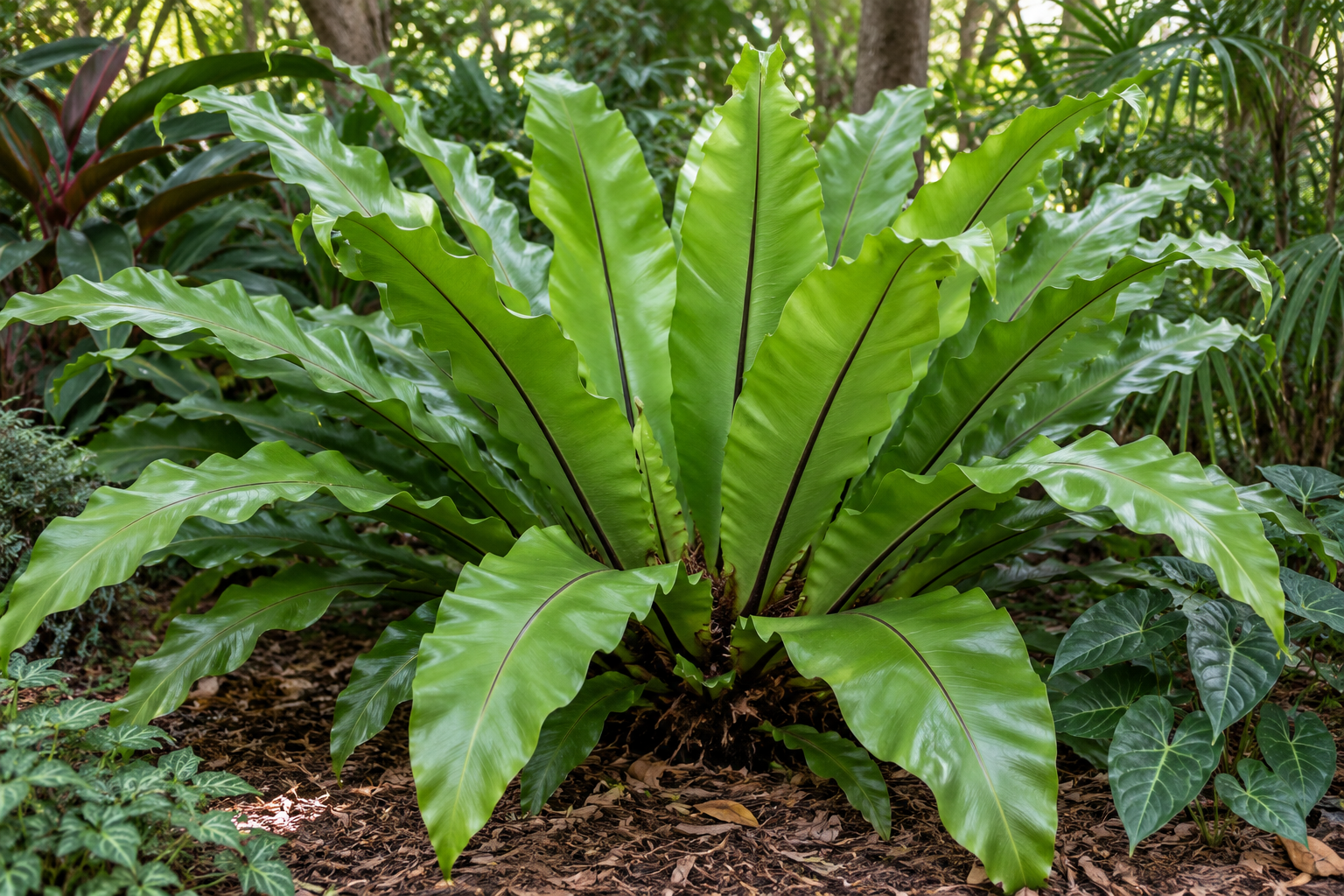
Bird's Nest Fern with broad, undivided green fronds and dark midribs forming an upright rosette in a shaded garden
Overview
Bird's nest fern adds bold green foliage to sheltered Tampa gardens. Its broad, undivided fronds rise from a central rosette, with dark midribs and gently wavy edges.
Mature Size and Habit
Allow about 2–4 feet of height and spread. This slow-growing evergreen forms a rounded, upright clump rather than the finely divided fronds of many familiar ferns.
Best Landscape Uses
Use it as a shaded accent, in grouped beds, or in a patio container. It also grows epiphytically on a suitable mount, with protection from drying wind.
Sunlight
Choose bright shade or filtered canopy light. Strong afternoon sun scorches the broad fronds. Indoors, place it in bright indirect light.
Soil, Drainage, and Irrigation
Provide a porous, organic-rich growing medium with good drainage and steady moisture. Avoid drought, buried crowns, and prolonged saturation. Water the root area without repeatedly flooding the center.
Best Planting Season for Tampa and Central Florida
Spring installation gives this tropical fern a warm establishment period. Year-round planting suits sheltered sites with reliable irrigation. Containers simplify protection during winter cold.
Pruning and Maintenance
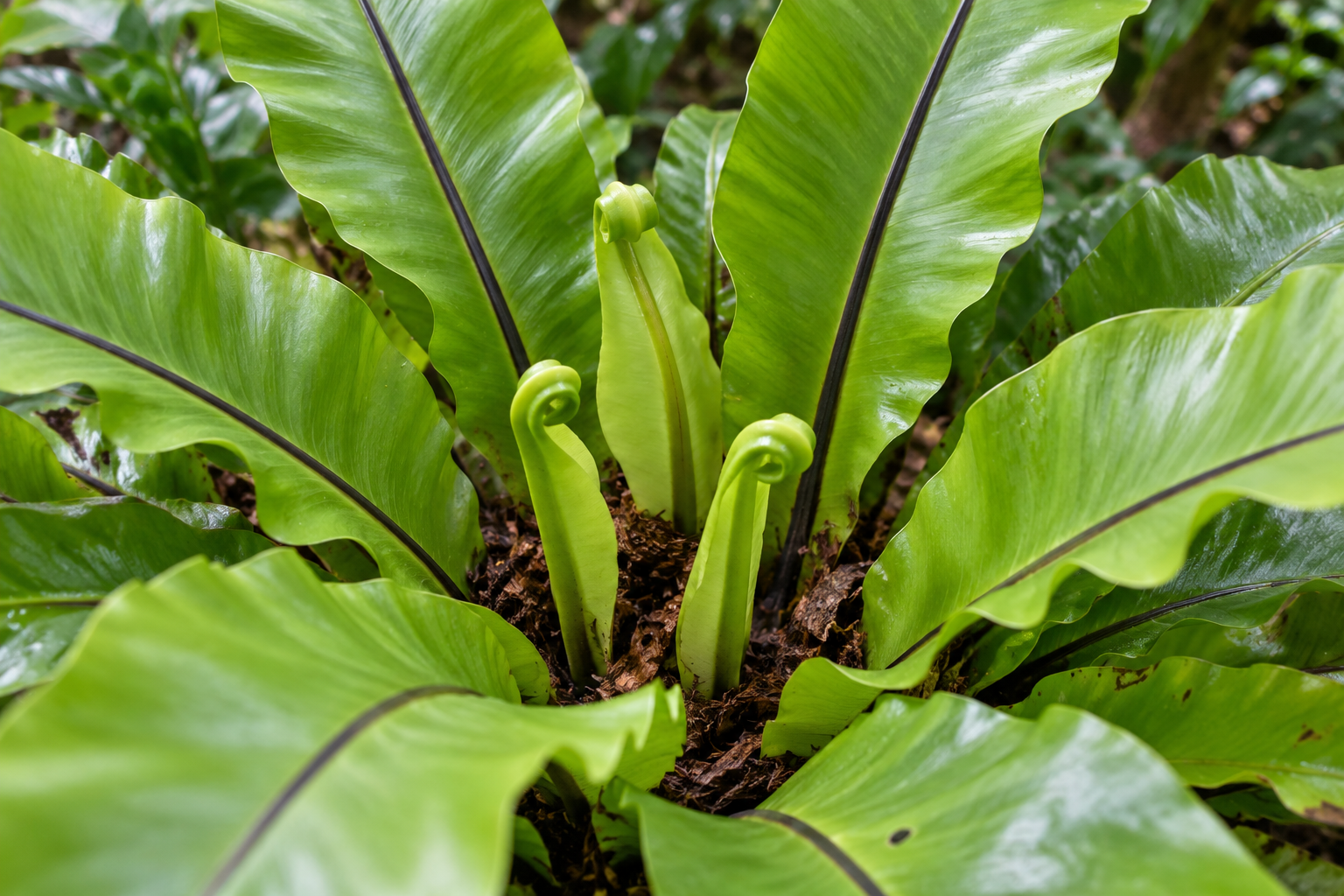
Remove damaged outer fronds at their bases and handle new growth gently. Use dilute fertilizer sparingly during active growth. Check for scale, snails, slugs, and leaf damage.
Wildlife Value
This fern supplies no nectar, flowers, fruit, or seed. Its structure offers small sheltered spaces, but it is not a substitute for native plants providing documented Florida wildlife food.
Cold and Heat Sensitivity
Humidity suits the plant, but frost damages it. Choose a protected South Tampa location and move containers under cover during cold events. Avoid exposed inland frost pockets.
Safety, Roots, and Placement Warnings
No thorns or woody structural roots are present. Leave room for spreading fronds beside walkways and avoid treating ornamental foliage as food. Keep the central growing point intact.
Invasive Concerns
Asplenium nidus is not Florida-native. UF/IFAS reports it is not known to be invasive. Keep plantings managed and dispose of unwanted plants away from natural areas.
Helpful Resources
Read the UF/IFAS profile and NC State Extension guide for identification, moisture needs, and cold protection.
Installed Prices
(No price means not available)
1 Gallon | 2 Gallon | 3 Gallon | 5 Gallon | 7 Gallon | 15G Price | 25 Gallon | 30 Gallon | 45 Gallon |
|---|---|---|---|---|---|---|---|---|
$18.60 |
Bloom Color
None
Bloom Season
Does Not Flower
Wildlife Benefits
Limited Wildlife Value
Safety Concerns
No Major Concern
Plant Features
Distinctive Foliage, Evergreen
Growth Rate
Slow
Drought Tolerance
Low
Water Needs
High
Maintenance Level
Moderate
Landscape Use
Accent, Container, Mass Planting, Tropical Garden
Mature Width
2–4 Feet
Mature Height
2–4 Feet
Sun Exposure
Shade