
Black Gum
Nyssa sylvatica
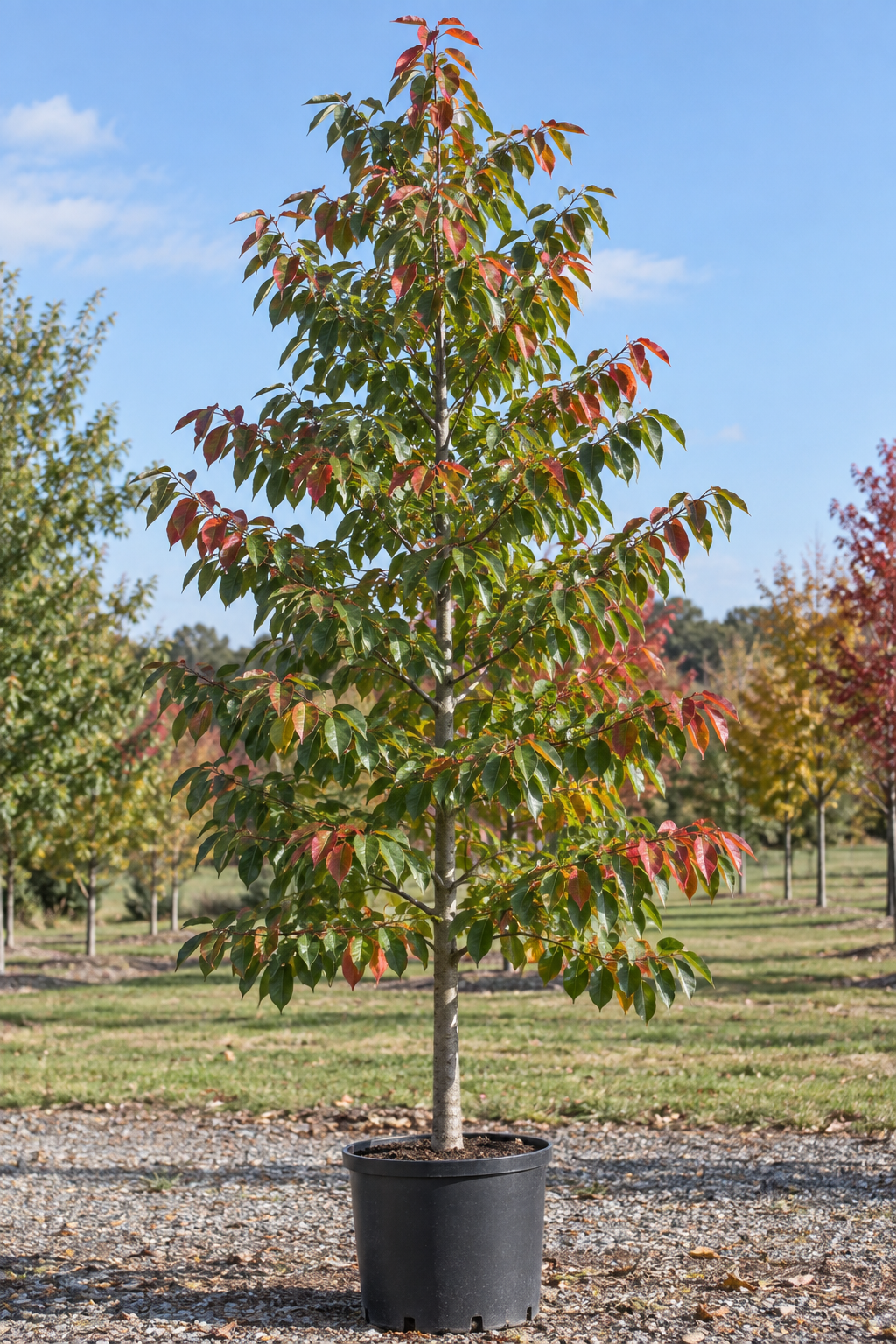
Young Black Gum tree with a straight leader and glossy leaves turning red and orange
Overview
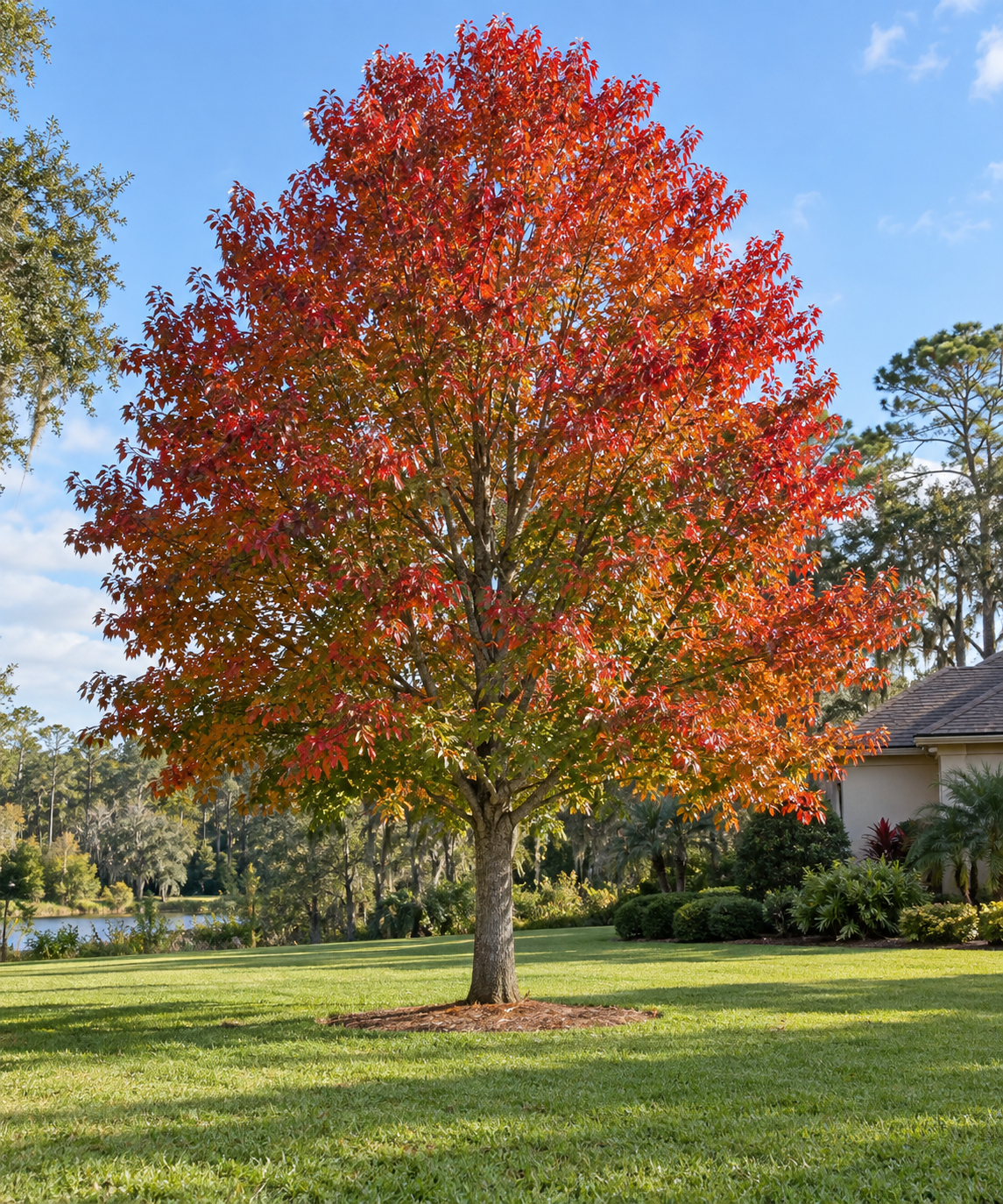
Black Gum is a Florida-native shade tree valued for a strong central form, glossy summer foliage, small wildlife fruit, and dependable red to orange fall color. It grows more slowly than many common street trees but develops into a durable long-term specimen.
Mature Size and Habit
In landscapes it often reaches 30 to 50 feet tall and 20 to 30 feet wide, with a pyramidal crown when young and a broader irregular crown with age.
Best Landscape Uses
Use Black Gum as a lawn specimen, shade tree, rain-garden tree, or native habitat anchor. Give it permanent open space because mature branches and roots extend well beyond a small planting island.
Sunlight
Full sun gives the best crown density and fall color. Partial sun is tolerated, especially at the edge of taller native trees.
Soil, Drainage, and Irrigation
Black Gum adapts to moist acidic soil and also grows in well-drained upland sites once established. Water deeply during the first two years. Avoid alkaline fill, compacted soil, and repeated root-zone disturbance.
Best Planting Season for Tampa and Central Florida
Late fall through winter is preferred. Cooler temperatures reduce canopy stress while new roots begin moving into surrounding soil.
Pruning and Maintenance
Train one central leader when young and remove competing stems early. Mature trees need little routine pruning. Watch for stress from grade changes, trunk injury, drought, and construction compaction.
Wildlife Value
Spring flowers support bees and other pollinators. Blue-black fruit feeds birds, while branching and mature canopy provide shelter.
Cold and Heat Sensitivity
The species handles Central Florida heat and ordinary winter cold. Newly installed trees need consistent water through hot dry periods. Fall color varies with weather and site conditions.
Safety, Roots, and Placement Warnings
Black Gum develops a strong taproot when young, which makes later transplanting difficult. Install it away from foundations, pavement, overhead utilities, and underground conflicts. Fallen fruit may spot hard surfaces.
Invasive Concerns
This tree is native to Florida and is not invasive. Seedlings belong in suitable native areas but should be removed from structures and narrow beds.
Helpful Resources
See NC State Extension's Black Gum profile for native range, mature size, soil, wildlife, and landscape guidance.
Installed Prices
(No price means not available)
1 Gallon | 2 Gallon | 3 Gallon | 5 Gallon | 7 Gallon | 15G Price | 25 Gallon | 30 Gallon | 45 Gallon |
|---|---|---|---|---|---|---|---|---|
$190.00 | $396.00 |
Bloom Color
Other or Inconspicuous
Bloom Season
Spring
Wildlife Benefits
Bees, Birds, Pollinators, Wildlife Shelter
Safety Concerns
None Known
Plant Features
Native, Fall Color, Berries
Growth Rate
Slow
Drought Tolerance
Moderate
Water Needs
Moderate
Maintenance Level
Low
Landscape Use
Shade Tree, Specimen, Rain Garden
Mature Width
Over 15 Feet
Mature Height
Over 30 Feet
Sun Exposure
Full Sun, Partial Sun