
Cape Breeze Switchgrass
Panicum virgatum 'Cape Breeze'
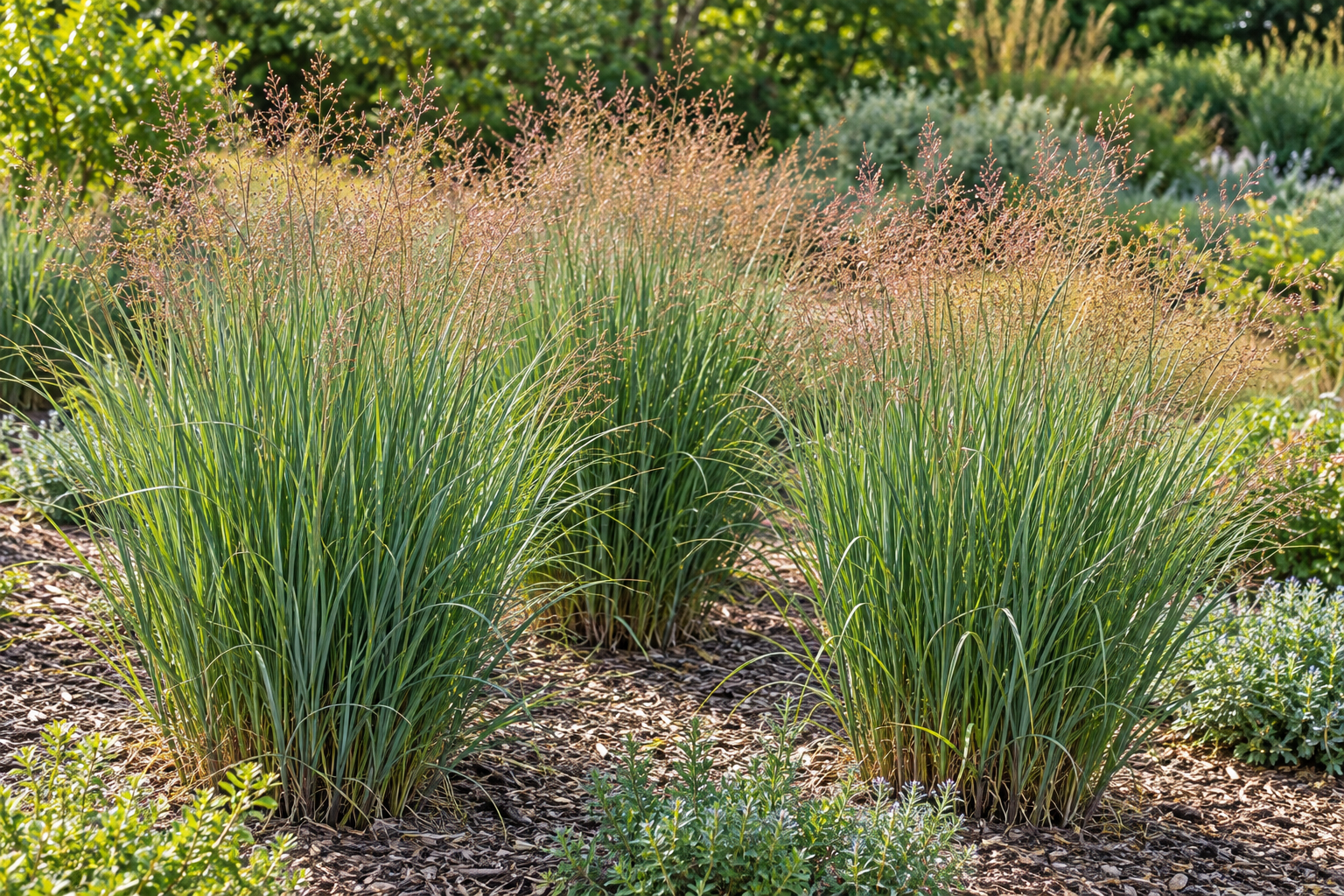
Compact Cape Breeze Switchgrass clumps with fine airy seed panicles
Overview
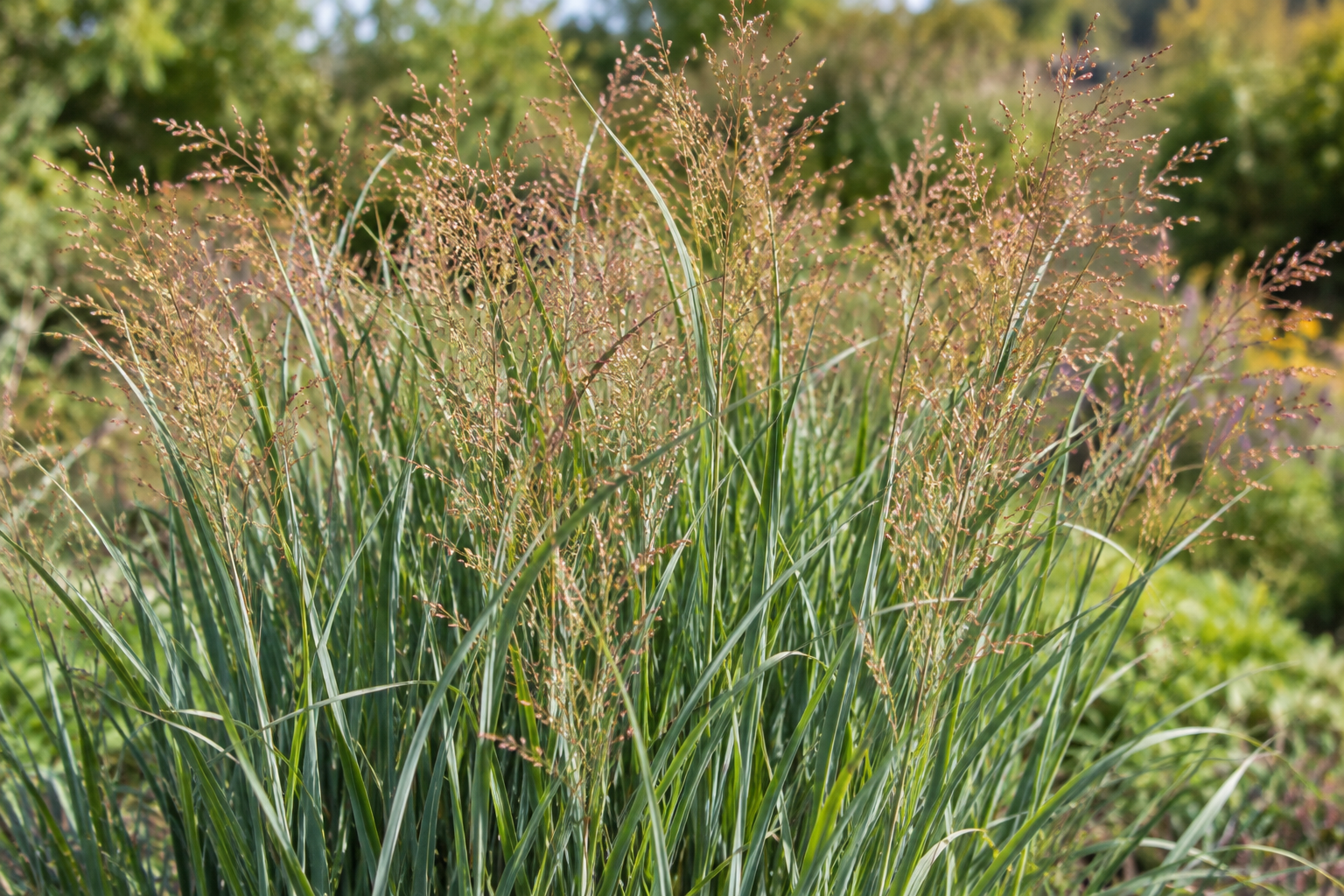
Cape Breeze is a compact, upright selection of Florida-native switchgrass. Green blades stay tidy late while airy panicles open pale pink to yellow-green and mature bronze.
Mature Size and Habit
This warm-season perennial forms a dense clump about 24–30 inches tall and roughly as wide, with flowers slightly above the foliage. Short rhizomes expand the crown gradually.
Best Landscape Uses
Use it as an accent, repeated border, rain-garden component, erosion-control planting, or compact mass in a sunny native garden. Its restrained height suits smaller beds.
Sunlight
Full sun gives the firmest stems, densest habit, and best flowers. Partial sun is tolerated by the species, but shade can open the clump and cause leaning.
Soil, Drainage, and Irrigation
Plant in sand or loam with average to moist conditions and keep the crown at grade. Water through establishment; afterward it tolerates dry periods, occasional inundation, and moderate salt spray.
Best Planting Season for Tampa and Central Florida
Install from fall through early spring, or in warm weather with reliable irrigation. Allow airflow in humid sites and mulch beside, never over, the crown.
Pruning and Maintenance
Leave tan stems for winter texture, then cut the clump to 6–10 inches before new shoots emerge in late winter. Divide crowded crowns in spring and avoid heavy fertilizer.
Wildlife Value
Seed heads feed birds and small mammals, while stems provide seasonal cover and nesting material. In Florida the species is a larval host for the tawny-edged skipper.
Cold and Heat Sensitivity
Summer heat and rain suit this grass. Top growth turns tan after cold weather, but established crowns return in spring; avoid keeping dormant crowns waterlogged.
Safety, Roots, and Placement Warnings
It has no thorns or major toxicity concern, but dry blades can feel sharp and dormant stems are highly flammable. Wear gloves when cutting and keep clumps away from buildings, grills, and ignition sources.
Invasive Concerns
Panicum virgatum is native throughout Florida and is not an invasive exotic. Clumps can expand and may seed, so divide plants that exceed their space and remove volunteers.
Helpful Resources
Review the Florida Native Plant Society profile for Florida habitat and wildlife value and the NC State Extension profile for culture, maintenance, and fire-safety guidance.
Installed Prices
(No price means not available)
1 Gallon | 2 Gallon | 3 Gallon | 5 Gallon | 7 Gallon | 15G Price | 25 Gallon | 30 Gallon | 45 Gallon |
|---|---|---|---|---|---|---|---|---|
$14.28 |
Bloom Color
Other or Inconspicuous
Bloom Season
Summer, Fall
Wildlife Benefits
Birds, Butterflies, Host Plant, Wildlife Shelter
Safety Concerns
No Major Concern
Plant Features
Compact Habit, Drought Tolerant, Florida Native, Native, Upright Habit
Growth Rate
Moderate
Drought Tolerance
High
Water Needs
Moderate
Maintenance Level
Low
Landscape Use
Accent, Border, Erosion Control, Mass Planting, Native Garden, Rain Garden, Wildlife Garden
Mature Width
2–4 Feet
Mature Height
2–4 Feet
Sun Exposure
Full Sun