
Common Staghorn Fern
Platycerium bifurcatum
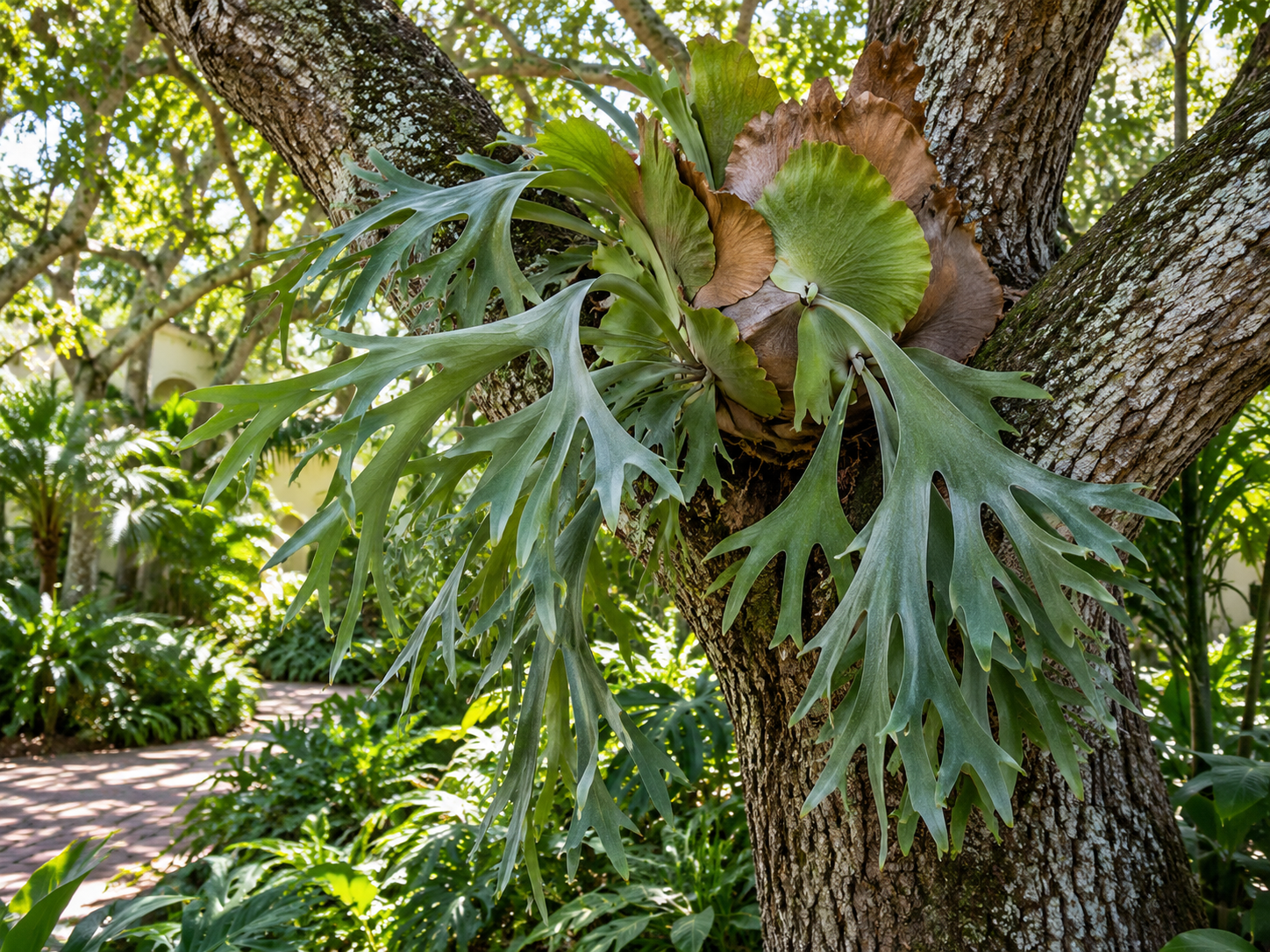
Common staghorn fern with layered shield fronds and forked antler fronds mounted in a shaded tree crotch
Overview
Common staghorn fern is an epiphytic tropical fern with rounded shield fronds and forked gray-green fronds resembling antlers. Beneath tree canopy, it becomes a dramatic accent in protected Tampa gardens.
Mature Size and Habit
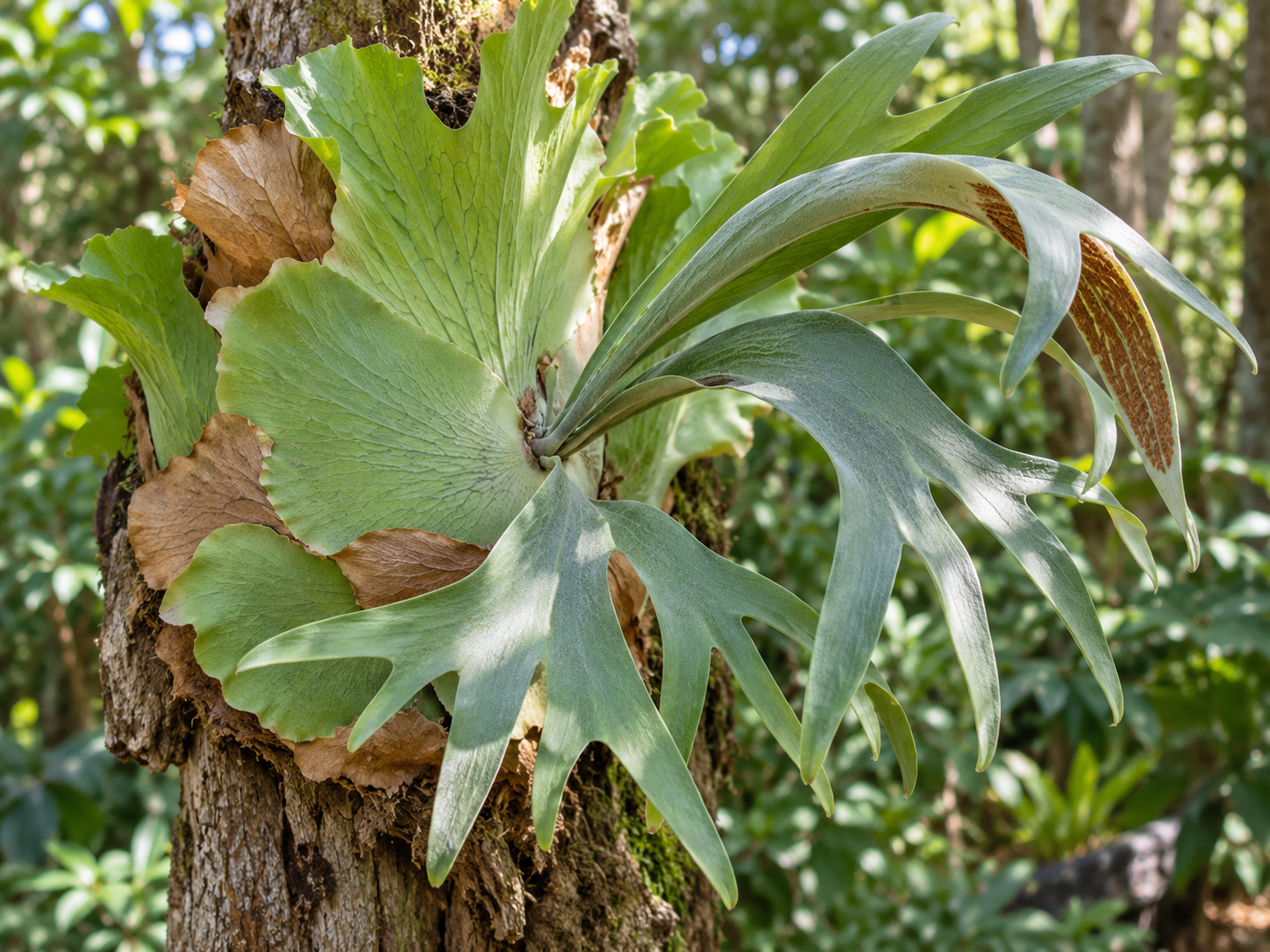
A colony reaches 2 to 3 feet tall and wide, with short rhizomes producing pups. Shield fronds overlap the mount and brown naturally; antler fronds carry spores underneath.
Best Landscape Uses
Mount it on untreated wood, tree fern fiber, rock, or a secure basket beneath a porch or shade tree. Use it as a tropical specimen away from strong wind.
Sunlight
Provide bright shade, dappled light, or gentle morning sun. Deep darkness weakens growth, while direct afternoon sun can scorch the felted fronds.
Soil, Drainage, and Irrigation
Use airy sphagnum or orchid-type medium rather than garden soil. Water thoroughly, then let the mount approach dryness; constant saturation causes rot.
Best Planting Season for Tampa and Central Florida
Mount from spring through early fall so roots and new shields secure before cool weather. Year-round installation works on a protected porch with frost protection.
Pruning and Maintenance
Do not remove brown shields; they protect roots and collect nutrients. Remove broken antler fronds, inspect ties, divide pups when needed, and fertilize lightly in warm weather.
Wildlife Value
Staghorn fern has no flowers, nectar, fruit, or seed. Its shields may shelter small invertebrates, but food value is limited; combine it with flowering native plants.
Cold and Heat Sensitivity
Florida heat and humidity suit this species, but frost is the main risk. It tolerates brief cold better than many staghorns; protect small mounts near freezing.
Safety, Roots, and Placement Warnings
No thorns or aggressive ground roots are present, and no major ingestion hazard is established. Keep plant material from pets and children, use sturdy hardware, and never let wire cut into a host tree.
Invasive Concerns
This nonnative fern needs caution because UF/IFAS notes potential escape. Keep it mounted in managed landscapes, remove unwanted pups, and never dump live pieces in natural areas.
Helpful Resources
Consult UF/IFAS Gardening Solutions for Florida care and caution guidance and NC State Extension for identification, size, and culture.
Installed Prices
(No price means not available)
1 Gallon | 2 Gallon | 3 Gallon | 5 Gallon | 7 Gallon | 15G Price | 25 Gallon | 30 Gallon | 45 Gallon |
|---|---|---|---|---|---|---|---|---|
$18.60 |
Bloom Color
None
Bloom Season
Does Not Flower
Wildlife Benefits
Limited Wildlife Value
Safety Concerns
No Major Concern
Plant Features
Distinctive Foliage, Evergreen
Growth Rate
Slow
Drought Tolerance
Moderate
Water Needs
Moderate
Maintenance Level
Low
Landscape Use
Accent, Container, Specimen, Tropical Garden
Mature Width
2–4 Feet
Mature Height
2–4 Feet
Sun Exposure
Partial Sun, Shade