
Holly Fern
Cyrtomium falcatum
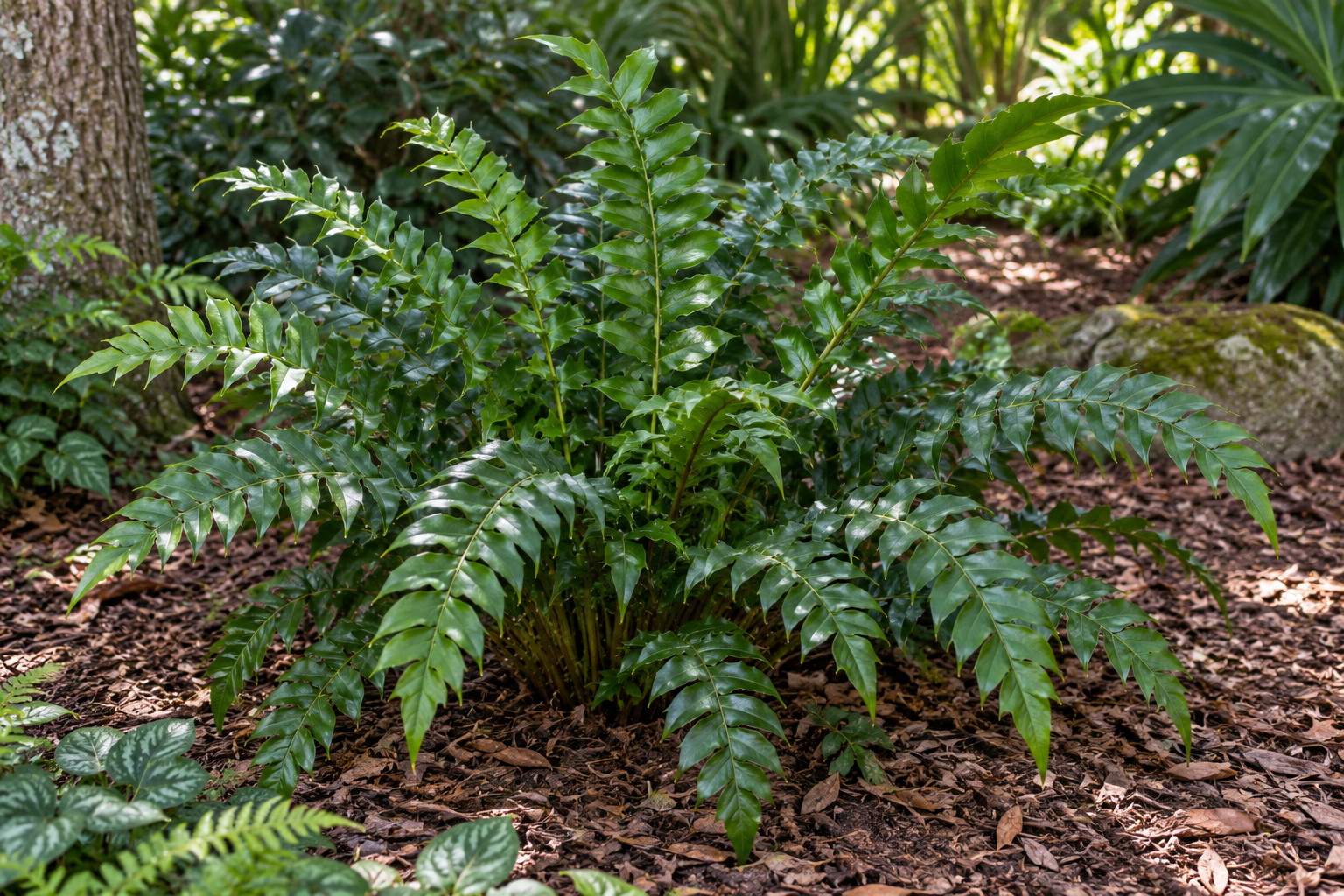
Holly Fern with arching dark green fronds and glossy, pointed holly-like leaflets in a mulched shade garden
Overview
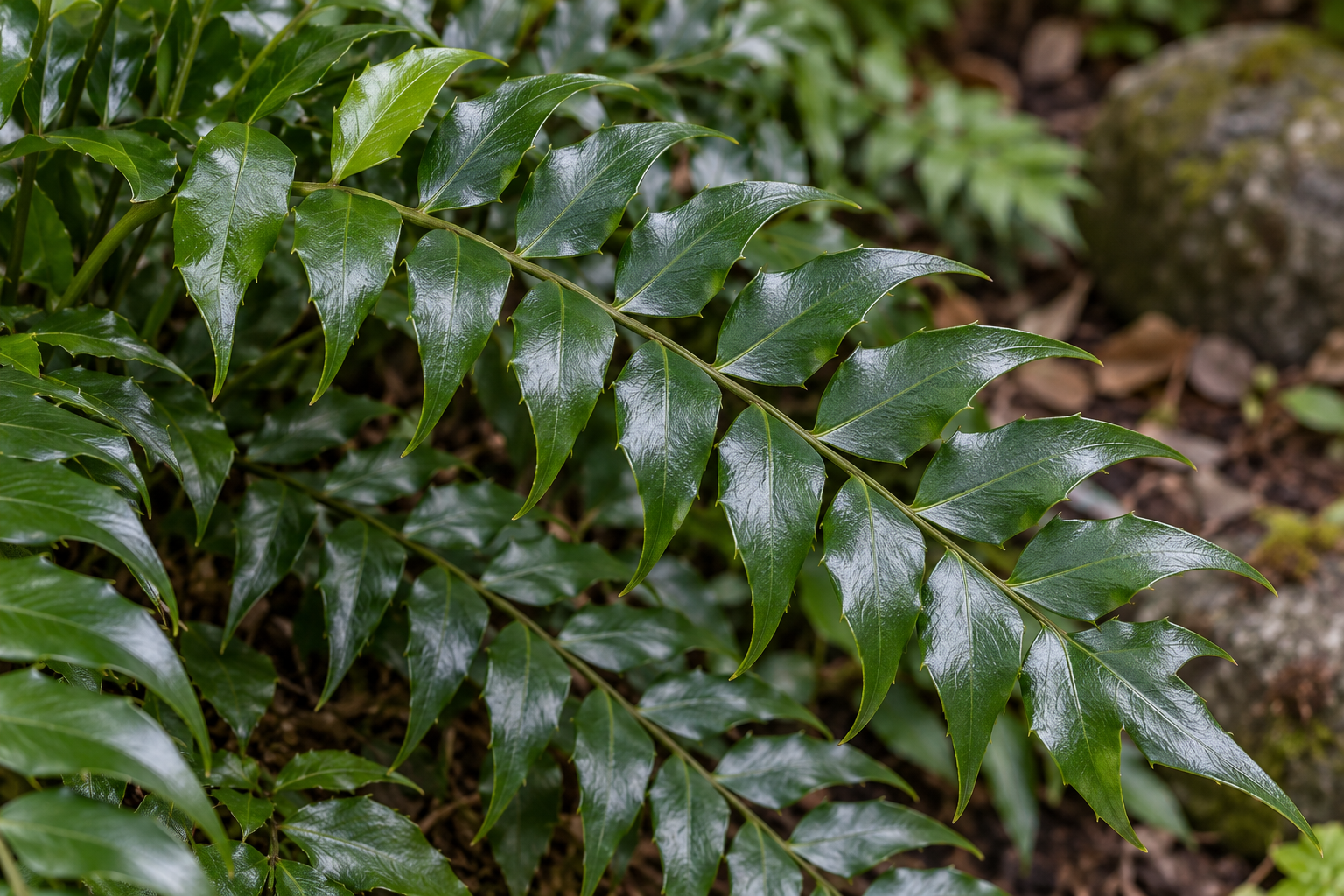
Holly fern brings coarse, glossy texture to shaded beds. Its arching fronds carry broad, pointed leaflets resembling holly foliage, with no woody branches or berries.
Mature Size and Habit
A typical clump grows about 18–24 inches tall and 2–3 feet wide. Slow growth and short rhizomes produce a dense, arching mound, usually evergreen in Tampa.
Best Landscape Uses
Use small groups along shaded borders, under trees, beside rocks, or in containers. Place it where its leathery leaflets contrast with finer ground covers.
Sunlight
Provide partial to full shade or dappled light beneath a canopy. Gentle morning sun suits protected sites. Avoid hot afternoon exposure beside reflective walls.
Soil, Drainage, and Irrigation
Keep soil moist, humus-rich, and well drained. Check moisture beneath tree canopies, where roots compete for water. Drought weakens fronds, while constant saturation encourages root rot.
Best Planting Season for Tampa and Central Florida
Fall through spring offers comfortable establishment conditions in Tampa. Warm-season installation needs dependable irrigation and shade. Keep mulch beside the crown instead of covering it.
Pruning and Maintenance
Trim frost-damaged or worn fronds at their bases. Inspect for scale, caterpillars, and leaf spots. Divide congested clumps when needed and avoid repeated shearing.
Wildlife Value
Flowers, nectar, fruit, and seed are absent because this fern reproduces by spores. Low clumps offer cover for small organisms, but direct Florida wildlife food value is limited.
Cold and Heat Sensitivity
Established plants tolerate normal Tampa heat and humidity in shade. Cold damages exposed fronds, although crowns are hardier than many tropical ferns. Protect newly installed plants during freezes.
Safety, Roots, and Placement Warnings
ASPCA lists Cyrtomium falcatum as non-toxic to cats and dogs. It has no woody structural roots or thorns. Preserve walking space and do not encourage pets to chew foliage.
Invasive Concerns
This Asian species has naturalized in parts of the Southeast. UF/IFAS assesses it as not a problem species in Florida. Remove volunteers and keep unwanted plants out of natural areas.
Helpful Resources
See NC State Extension, the UF/IFAS assessment, and the ASPCA listing.
Installed Prices
(No price means not available)
1 Gallon | 2 Gallon | 3 Gallon | 5 Gallon | 7 Gallon | 15G Price | 25 Gallon | 30 Gallon | 45 Gallon |
|---|---|---|---|---|---|---|---|---|
$10.80 | $25.20 |
Bloom Color
None
Bloom Season
Does Not Flower
Wildlife Benefits
Limited Wildlife Value
Safety Concerns
No Major Concern
Plant Features
Distinctive Foliage, Evergreen
Growth Rate
Slow
Drought Tolerance
Low
Water Needs
Moderate
Maintenance Level
Moderate
Landscape Use
Border, Container, Mass Planting, Rock Garden
Mature Width
2–4 Feet
Mature Height
1–3 Feet
Sun Exposure
Partial Sun, Shade