
Lantana
Lantana camara
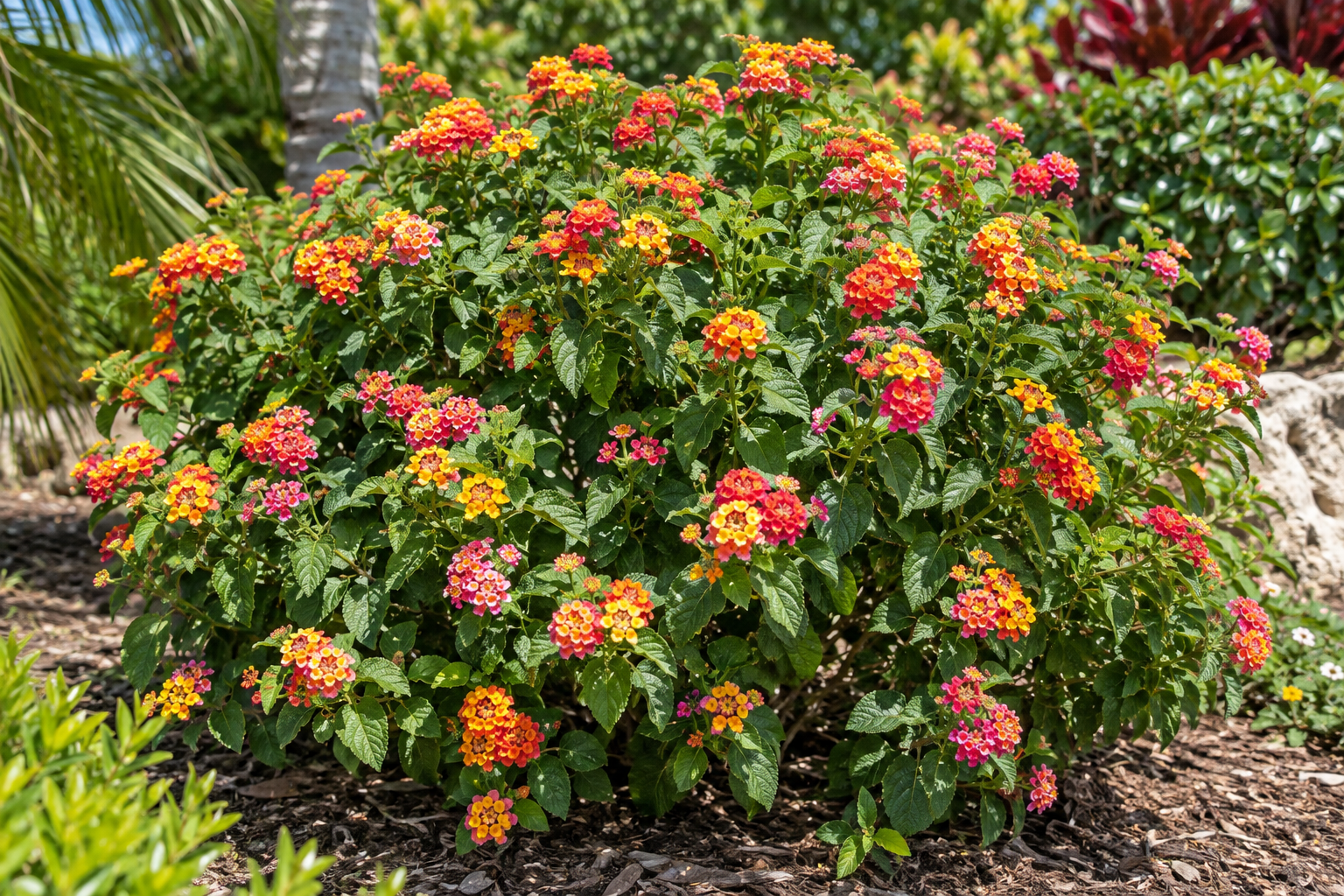
Lantana shrub with green leaves and multicolored yellow orange pink and red flowers
Overview
Lantana is a heat-tolerant nonnative flowering shrub with clusters of yellow, orange, pink, red, or mixed-color blooms. It flowers heavily through Tampa's warm season and attracts many pollinators.
Mature Size
Landscape cultivars range from low spreading forms to shrubs 4 to 6 feet tall and wide. Confirm the cultivar before choosing spacing.
Light and Water
Plant in full sun for dense growth and abundant flowers. Water during establishment, then irrigate during prolonged drought.
Soil and Drainage
Lantana accepts poor sandy soil but requires good drainage. Rich soil and excess fertilizer produce foliage at the expense of flowers.
Care
Prune during warm weather to control size and renew flowering. Wear gloves because foliage may irritate skin.
Landscape Uses
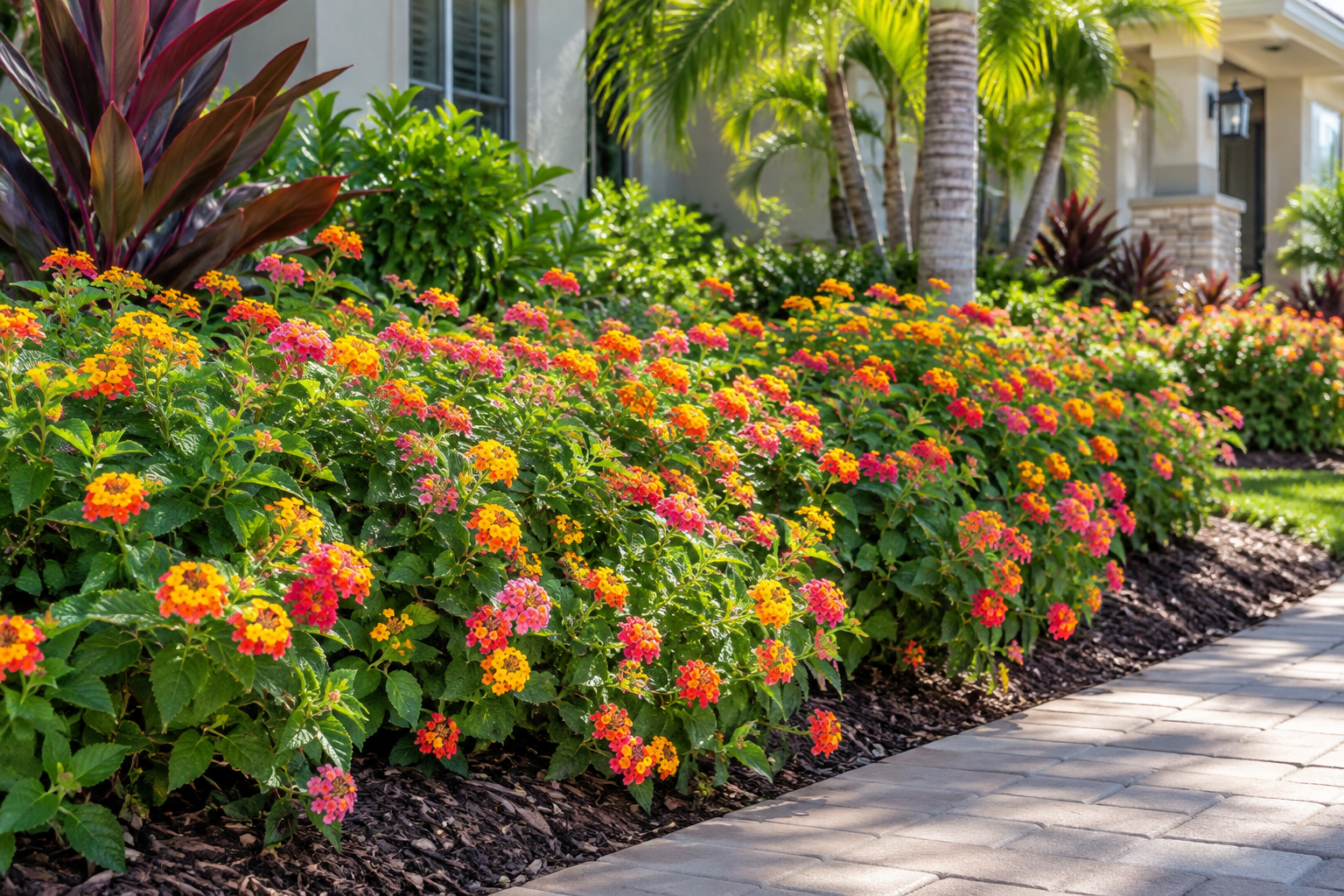
Use sterile compact cultivars in sunny borders, butterfly gardens, containers, or heat-exposed beds.
Best Planting Time
Spring through early fall supports quick establishment.
Invasive and Safety Concerns
Common lantana may spread into natural areas and hybridize with native lantana. Choose confirmed sterile cultivars and remove unwanted seedlings. Unripe berries and other plant parts are toxic if eaten.
Florida Resource
Use the UF/IFAS Florida-Friendly Landscaping Plant Guide to compare regional conditions and placement options.
Installed Prices
(No price means not available)
1 Gallon | 2 Gallon | 3 Gallon | 5 Gallon | 7 Gallon | 15G Price | 25 Gallon | 30 Gallon | 45 Gallon |
|---|---|---|---|---|---|---|---|---|
$7.50 | $11.00 |
Bloom Color
Yellow, Orange, Red, Pink
Bloom Season
Year-Round
Wildlife Benefits
Limited Wildlife Value
Safety Concerns
None Known
Plant Features
Flowering
Growth Rate
Moderate
Drought Tolerance
Moderate
Water Needs
Moderate
Maintenance Level
Moderate
Landscape Use
Foundation Planting, Accent Plant
Mature Width
4–8 Feet
Mature Height
4–8 Feet
Sun Exposure
Full Sun