
Oakland Holly
Ilex hybrid 'Magland'
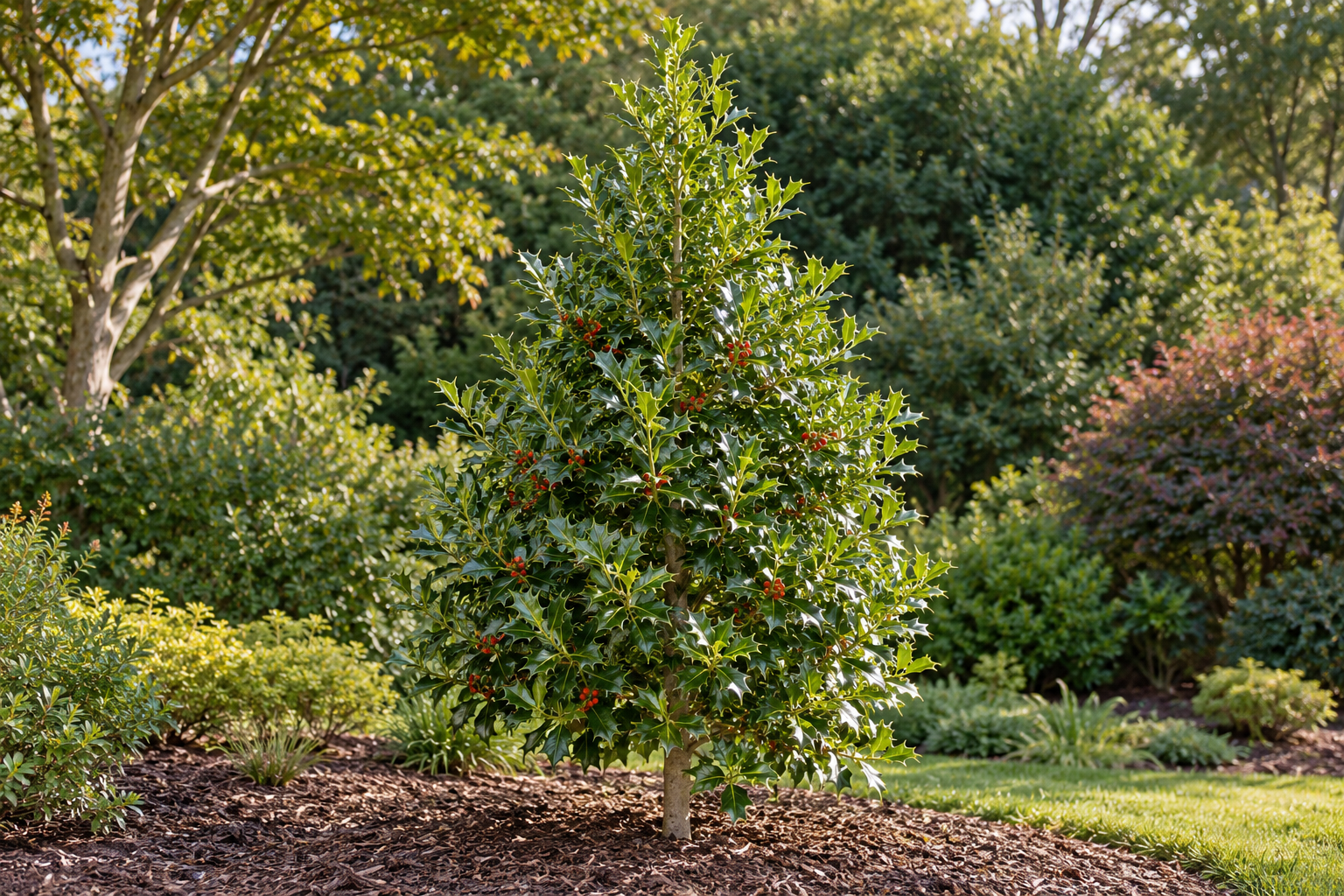
Young Oakland holly with upright pyramidal growth, glossy lobed leaves, and orange-red berries
Overview
Oakland Holly is an upright evergreen selection with glossy oak-shaped leaves. Its dense branching provides structure for screening and specimen plantings. Small flowers are secondary to the foliage and overall form.
Mature Size and Habit
The breeder lists 15 to 20 feet tall and 12 to 15 feet wide. Its natural upright form still develops substantial width. Measure available space before placing it beside a house or property boundary.
Best Landscape Uses
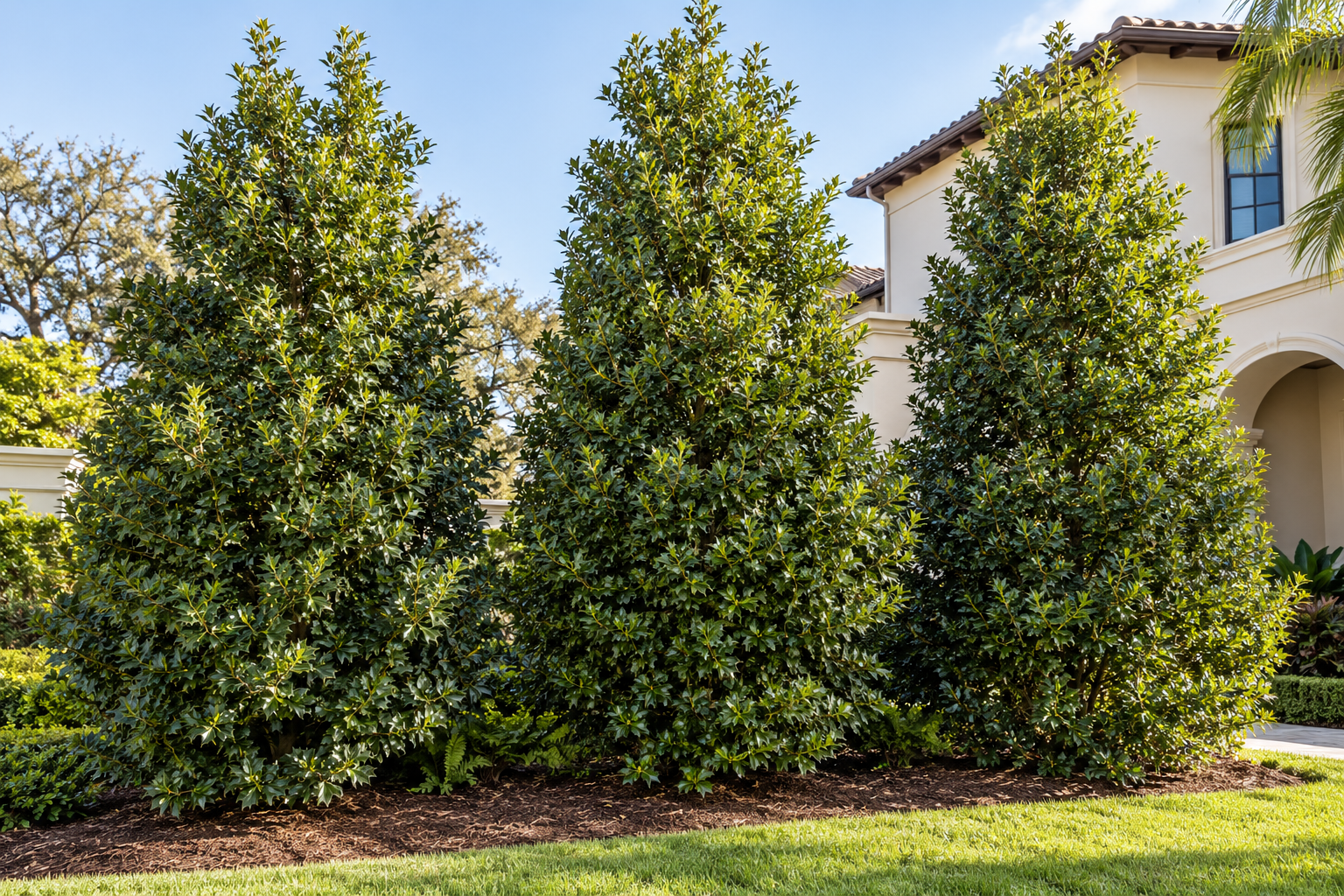
Use it as a specimen tree, a broad privacy screen, or a repeated architectural planting. Leave enough room for the mature canopy. Select a smaller shrub for narrow side yards or beds beneath low windows.
Sunlight
Plant in full sun to partial sun. Evaluate the light available as nearby trees grow. Dense overhead shade complicates the development of a full, balanced canopy.
Soil, Drainage, and Irrigation
Choose well-drained soil and avoid planting too deeply. Water directly over the root ball during establishment, then broaden the irrigated area as roots spread. Keep mulch away from the trunk and inspect moisture after heavy rain.
Best Planting Season for Tampa and Central Florida
Fall through early spring offers a practical installation window. The breeder lists zones 6a through 9b. Verify suitability for warmer Tampa sites before installation rather than assuming the cold-hardiness rating proves heat tolerance.
Pruning and Maintenance
Preserve the natural upright shape where possible. Light shaping in early spring suits the breeder's guidance. Remove damaged branches and inspect foliage during routine maintenance instead of relying on heavy repeated shearing.
Wildlife Value
Evergreen branches provide bird shelter, and fruiting plants offer berries for wildlife. Leave some natural branching when the design permits. Native trees nearby add further habitat value.
Cold and Heat Sensitivity
Cold is seldom the main placement issue in Tampa. The cultivar's published range ends at zone 9b, so site heat and regional performance deserve attention. Avoid reflected pavement heat and drought stress during establishment.
Safety, Roots, and Placement Warnings
Holly berries should not be eaten by people or pets, and leaf points irritate skin. Keep access paths clear of foliage. Allow mature canopy space around roofs, utilities, driveways, and property lines.
Invasive Concerns
Oakland is a cultivated hybrid and is not a Florida native. Use it within maintained landscapes. Native hollies offer alternatives when the planting goal includes local habitat restoration.
Helpful Resources
Southern Living Oakland Holly profile lists mature size, light, water, and pruning information.
Installed Prices
(No price means not available)
1 Gallon | 2 Gallon | 3 Gallon | 5 Gallon | 7 Gallon | 15G Price | 25 Gallon | 30 Gallon | 45 Gallon |
|---|---|---|---|---|---|---|---|---|
$84.00 |
Bloom Color
White
Bloom Season
Spring
Wildlife Benefits
Birds, Wildlife Shelter
Safety Concerns
Toxic if Ingested, Sharp Leaves
Plant Features
Evergreen, Upright Habit, Ornamental Berries
Growth Rate
Moderate
Drought Tolerance
Moderate
Water Needs
Moderate
Maintenance Level
Low
Landscape Use
Privacy Screen, Hedge, Accent Plant, Specimen Tree
Mature Width
12–15 Feet
Mature Height
12–20 Feet
Sun Exposure
Full Sun, Partial Sun