
Orange Jasmine
Murraya paniculata
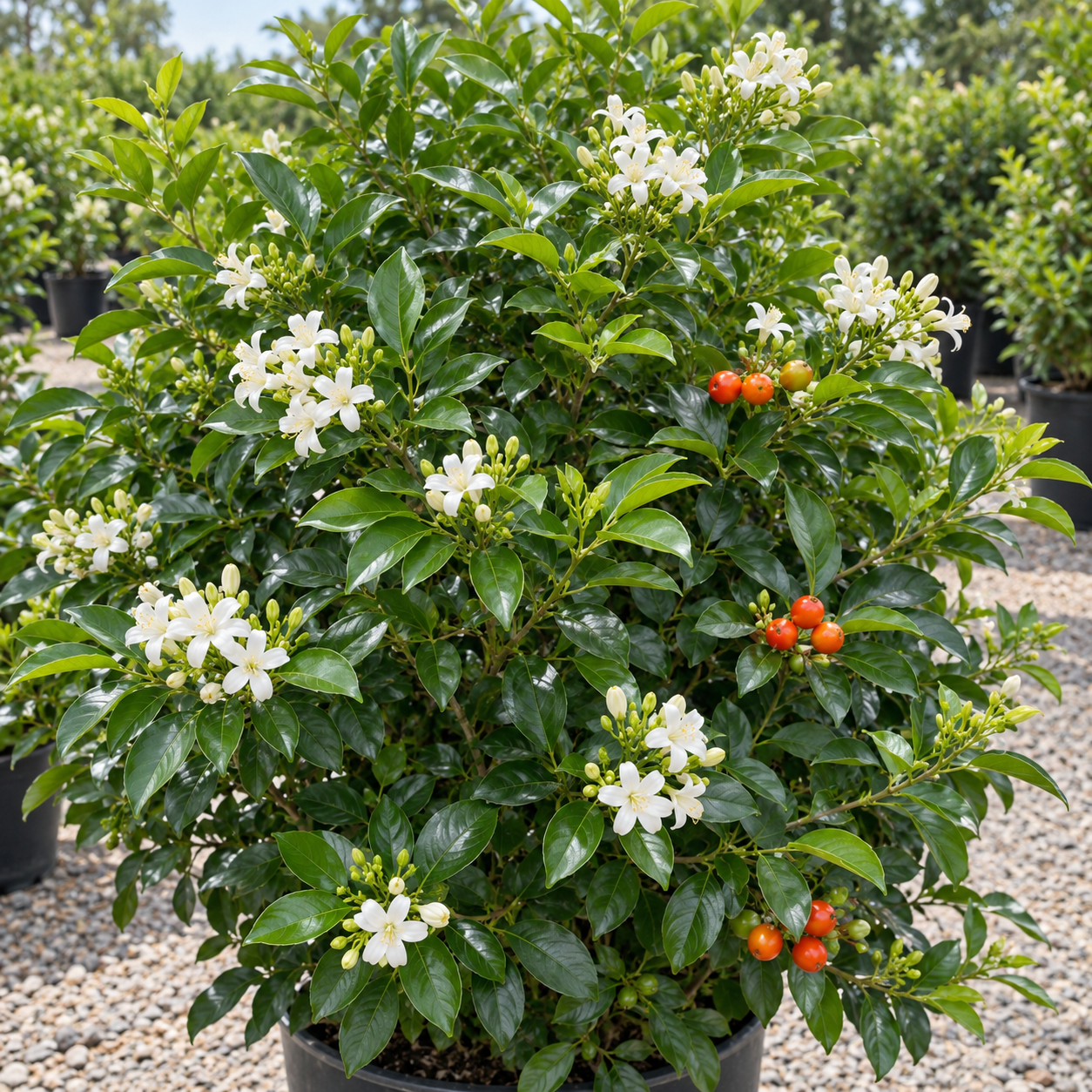
Orange jasmine shrub with glossy foliage, fragrant white flowers, and orange-red fruit
Overview
Orange Jasmine is a glossy evergreen shrub known for clusters of intensely fragrant white flowers followed by small orange-red fruits. Its refined foliage and repeat bloom make it a strong choice for sheltered South Tampa gardens.
Mature Size and Habit
Plants commonly reach 8 to 12 feet tall and 6 to 10 feet wide, although regular pruning keeps them lower. Growth is dense, upright, and naturally suited to screening.
Best Landscape Uses
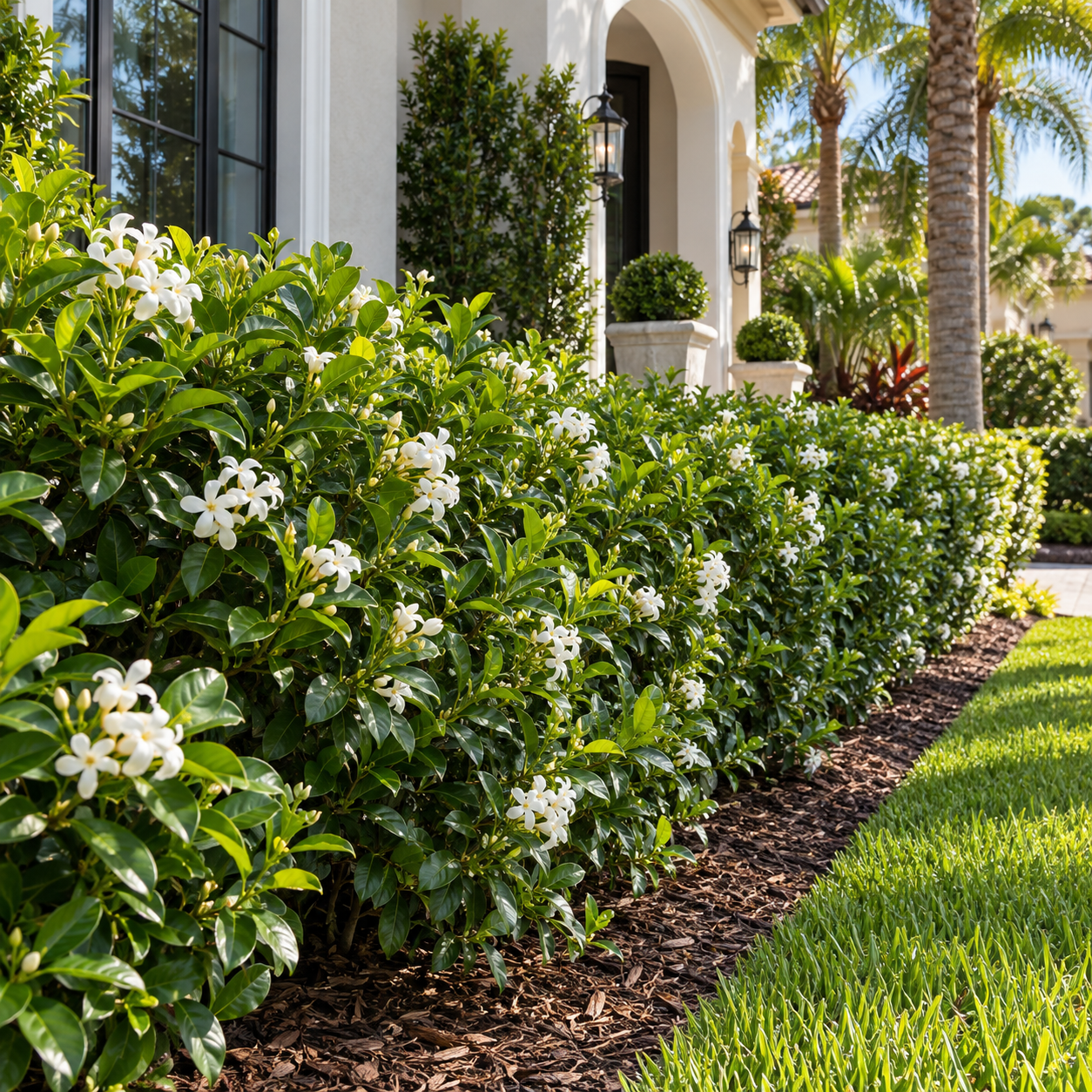
Use Orange Jasmine as a flowering hedge, privacy screen, foundation accent, specimen shrub, or large patio container. Place it where people will enjoy the fragrance near an entry, terrace, or seating area.
Sunlight
Full sun supports the heaviest flowering and densest form. Partial sun is suitable, especially near hot western walls, although deep shade reduces bloom and creates thinner growth.
Soil, Drainage, and Irrigation
Plant in fertile, well-drained soil. Water deeply and consistently during establishment, then allow the upper soil to begin drying between irrigations. Avoid saturated beds. Apply mulch over the root zone while keeping it away from the stems.
Best Planting Season for Tampa and Central Florida
Spring and fall provide favorable establishment conditions. Protect newly planted shrubs from drought and unusual cold during their first year.
Pruning and Maintenance
Prune after a flowering flush to control size without removing the next set of buds. Thin crowded interior branches instead of repeatedly cutting only the surface. Feed lightly during active growth and monitor tender new foliage for scale, whitefly, and citrus-related pests.
Wildlife Value
Fragrant flowers attract bees, butterflies, and other pollinators. Birds may use the dense branches for shelter and may feed on the mature fruit.
Cold and Heat Sensitivity
Orange Jasmine prefers warm conditions and may suffer foliage or branch injury during a hard freeze. Use a protected location, maintain mulch, and cover young plants when severe cold is forecast. Established plants tolerate Tampa heat when roots receive adequate moisture.
Safety, Roots, and Placement Warnings
Do not treat the ornamental fruit as food. Place the shrub where its fragrance will not overwhelm enclosed spaces. Roots are generally nonaggressive, but mature plants require adequate clearance from walls, walks, and utilities.
Invasive and Regulatory Concerns
Orange Jasmine is not native to Florida. Because it belongs to the citrus family and may host pests or diseases affecting citrus, verify current Florida Department of Agriculture guidance before transport or installation.
Helpful Resources
Consult UF/IFAS and Florida Department of Agriculture resources for current information on Murraya paniculata, citrus pest restrictions, pruning, and establishment care.
Installed Prices
(No price means not available)
1 Gallon | 2 Gallon | 3 Gallon | 5 Gallon | 7 Gallon | 15G Price | 25 Gallon | 30 Gallon | 45 Gallon |
|---|---|---|---|---|---|---|---|---|
Bloom Color
White
Bloom Season
Spring, Summer, Fall
Wildlife Benefits
Bees, Butterflies, Birds, Pollinators
Safety Concerns
Fruit Concern
Plant Features
Evergreen, Flowering, Fragrant, Berries
Growth Rate
Moderate
Drought Tolerance
Moderate
Water Needs
Moderate
Maintenance Level
Moderate
Landscape Use
Hedge, Privacy Screen, Foundation Planting, Specimen, Container
Mature Width
6–12 Feet
Mature Height
6–15 Feet
Sun Exposure
Full Sun, Partial Sun