
Regal Shields Alocasia
Alocasia 'Regal Shields'
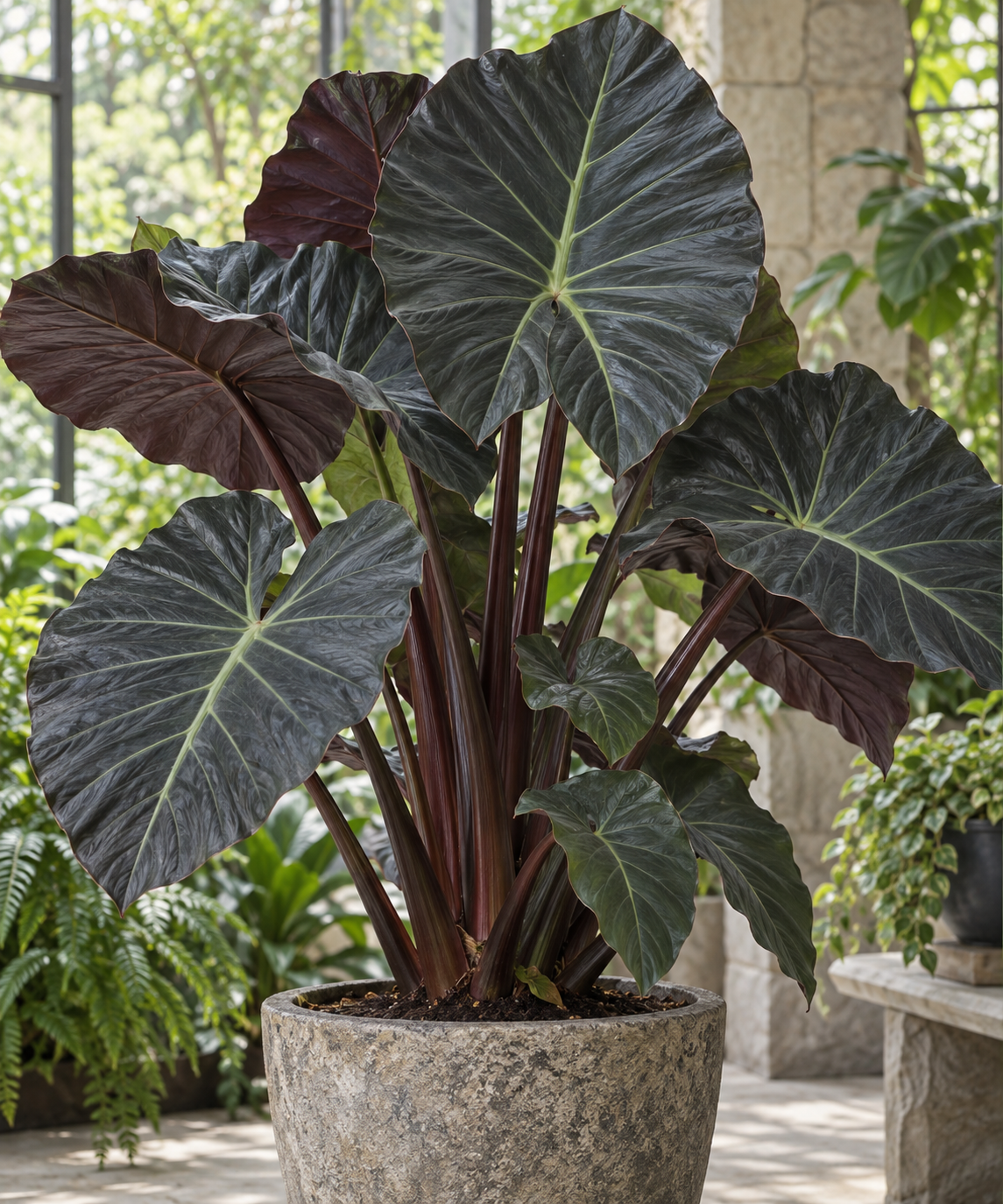
Regal Shields Alocasia with large dark shield-shaped leaves and burgundy-purple undersides
Overview
Regal Shields Alocasia is a bold tropical foliage plant with large upright leaves that appear nearly black-green from above and burgundy-purple beneath. Its strong vertical form gives shaded Tampa courtyards and protected pool gardens an immediate focal point.
Mature Size and Habit
In warm protected sites it commonly reaches 4 to 6 feet tall and 3 to 5 feet wide. New leaves rise from a clumping underground base on sturdy petioles.
Best Landscape Uses
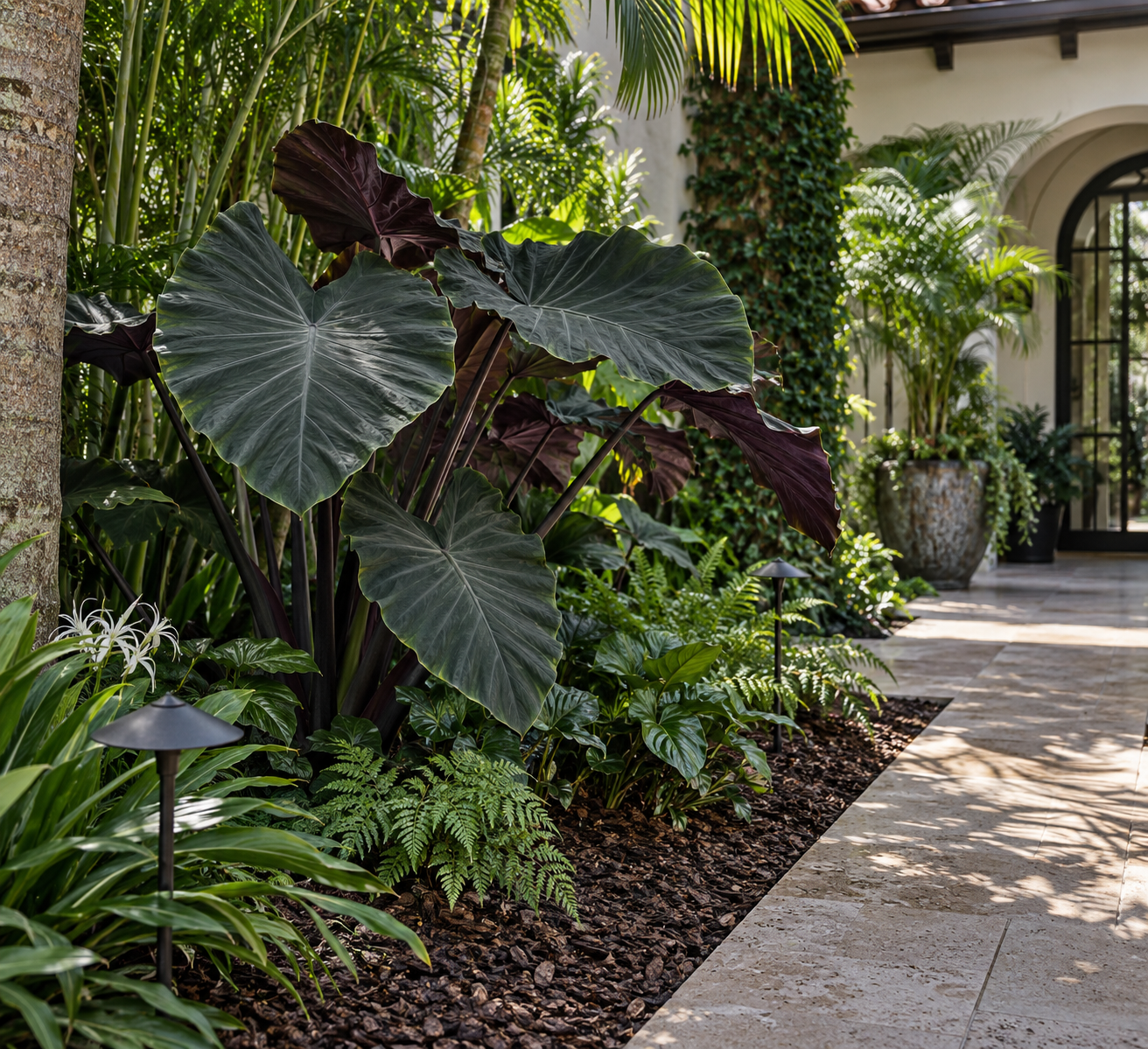
Use it as a shaded accent, tropical garden anchor, large container feature, or poolside foliage plant. Pair it with lighter green plants so the dark leaves remain visible.
Sunlight
Bright filtered light, morning sun, or partial shade is best. Intense afternoon sun scorches leaves, while very deep shade slows growth and weakens petioles.
Soil, Drainage, and Irrigation
Plant in rich, moisture-retentive soil that still drains freely. Water often enough to prevent prolonged wilt, but do not leave the crown in standing water. Mulch the root zone and keep irrigation from constantly wetting the leaf bases.
Best Planting Season for Tampa and Central Florida
Plant from late March through early summer after cold risk passes. Warm soil supports quick rooting and steady leaf production.
Pruning and Maintenance
Cut yellow, torn, or cold-damaged leaves at the base with clean tools. Feed during active growth and inspect for spider mites, scale, mealybugs, caterpillars, and crown rot. Containers need regular watering and drainage checks.
Wildlife Value
The foliage offers limited food value but provides temporary cover for small wildlife. Outdoor flowers are uncommon and visually secondary to the leaves.
Cold and Heat Sensitivity
Regal Shields thrives in humid summer warmth with moisture and shade. Cold below the low 40s slows growth, and freezing weather may kill foliage or the crown. Shelter it from wind.
Safety, Roots, and Placement Warnings
All parts contain irritating calcium oxalate crystals and are toxic if eaten. Sap may irritate skin and eyes. Keep away from pets, children, narrow walks, and areas where broad leaves block visibility.
Invasive Concerns
This cultivar is not native to Florida and is not generally listed as invasive. Remove unwanted divisions and dispose of live rhizomes where they will not root.
Helpful Resources
See NC State Extension's Alocasia profile for light, soil, moisture, toxicity, pest, and cold-sensitivity guidance.
Installed Prices
(No price means not available)
1 Gallon | 2 Gallon | 3 Gallon | 5 Gallon | 7 Gallon | 15G Price | 25 Gallon | 30 Gallon | 45 Gallon |
|---|---|---|---|---|---|---|---|---|
$35.00 |
Bloom Color
Other or Inconspicuous
Bloom Season
Does Not Flower
Wildlife Benefits
Limited Wildlife Value, Wildlife Shelter
Safety Concerns
Toxic if Eaten, Irritating Sap, Pet Concern
Plant Features
Evergreen, Distinctive Foliage, Fast Growing
Growth Rate
Fast
Drought Tolerance
Low
Water Needs
Moderate
Maintenance Level
Moderate
Landscape Use
Accent Plant, Container, Tropical Garden, Poolside
Mature Width
4–8 Feet
Mature Height
4–8 Feet
Sun Exposure
Partial Sun, Shade