
Sea Oxeye Daisy
Borrichia frutescens
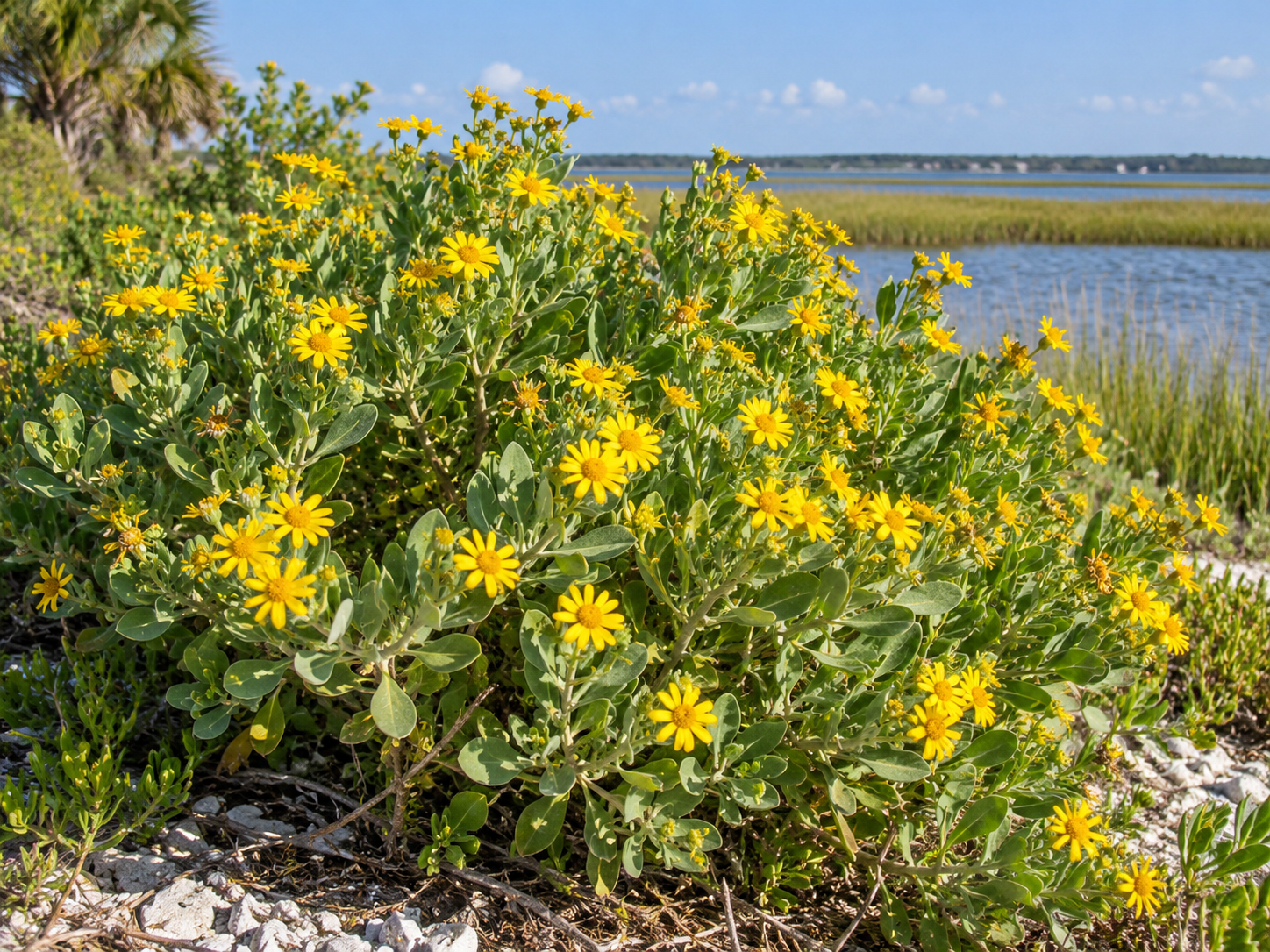
Sea Oxeye Daisy shrub with gray-green leaves and yellow flowers beside a Tampa Bay coastal landscape
Overview
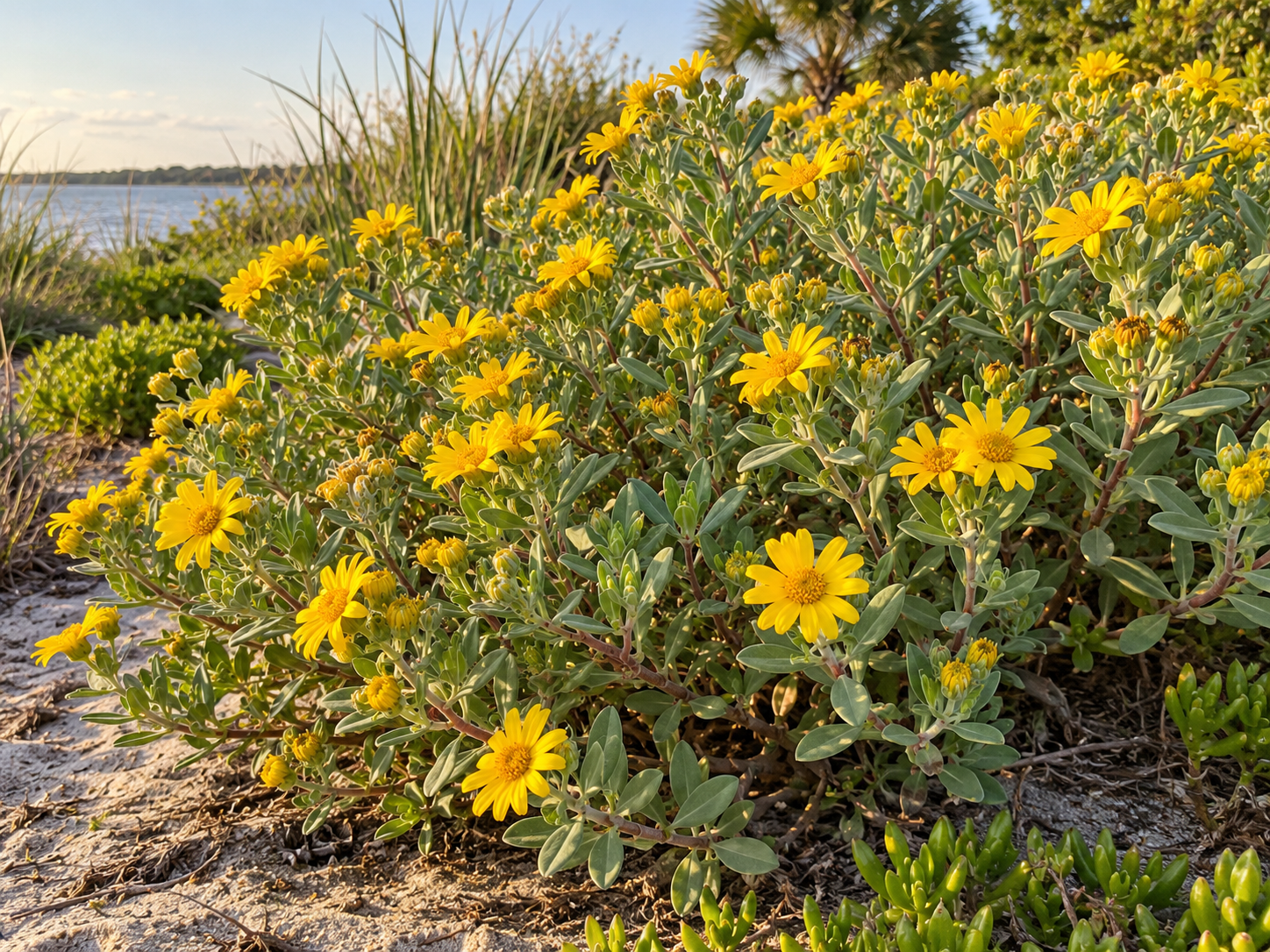
Sea Oxeye Daisy is an evergreen Florida native coastal shrub with leathery gray-green leaves and bright yellow daisy flowers. It thrives in sunny, salty sites that challenge many landscape plants.
Mature Size and Habit
Stems usually reach 2 to 4 feet tall and spread about 2 to 3 feet. Underground rhizomes produce new stems, forming a broad upright-to-sprawling colony.
Best Landscape Uses
Use it as a coastal ground cover, low hedge, native border, mass planting, or erosion-control shrub on sunny banks. Allow room to expand and avoid narrow formal beds.
Sunlight
Full sun produces compact growth and the best flowers. Shade reduces bloom and opens the habit. Choose an exposed site where foliage dries quickly after rain.
Soil, Drainage, and Irrigation
Sea Oxeye accepts sand, alkaline soil, periodic flooding, salt spray, and seasonal dryness. Water until established, then avoid routine overwatering. It adapts where moisture fluctuates naturally.
Best Planting Season for Tampa and Central Florida
Plant year-round in coastal Central Florida. Fall through spring reduces irrigation demand; warm-season planting works when the root ball receives steady water without a saturated crown.
Pruning and Maintenance
Trim after a major bloom cycle or shear lightly for a low hedge. Remove stems from walks and divide or root-prune colonies when they cross the intended boundary.
Wildlife Value
Flowers provide nectar for butterflies, bees, and other pollinators. Birds and small mammals use the seeds, adding value to coastal wildlife plantings.
Cold and Heat Sensitivity
This species handles Tampa heat, coastal wind, drought, and salt exceptionally well. It suits coastal zones 8B through 11B and tolerates Central Florida winters.
Safety, Roots, and Placement Warnings
No major toxicity is commonly reported, and fibrous roots are not structurally damaging. Leaves have small terminal points, and rhizomes spread steadily, so allow clearance from walks and drains.
Invasive Concerns
Sea Oxeye Daisy is native to Florida and is not listed as invasive. Its rhizomes can be assertive in a small bed; edge or divide the patch before it overruns nearby plants.
Helpful Resources
Review the UF/IFAS profile and the Florida Native Plant Society profile for verified culture and wildlife details.
Installed Prices
(No price means not available)
1 Gallon | 2 Gallon | 3 Gallon | 5 Gallon | 7 Gallon | 15G Price | 25 Gallon | 30 Gallon | 45 Gallon |
|---|---|---|---|---|---|---|---|---|
$10.80 |
Bloom Color
Yellow
Bloom Season
Spring, Summer, Year-Round
Wildlife Benefits
Bees, Butterflies, Birds, Pollinators
Safety Concerns
Rapid Growth
Plant Features
Florida Native, Native, Evergreen, Flowering, Long Bloom Season, Drought Tolerant
Growth Rate
Slow
Drought Tolerance
Moderate
Water Needs
Moderate
Maintenance Level
Moderate
Landscape Use
Coastal Landscape, Ground Cover, Low Hedge, Mass Planting, Border, Erosion Control, Native Garden, Pollinator Garden
Mature Width
2–4 Feet
Mature Height
2–4 Feet
Sun Exposure
Full Sun