
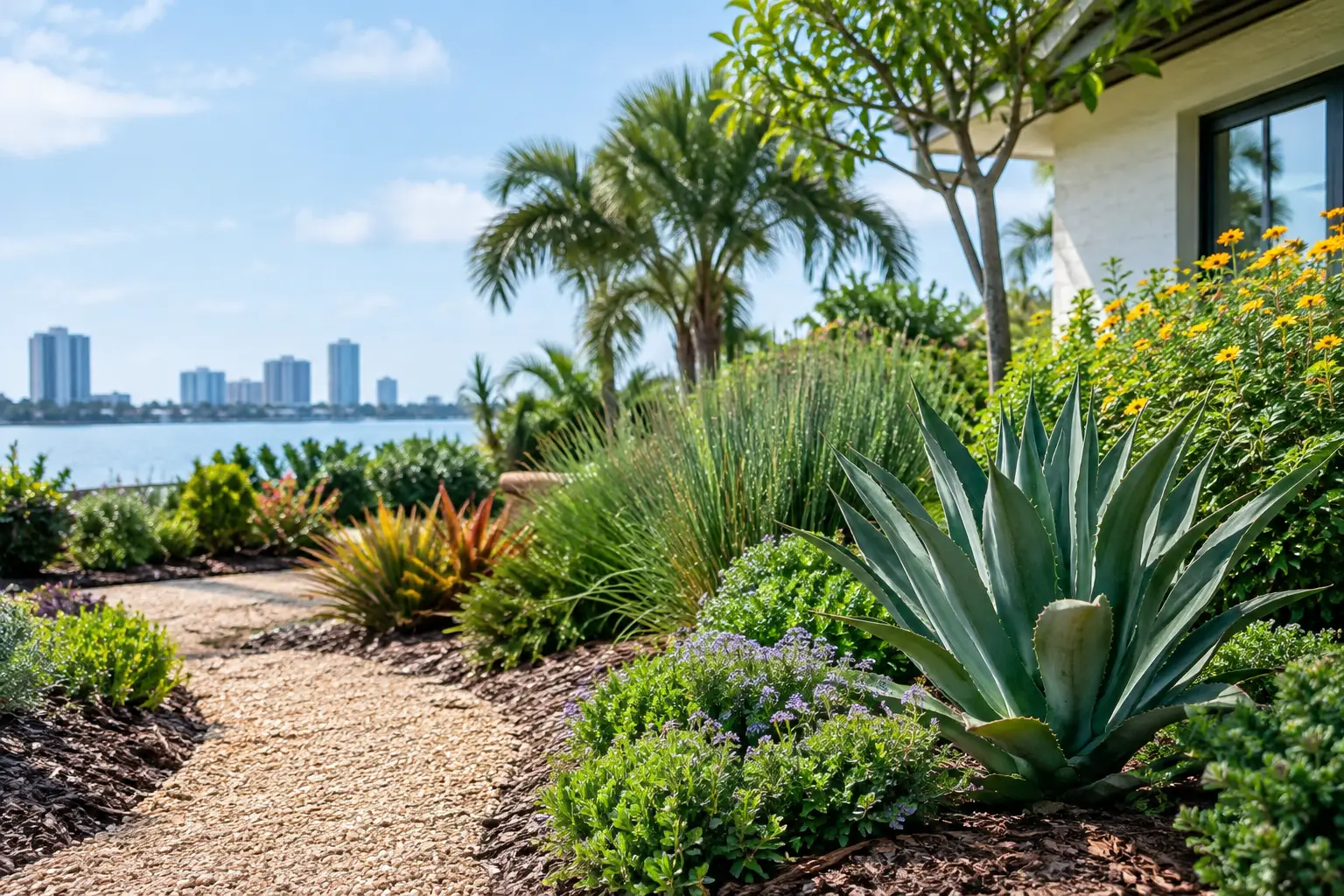
Climate Resilient Garden Trends for Tampa
A South Tampa garden has to look composed in August, drain decisively after a hard afternoon storm, and still feel considered when cooler, drier weather arrives. That is why climate resilient garden trends are moving beyond a loose mix of drought-tolerant plants. The strongest properties are being designed as high-performing outdoor environments, where planting, grading, irrigation, shade, and maintenance work together.
For homeowners who expect their exterior spaces to reflect the standard of the home, resilience is not a rustic or low-effort look. It is a more disciplined approach to landscape design. The goal is a landscape that holds its form, protects the property, and requires fewer emergency corrections when Florida weather changes course.
Climate Resilient Garden Trends Start Below the Surface
The most consequential trend is also the least visible: better water management. A beautiful planting plan cannot compensate for water that pools against a foundation, saturates root zones, or cuts channels through fresh mulch. In South Tampa and Davis Island, where intense rainfall and high water tables can shape every landscape decision, drainage should be addressed before ornamental details are finalized.
Modern resilient gardens use intentional grading to direct water away from structures and high-use spaces. Depending on the site, that may include discreet swales, catch basins, drainage lines, permeable hardscape areas, or rain gardens positioned where they can actually do their job. The best solution depends on the property’s elevation, existing drainage path, soil conditions, and neighboring lots. There is no serious one-size-fits-all drainage package.
This is where professional planning separates a finished landscape from a collection of attractive materials. Water should have a clear route. Beds should be built at elevations that support plant health. Hardscape transitions should feel clean underfoot while avoiding trapped water at doors, patios, and walkways.
Heat-Ready Planting With a Refined Structure
Heat tolerance remains central to climate-resilient planting, but the current direction is more selective than simply filling a bed with hardy species. Homeowners are asking for plant palettes that withstand heat and humidity while keeping a tailored, architectural appearance.
That often means using evergreen structure as the backbone of the garden, then introducing controlled color and texture through plants chosen for their placement. Clumping palms, podocarpus, cocoplum, Simpson’s stopper, coontie, muhly grass, firebush, and carefully selected flowering perennials can all have a role. The right mix depends on sun exposure, salt exposure, drainage, desired privacy, and the level of maintenance expected.
Native and Florida-friendly plants are increasingly part of premium landscape plans because they can be well suited to local conditions, not because every property needs to resemble a natural preserve. A formal Hyde Park entry garden may call for clipped hedges, restrained tropical texture, and clean negative space. A larger South Tampa rear yard may support layered screening, broader planting beds, and a more relaxed canopy. Climate resilience should serve the architecture and the owner’s lifestyle.
The trade-off is worth acknowledging. Some plants marketed as low-water or low-maintenance can appear sparse, informal, or seasonal if they are installed without enough mass or maintained with too little precision. Resilient does not mean neglected. Pruning, edging, nutrition, and replacement planning still determine whether the landscape looks intentional.
Right Plant, Right Exposure
A plant that tolerates heat may still fail in reflected heat beside a pale wall, in a wet low spot, or under dense shade. Placement is the detail that changes outcomes. Beds near driveways and pool decks need species that can handle radiant heat. Waterfront or exposed properties may require greater salt tolerance and stronger wind resistance. Areas beneath mature trees need planting that can compete with roots without demanding constant intervention.
This is also why overplanting is falling out of favor. Plants need room to mature, airflow around them, and access to irrigation without being crowded into stressed conditions. A more edited planting plan usually looks better after two years than a densely packed installation designed only for day-one impact.
Shade Is Becoming Essential Infrastructure
Outdoor living has become a central design priority, but Florida heat has made unshaded patios and lawns far less usable for much of the year. One of the clearest climate resilient garden trends is treating shade as a functional part of the landscape, not an afterthought.
Canopy trees, layered palms, pergolas, and strategically located screens can lower the intensity of an outdoor space and make seating areas more practical. Trees also help cool surrounding hardscape, protect understory planting, and soften the visual scale of large homes or open yards. Their location must be considered carefully, especially around foundations, pools, overhead utilities, and sightlines.
The strongest designs balance immediate comfort with long-term growth. A newly planted tree will not provide meaningful shade next month, so a landscape plan may pair young canopy planting with built shade structures or umbrellas for near-term use. That is a practical decision, not a compromise in quality.
Smarter Irrigation, Less Waste
Water restrictions, rising utility awareness, and more erratic weather patterns are pushing irrigation systems toward greater precision. The goal is not to water less at all times. It is to apply the right amount of water to the right zone, based on weather, plant needs, and soil conditions.
Separate irrigation zones for turf, hedges, tropical beds, and containers allow a property to be managed with greater accuracy. Drip irrigation is increasingly preferred in many planting beds because it delivers water at the root zone and reduces overspray onto hardscape. Rain sensors and smart controllers can help prevent watering during or immediately after rainfall, though they still need periodic inspection and programming.
An efficient irrigation system will not solve weak drainage or poor plant selection. It will, however, protect a properly designed landscape from the inconsistency that comes with manual adjustments and generic schedules. For premium properties, that consistency matters. Brown edges, oversaturated beds, and irrigation overspray on walls or pavers diminish the entire presentation.
Turf Is Being Used More Intentionally
Lawn remains a defining feature of many well-kept Tampa properties, particularly where there is an open front elevation or a family-oriented backyard. The trend is not the elimination of turf. It is using turf where it earns its place.
High-quality sod performs best in areas with appropriate sun, drainage, irrigation coverage, and a clear use case. A broad lawn panel can create visual calm, provide space for children or pets, and frame a modern planting scheme. Turf squeezed into deep shade, narrow side yards, or chronically wet areas is usually a maintenance liability.
Replacing those difficult zones with groundcovers, gravel accents, planting beds, or hardscape can reduce recurring stress while improving the design. The decision should be made carefully. Too much hardscape can increase heat and runoff; too little open space can make a property feel crowded. Balance is the standard.
Gardens Designed for Storm Recovery
Resilience now includes what happens after a storm. Gardens that recover well are built with wind exposure, branch structure, drainage, and cleanup access in mind. This may involve choosing trees with appropriate mature scale, avoiding oversized material planted too close to structures, and maintaining clean canopy structure before storm season rather than reacting afterward.
Mulch selection and installation also matter. Mulch should retain moisture, protect roots, and finish a bed cleanly, but it should not be piled against trunks or allowed to wash into drains. Edging, bed definition, and groundcover density can all help landscapes hold their shape through heavy rain.
For properties with outdoor kitchens, audio equipment, lighting, and refined hardscape, storm preparation is part of protecting the investment. Drainage inlets need to remain clear. Plant material should not block access to service points. Lighting and irrigation components should be installed and maintained with professional attention to detail.
A More Considered Standard for Outdoor Living
The shift toward climate resilience is not about accepting a less polished garden. It is about demanding a landscape that performs as well as it presents. At Ecoscape Outdoor Services, that means looking at the property as a complete system, then executing the details with the consistency premium homes require.
A resilient garden should still feel personal: a quiet front entry with strong curb appeal, a shaded patio that is genuinely usable, or a backyard that remains composed after a summer storm. Start with the conditions your property actually has, not the look you saw on another lot. The best landscape decisions are the ones that continue to look right after the weather has tested them.


Comments