
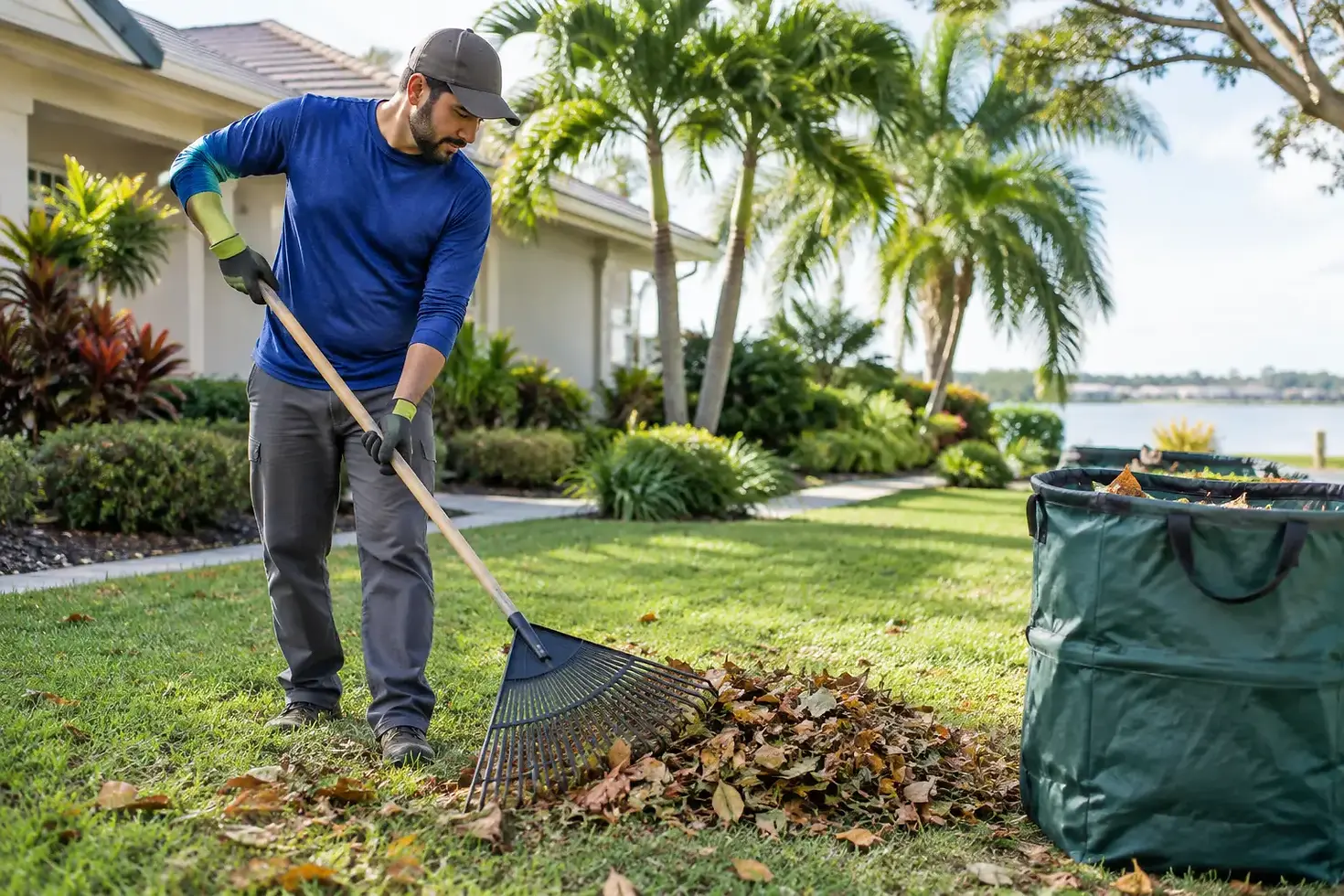
Seasonal Yard Cleanup Tampa: What Quality Requires
A polished South Tampa property can lose its edge quickly after a week of summer rain, a windstorm, or the first real cool front of the year. Seasonal yard cleanup Tampa homeowners choose should do more than remove visible debris. It should restore order, protect the landscape, and make the property look intentionally maintained from the street to the back patio.
For homes in South Tampa and Davis Islands, cleanup is not a once-a-year task. Our climate keeps landscapes growing, shedding, flowering, and collecting storm debris through every season. The standard is not simply getting the yard cleared. The standard is knowing what to remove, what to preserve, what to monitor, and how to leave the entire exterior looking finished.
Tampa’s Seasons Create Different Cleanup Demands
Tampa does not follow a traditional fall-and-winter landscape calendar. Lawns may slow down, but palms continue dropping fronds, live oaks shed leaves in bursts, tropical plantings stay active, and afternoon storms can move debris into beds, drains, and hardscape joints without warning.
That means a property can look neglected even when the lawn has been mowed. Leaf buildup under hedges, spent blooms around entry plantings, palm litter near the pool, and weeds emerging along pavers all signal a lack of attention. On a well-kept property, those details are handled before they become the first thing someone notices.
A proper cleanup also changes with the time of year. Spring work often centers on refreshing beds after winter dormancy and preparing plants for a vigorous growth cycle. Summer cleanup is more about storm response, controlling rapid growth, and keeping drainage paths clear. Fall brings oak leaves and seasonal pruning needs, while winter is the right time to assess structure, remove declining material, and set the landscape up for a clean return in spring.
What a High-Standard Yard Cleanup Should Include
The visible result matters, but quality begins with an experienced eye. A crew should not treat every branch, leaf, or plant the same way. Healthy organic material may belong in a bed as light mulch in some settings. In other areas, it needs to be removed because it is trapping moisture, obscuring edging, or creating a hiding place for pests.
Debris Removal Without Disturbing the Landscape
Palm fronds, branches, leaf piles, seed pods, and storm-thrown debris should be removed completely, not relocated behind a hedge or into an unused corner of the yard. Fine debris should also be cleared from lawn edges, planting beds, pool decks, walkways, and driveway joints.
The trade-off is speed versus care. A rushed cleanup can damage turf, pull mulch into the lawn, scar pavers, or break low-growing ornamentals. Professional work takes a more controlled approach, especially around premium plant material, irrigation heads, landscape lighting, and finished hardscape.
Bed Definition and Plant Grooming
Landscape beds lose definition as mulch settles, leaves collect, and plants extend past their intended form. Cleanup is the right time to restore crisp edges, remove weeds, clear fallen material, and groom plantings that have become visually heavy or uneven.
Grooming is different from aggressive pruning. Cutting everything back may create a temporarily bare landscape and can stress certain tropical varieties. The right approach depends on the plant, its health, its location, and the season. A well-designed landscape should still look natural, but it should never look unmanaged.
Drainage and Irrigation Visibility
South Tampa rain can expose a problem that dry-season maintenance hides. Leaves and mulch can block drainage grates, collect along swales, or build up around downspout outlets. Those issues may seem minor until water begins pooling near a foundation, damaging turf, or washing mulch across pavers.
Seasonal cleanup is an opportunity to make drainage areas visible and functional again. It is also a practical time to check that irrigation heads are not buried, tilted, blocked by overgrowth, or spraying onto walkways and structures. Cleanup does not replace an irrigation repair, but it often reveals where one is needed.
Hardscape, Entries, and Outdoor Living Areas
The front entry, driveway, patio, and pool area carry a different visual weight than a side yard. These are the spaces homeowners and guests use every day. Blown debris in corners, stained-looking leaf residue, overgrown borders, and plant litter around outdoor furniture can undermine an otherwise refined exterior.
A detail-oriented cleanup accounts for those transitions. The goal is not to make every surface look sterile. It is to make the property look cared for, clear, and ready to enjoy without the homeowner needing to spend a Saturday correcting what routine service missed.
When to Schedule Seasonal Yard Cleanup in Tampa
For many properties, four planned cleanups per year create a strong baseline: early spring, early summer, early fall, and late fall or winter. Larger lots, homes with mature oaks and palms, waterfront exposure, or extensive planting beds may require more frequent attention.
Storm response is separate from routine seasonal work. After heavy wind or prolonged rain, waiting for the next scheduled visit can allow debris to smother turf, clog drains, or make the property appear abandoned. A prompt cleanup is often the difference between a short-term mess and a larger restoration project.
The right frequency depends on the landscape. A minimalist property with structured planting and limited canopy may need less intensive resets. A mature property with dense hedges, palms, flowering material, and outdoor entertaining spaces demands closer oversight. There is no value in paying for work that is unnecessary, but there is also no advantage in allowing visible decline between visits.
The Difference Between Cleanup and Property Care
A one-time cleanup can make a neglected yard look better. It does not create consistency on its own. Without disciplined mowing, edging, pruning, weed control, bed care, and communication, the same problems return quickly.
That is why the best seasonal cleanups fit into a broader property-care plan. The crew already understands the site, recognizes changes in plant health, knows where water tends to collect, and can keep landscape details aligned with the home’s overall standard. This is especially valuable for homeowners who expect their exterior to remain presentation-ready without constant follow-up.
Ecoscape Outdoor Services is not structured around the lowest-cost version of lawn maintenance. The work is designed for homeowners who want professional accountability, thoughtful execution, and a property that reflects the standard of the home itself.
Signs Your Property Is Ready for a Reset
The need for cleanup is not always dramatic. Sometimes it shows up as beds that have lost their shape, palms that have begun to look untidy, leaves gathering beneath shrubs, or a driveway edge that no longer looks sharp. Other times, it is more obvious: storm debris, clogged drains, heavy weed pressure, or plant material pushing into walkways.
If you find yourself noticing several small issues every time you pull into the driveway, the property is already asking for more than a quick blow-off. A focused seasonal reset can bring back the clarity that regular maintenance is meant to preserve.
A well-managed landscape should feel quiet in the best sense. Nothing looks overgrown, overlooked, or out of place. It simply reinforces the quality of the home every time you arrive.


Comments