

Overview
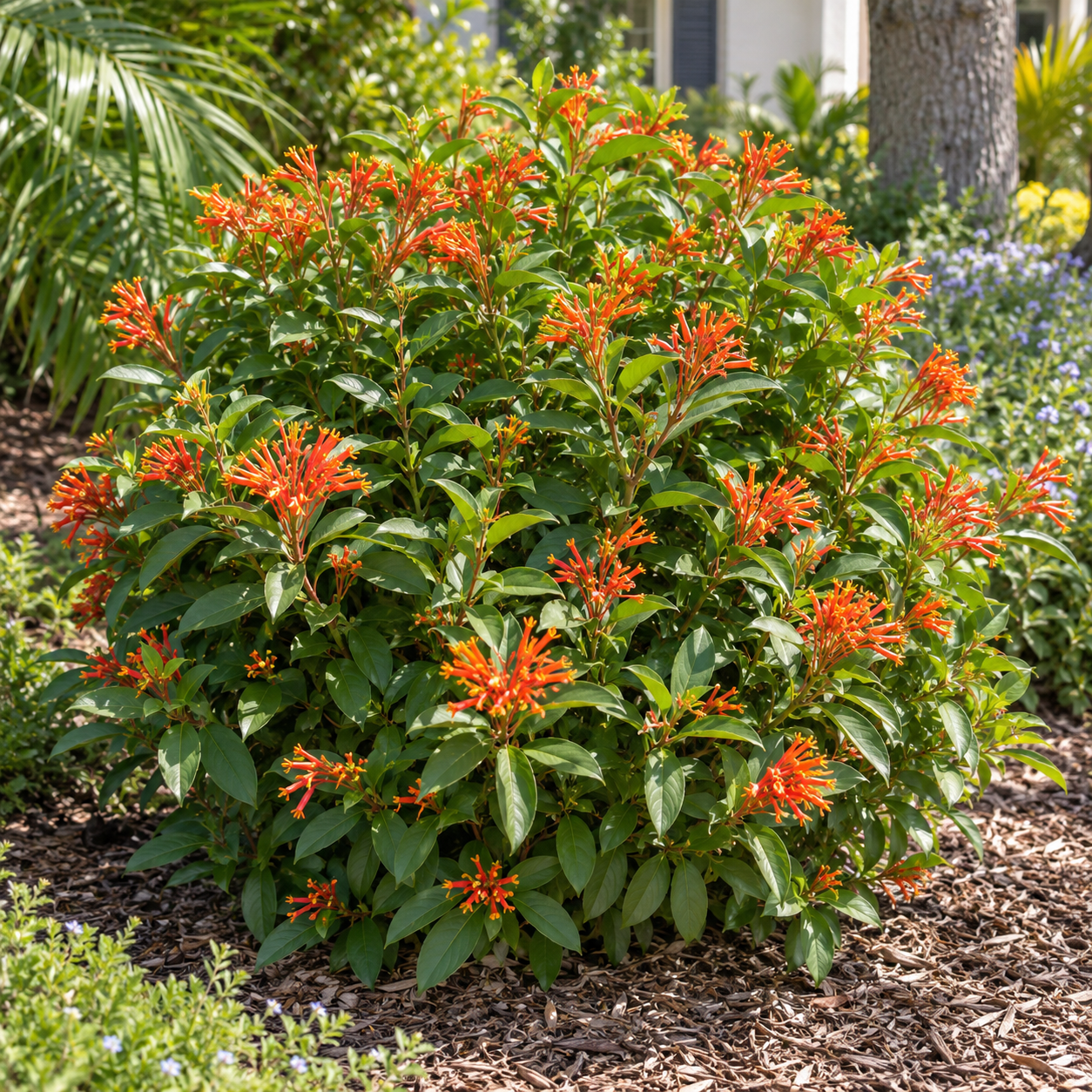
Dwarf Firebush is a compact tropical shrub with smooth green leaves, orange-red tubular flowers, and a long warm-season bloom period. It delivers strong pollinator activity in a smaller footprint.
Mature Size and Habit
Most maintained plants reach about 3 to 4 feet tall and wide. Warm weather produces quick branching and a rounded form that stays smaller than Florida's native firebush.
Best Landscape Uses
Use it in low hedges, pollinator beds, colorful foundations, borders, patio containers, and poolside planting. Masses create a more visible nectar source.
Sunlight
Full sun produces the densest habit and heaviest flowering. Partial sun is acceptable, although shade reduces blooms and can stretch the stems.
Soil, Drainage, and Irrigation
Plant in well-drained soil and water regularly until established. Mature plants tolerate dry periods, but occasional deep irrigation keeps flowering stronger during prolonged heat.
Best Planting Season for Tampa and Central Florida
Late spring through summer gives the fastest establishment. Fall planting also works if roots receive enough time before an unusual cold event.
Pruning and Maintenance
Light tip pruning controls size and encourages branching. Avoid frequent hard shearing because removing new growth also removes flower buds and wildlife value.
Wildlife Value
Tubular flowers attract hummingbirds, butterflies, and bees, while berries feed birds. This dwarf selection is useful for wildlife but does not provide the same native ecological value as Hamelia patens.
Cold and Heat Sensitivity
Heat and humidity are well tolerated. Frost can burn foliage and stems, but established plants often recover rapidly in spring.
Safety, Roots, and Placement Warnings
Roots are normally manageable around walks and foundations. Give the shrub airflow and enough width so routine pruning does not become necessary beside narrow paths.
Invasive Concerns
UF/IFAS identifies dwarf firebush as a nonnative relative or selection. Keep it in maintained beds and choose native firebush where preserving local genetics is the priority.
Helpful Resources
See the UF/IFAS firebush guide for the important distinction between native and dwarf forms.

