

Overview
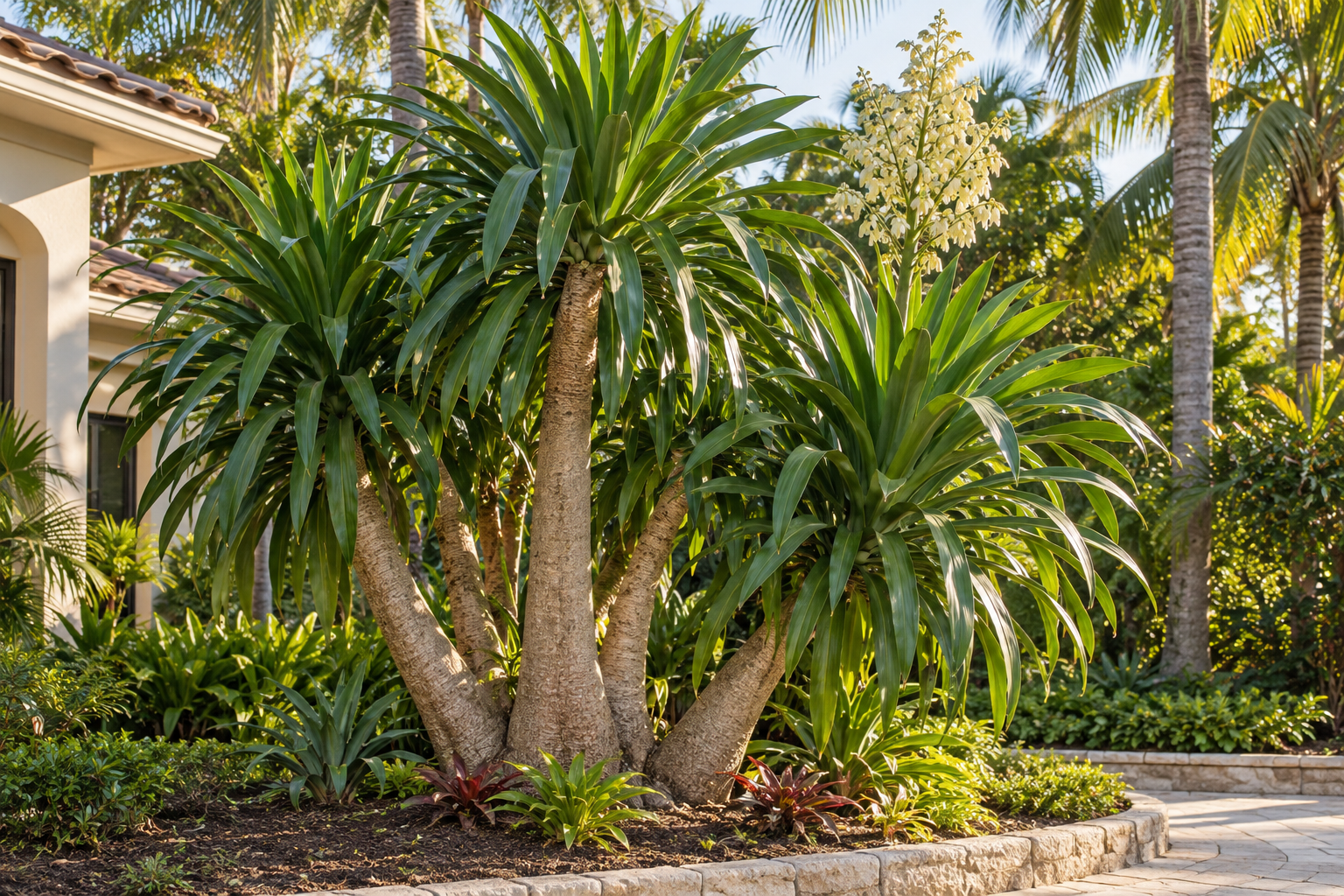
Spineless yucca (Yucca gigantea) is a tropical evergreen succulent tree with thick canelike trunks and crowns of broad, flexible leaves. Its soft tips and bold form suit modern and tropical Tampa landscapes.
Mature Size and Habit
Outdoors, this fast-growing species can reach 20–30 feet tall and 10–15 feet wide. Basal sprouts commonly produce a multi-trunked specimen with an irregular upright crown.
Best Landscape Uses
Use it as a specimen, courtyard accent, large planter subject, tropical-garden anchor, or architectural backdrop. Provide ample overhead and side clearance.
Sunlight
Full sun to partial sun is suitable. Bright sites support a tighter crown, while light afternoon shade can reduce stress beside reflective walls.
Soil, Drainage, and Irrigation
Plant only in well-drained sand, loam, or amended soil. Water during establishment, then let the root zone dry between deep irrigations. Chronic wetness invites root and stem rot.
Best Planting Season for Tampa and Central Florida
Install while soil is warm, or during the dry season with establishment irrigation. Keep the trunk flare visible and never bury the cane base.
Pruning and Maintenance
Remove brown lower leaves, spent flower stalks, and unwanted basal shoots. Avoid topping established trunks unless rejuvenation is planned, since new heads may emerge unevenly.
Wildlife Value
Older plants may produce creamy-white flowers, but UF/IFAS notes that the fruit is not a significant wildlife attractant. Its chief value is evergreen structure rather than dependable habitat or food.
Cold and Heat Sensitivity
Spineless yucca performs in USDA zones 9B–11 and handles Tampa heat well. Frost can burn foliage, so use a protected site in colder Central Florida locations and avoid cold, wet soil.
Safety, Roots, and Placement Warnings
Leaves are softer than Spanish bayonet, but the mature base becomes massive; keep it away from foundations and tight hardscape. Leaves and roots contain saponins and are toxic if eaten by people or pets. Sap may irritate skin.
Invasive Concerns
UF/IFAS identifies this nonnative species as not currently considered a Florida problem plant. It roots from basal suckers and cut stems, so remove discarded pieces and unwanted shoots.
Helpful Resources
See the UF/IFAS Spineless Yucca guide and the NC State Extension profile for taxonomy, dimensions, culture, and safety.

